
Battery-powered competition leaves veteran rickshaw pullers in Bangladesh struggling to survive
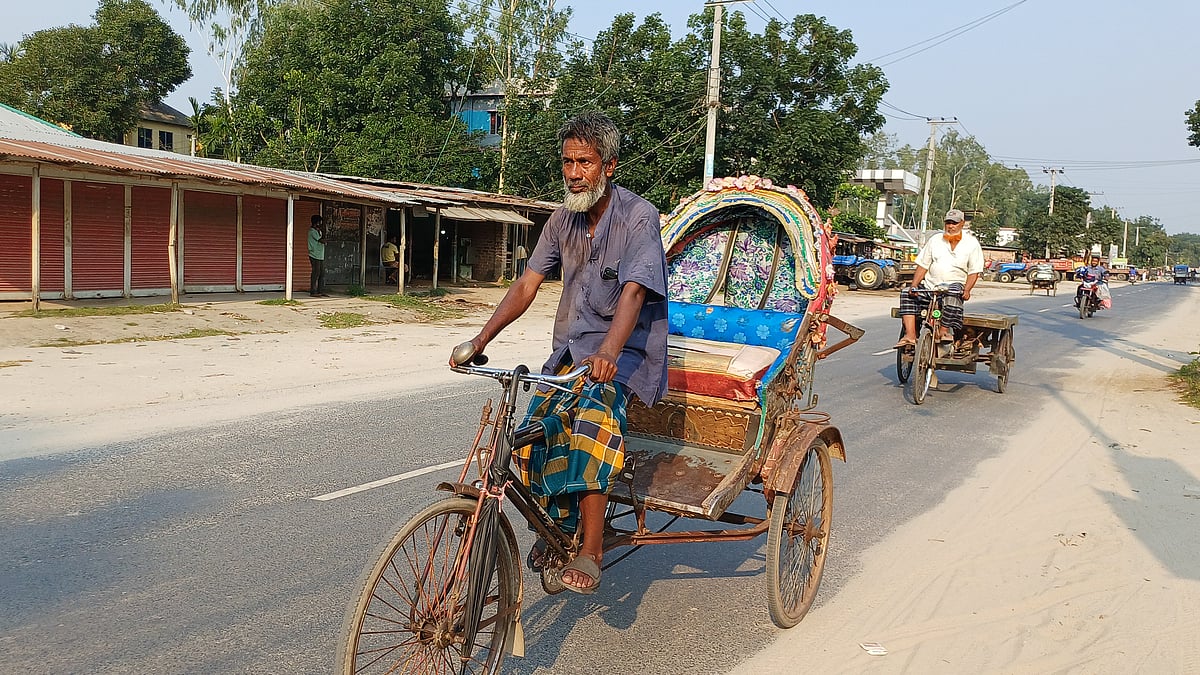
Photo Collected
The rapid proliferation of battery-operated rickshaws and easy-bikes across Panchagarh has pushed traditional pedal-rickshaw pullers to the brink of financial ruin. As the city’s streets become increasingly dominated by faster, motorized transit, veteran operators who have spent decades navigating the town on muscle power alone are struggling to secure even the most basic daily earnings.
Rafiqul Islam, a 57-year-old who has spent 40 years in the trade, is among those caught in this struggle. On a recent Tuesday, as the afternoon heat lingered over the C&B intersection, Islam prepared to head home with barely 200 taka in his pocket—a typical day’s wage that has plummeted since the motorized vehicles took over. For operators like Islam, the modern preference for speed has rendered their traditional labor obsolete, yet a lack of capital prevents them from upgrading to battery-powered alternatives.
The economic strain extends to their families. Islam, a resident of the Dhakkamara union, lives on a small homestead with his wife, who is frequently forced to work as a day laborer to help make ends meet. Even with their children grown and living independently, the couple remains responsible for two grandchildren, making the meager income from pedaling an aging rickshaw insufficient for survival.
Industry observers note that at least a dozen traditional pullers remain active in Panchagarh, all sharing the same precarious fate as they compete against more than a thousand motorized units. Mansur Ali, 65, echoes these concerns, noting that while he once thrived in the industry during his years in Gazipur, the saturated market in Panchagarh has left him sidelined. When passengers prove elusive, Ali is often forced to resort to manual labor, such as delivering groceries, to supplement his dwindling income.
The shift has forced many to seek unconventional ways to survive. For Shahjahan Ali, 50, the lack of ridership has necessitated a transition away from passenger transport entirely. He now spends his days assisting a local pharmacy with deliveries and general tasks to compensate for the passengers who increasingly bypass pedal-rickshaws in favor of motorized options. For these men, the daily trek to the city streets is no longer a path to a livelihood, but a desperate, aging cycle of physical exertion against a tide of mechanical modernization.
0%
0%
0%
0%