

Bangladesh Joins Saudi-Led Multinational Maritime Defense Coalition to Protect Red Sea Trade Routes
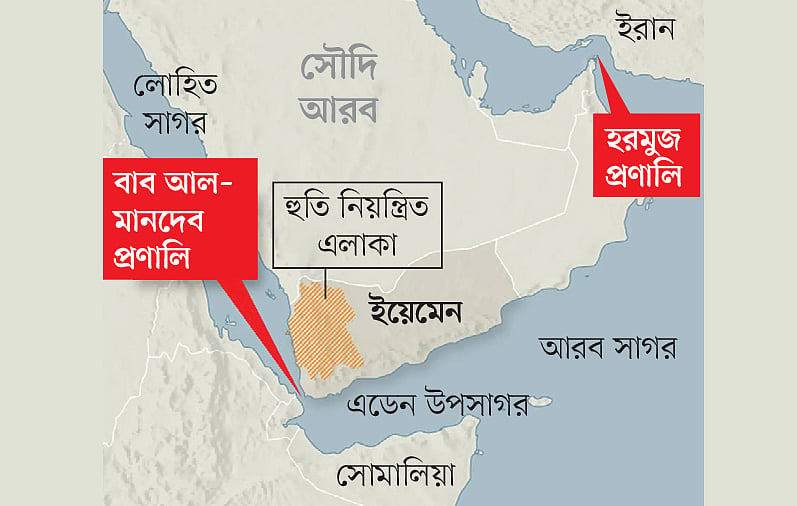
Photo Collected
Saudi Arabia has launched a multinational maritime defense coalition, enlisting Bangladesh and 12 other nations to secure critical trade routes through the Red Sea, the Bab al-Mandab Strait, and the Gulf of Aden. The initiative follows weeks of high-level diplomatic discussions aimed at ensuring the free flow of international shipping amid escalating regional instability.
The coalition, confirmed by the Saudi Ministry of Defense, includes Saudi Arabia, Bangladesh, Turkey, Kuwait, Bahrain, Qatar, Jordan, Egypt, Pakistan, Djibouti, Somalia, Yemen, Sudan, and Nigeria. According to reports from Arab News and Al Jazeera, the alliance emerged from consultations that initially invited 51 countries. Bangladesh’s participation was finalized last Thursday during a meeting in Riyadh, where the country was represented by Lieutenant General Mizanur Rahman, Principal Staff Officer of the Armed Forces Division.
The formation of the security pact is a direct response to threats against global energy supplies. With the Strait of Hormuz—a vital conduit for nearly 20% of the world’s oil—effectively obstructed, Saudi Arabia had increasingly relied on the Red Sea to export its energy resources. However, the route has become treacherous due to persistent attacks by Iranian-backed Houthi rebels in Yemen. The Bab al-Mandab Strait, a narrow 29-kilometer passage, handles roughly 10% to 12% of global trade, and the security of this bottleneck is considered essential to preventing further volatility in international energy markets.
According to the Saudi Ministry of Defense, the coalition’s primary mandate is to protect freedom of navigation and maintain maritime security from the Indian Ocean to the Mediterranean Sea. While specific contributions of vessels or aircraft remain undisclosed, the alliance plans to facilitate intelligence sharing, coordinate joint maritime operations, and conduct military exercises. The inclusion of Djibouti, situated on the western side of the Bab al-Mandab Strait, is viewed as a strategic advantage for the coalition’s surveillance and operational capabilities.
Despite the defensive objectives cited by Riyadh, the alliance faces questions regarding its long-term regional impact. European Union delegates, who were among the initial invitees, already maintain a separate maritime security presence in the area, leaving the exact coordination between the two initiatives unclear.
For Bangladesh, the decision marks a rare entry into a formal defense alliance, a departure from its traditional foreign policy stance of avoiding military blocs. Security analysts, including Major General (Ret.) A.N.M. Muniruzzaman of the Bangladesh Institute of Peace and Security Studies, have cautioned that Dhaka must carefully navigate these commitments to avoid being drawn into Middle Eastern regional rivalries. He noted that given Bangladesh’s multifaceted relationships and interests throughout the Middle East, balancing these geopolitical ties will be critical.
This move follows Bangladesh’s 2015 decision to join the Saudi-led Islamic Military Counter Terrorism Coalition. Although Dhaka joined that alliance, it refrained from sending a full-time delegation to the coalition’s Riyadh headquarters, illustrating a cautious approach to regional military involvement that analysts expect will be mirrored in the government’s handling of this new maritime security commitment.
0%
0%
0%
0%