

Bangladesh Forest Department Seeks Return of 4,000 Acres from Nations Largest Economic Zone
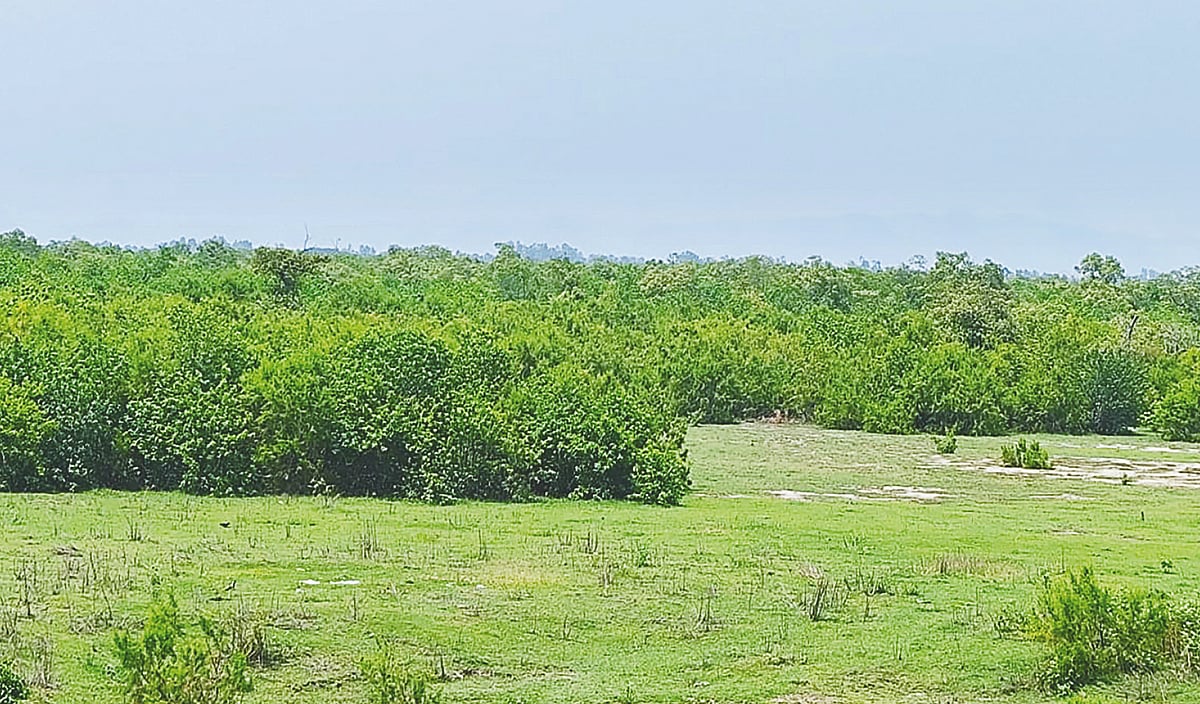
Photo Collected
The Bangladesh Forest Department is seeking the reclamation of 4,104 acres of land within the country’s largest industrial hub, the National Special Economic Zone in Mirsarai, Chittagong. The area, which was originally cleared for development, has naturally regenerated into a thriving forest ecosystem featuring native flora such as Gewa and Keora, while serving as a sanctuary for deer, snakes, and various migratory seabirds.
The industrial zone, spanning 33,805 acres, was established with ambitious goals for economic growth, aiming to provide employment for 1.5 million people and generate $15 billion in export revenue. However, a decade into the project, much of the designated land remains undeveloped. According to reports, the Forest Department argues that the spontaneous forest growth on these dormant plots acts as a vital carbon sink and a natural coastal shield against cyclones and storm surges.
বিজ্ঞাপন
In a formal correspondence dated January 11, Chief Conservator of Forests Md. Amir Hossain Chowdhury requested the transfer of the 4,104 acres back to his department, emphasizing the environmental necessity of the land. The Ministry of Environment, Forest and Climate Change has since initiated the process by requesting a land schedule from the Chittagong District Administration. Additional District Commissioner Sakhawat Jamil Saikat confirmed that the administration is currently conducting a review before finalizing the documentation for the land transfer.
The Bangladesh Economic Zones Authority (BEZA) has acknowledged that much of the land allocated to investors remains idle. While BEZA currently holds the land, officials have indicated a willingness to coordinate with the Forest Department to reach a sustainable solution. Out of the total 33,805 acres intended for the zone, only about 600 acres are currently occupied by operational industrial units.
বিজ্ঞাপন
Experts caution that while industrialization is essential for national development, the ecological value of these coastal lands cannot be overlooked. Professor Md. Kamal Hossain of the Institute of Forestry and Environmental Science at Chittagong University noted that the area has developed a dense, Sundarban-like ecosystem that provides a critical buffer for the coastline. He suggested that a balanced approach, incorporating both the industrial vision and a mandatory green belt, is necessary to ensure long-term environmental stability.
This push to recover forest land follows a broader shift in government policy. In April 2024, the governing body of BEZA cancelled ten economic zone projects approved by the previous administration, including the Sonadia Ecotourism Park, and returned 9,467 acres of land in Sonadia to the Forest Department. However, concerns remain regarding the effectiveness of such transfers, as local encroachment for salt and shrimp farming continues to threaten forest recovery efforts in areas like Sonadia, often despite the presence of legal protections.
0%
0%
0%
0%