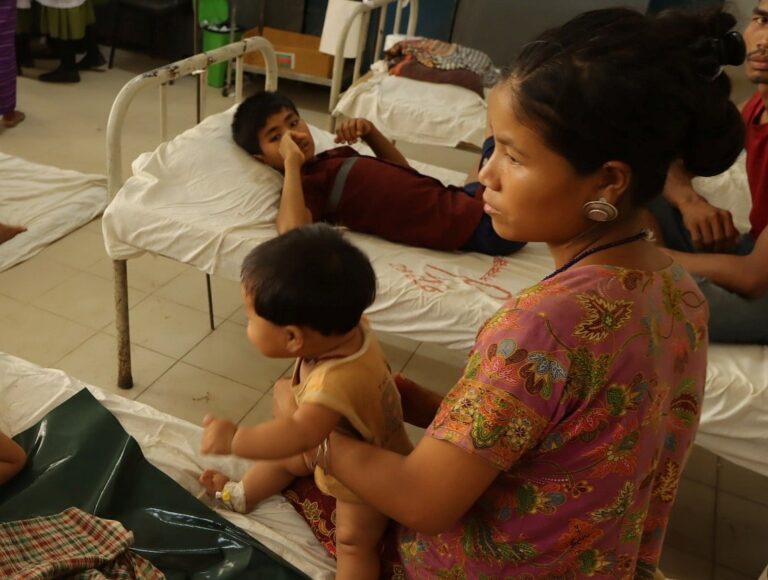

Bangladesh Floods Leave 44 Dead and Over One Million People Stranded Across Seven Districts

Photo Collected
Severe flooding, triggered by incessant monsoon rains and mountain runoff, has claimed 44 lives and left over 10 million people across Bangladesh reeling from one of the most significant climate-related disasters in recent memory. According to the Ministry of Disaster Management and Relief, the calamity has inundated 58 sub-districts across seven districts—Khagrachhari, Rangamati, Bandarban, Cox’s Bazar, Chittagong, Moulvibazar, and Habiganj—trapping more than 267,000 families in rising waters.
The human toll has been particularly devastating, with 39 people reported injured and thousands left homeless as traditional earthen homes collapsed under the pressure of the floods and landslides. In the Banshkhali sub-district of Chittagong, two children, identified as seven-year-old Mohammad Ashiq and three-year-old Mohammad Miraj, were swept away by flash floods while in their courtyard; their bodies were recovered shortly after the incident on Friday.
বিজ্ঞাপন
Meteorological data indicates that the Chittagong region has been under immense strain since July 4, recording 1,169 millimeters of rain in just one week. While the intensity of the rainfall has begun to subside in some areas, authorities warn that the situation remains precarious. The Flood Forecasting and Warning Centre reported that water levels in five rivers—the Manu, Kushiyara, Sangu, Matamuhuri, and Someshwari—continue to flow above the danger mark. Experts anticipate that while the situation in Chittagong may improve over the next 48 hours, new flood threats are emerging in the Feni, Sylhet, and northern regions, particularly due to rising water levels in the Teesta River.
In response to the crisis, the government has established 1,131 shelters, currently housing over 44,000 displaced individuals. The Ministry of Disaster Management and Relief has allocated 14.5 million taka and 2,650 tons of rice to the affected districts to support relief efforts. However, the scale of the devastation has hampered distribution, leaving many survivors, such as those in Chittagong’s Lohagara sub-district, struggling to secure food and clean water as their homes and livelihoods have been destroyed.
বিজ্ঞাপন
Disaster management experts emphasize that the current challenge is not merely a lack of resources but a logistical failure in coordination. With local government infrastructure stretched to its limit, analysts have urged for the mobilization of civil society organizations, including the Red Crescent and the Scouts, to reach the most vulnerable populations, such as pregnant women, children, and the elderly. As families like those in Banshkhali begin the arduous task of clearing debris from their demolished homes, the long-term recovery process remains uncertain for those who have lost their entire support systems to the floods.
0%
0%
0%
0%