

Bangladesh Faces Urgent Call to Unlock Demographic Dividend Amid Youth Employment and Safety Hurdles

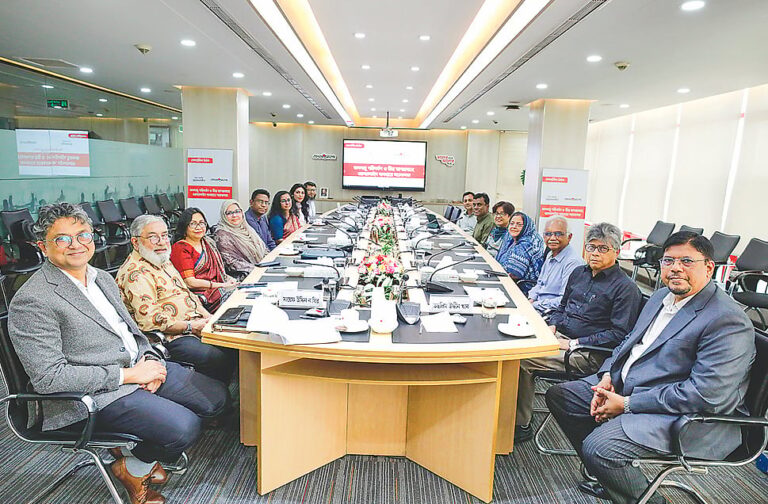
Photo Collected
As the world observes World Population Day on July 11, Bangladesh finds itself at a critical juncture in harnessing its demographic potential. Guided by this year’s theme, “Realizing the aspirations of youth, building a better tomorrow,” the country faces the urgent challenge of supporting a record-breaking generation of 47 million people aged 15 to 29—the largest, most digitally connected, and best-educated demographic in the nation’s history.
Projections indicate that this youth population will reach its peak in 2036. Currently, Bangladesh is navigating a window of “demographic dividend,” a period where the working-age population outweighs dependents. This phase, which is expected to see the dependency ratio peak around 2042, offers roughly two decades of immense growth potential. However, analysts warn that this is a finite opportunity; failure to invest in these young people today risks turning this potential engine of prosperity into a long-term economic burden.
বিজ্ঞাপন
Data from the United Nations Population Fund (UNFPA), detailed in the “Demographic Future Survey” conducted across 73 countries including Bangladesh, reveals that young people’s core desires are universal: financial security, stable employment, and the ability to build a family. While two-thirds of young people express optimism about the future, their path to achieving these goals is fraught with systemic hurdles. For 88% of respondents, financial stability is a prerequisite for starting a family, yet more than half identify housing shortages and economic volatility as primary obstacles to these aspirations.
The gendered nature of these challenges is particularly stark in Bangladesh. Although the nation is modernizing, 47% of girls are married before the age of 18. This prevalence of child marriage, combined with a high rate of adolescent motherhood—92 births per 1,000 women aged 15 to 19—traps young women in cycles of poverty and health risks. Globally, pregnancy-related complications remain a leading cause of death among women aged 15 to 24 in low-to-middle-income countries.
বিজ্ঞাপন
Beyond biological risks, young women are disproportionately affected by gender-based violence, which remains the single greatest impediment to their education, workforce participation, and social autonomy. As digital connectivity expands, this threat has evolved, with technology-facilitated violence emerging as a dangerous new frontier. Furthermore, traditional domestic labor norms continue to stifle women’s economic mobility; women in Bangladesh perform unpaid household labor valued at 5.19 trillion taka annually, representing 15% of the national GDP. This imbalance is reflected in the fact that one in five young people in the country are currently neither in education, employment, nor training, with women facing the highest rates of exclusion.
Despite these obstacles, there is a clear roadmap for progress. Bangladesh’s new National Population Policy and the government’s Eighth Five-Year Plan explicitly prioritize the demographic dividend, recognizing that sustainable development is impossible without the full, equal participation of women and girls. Policymakers have acknowledged that success requires massive investments in reproductive health, education, and legal accountability to combat gender-based violence, both online and offline.
Ultimately, the goal of national development must be re-evaluated through the lens of human potential. Success should not be measured merely by population statistics, but by whether every young person—regardless of gender or geography—has the agency to build the life and family they envision. As UNFPA and its partners continue to advocate for policy implementation, the focus remains on transforming the collective aspirations of Bangladesh’s youth into a tangible, prosperous reality before the current window of opportunity closes.
0%
0%
0%
0%