


Study finds Aedes mosquitoes in Dhaka and Chittagong developing widespread resistance to common insecticides
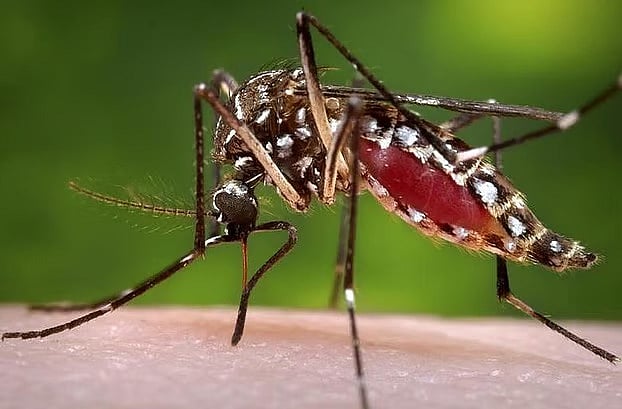
Photo Collected
A study has revealed that Aedes mosquitoes in Dhaka and Chittagong have developed widespread resistance to most insecticides currently used for vector control, raising concerns over the efficacy of ongoing dengue prevention efforts. Researchers found that of six insecticides tested across three chemical classes, five have become largely ineffective against the mosquito population.
The ongoing research, led by Professor Kabirul Bashar of the Department of Zoology at Jahangirnagar University in collaboration with Japan’s Institute of Health Security, identified genetic mutations in the mosquitoes linked to insecticide resistance. Findings were presented earlier this month at the Asia Pacific Mosquito and Vector Control Conference in Bangkok.
Tests were conducted on 1,450 samples of larvae and adult Aedes aegypti mosquitoes collected from various locations across Dhaka and Chittagong. Scientists evaluated four pyrethroids—deltamethrin, alpha-cypermethrin, permethrin, and etofenprox—along with the carbamate bendiocarb and the organophosphate malathion.
Results indicate that the mosquitoes have developed significant resistance to both pyrethroids and bendiocarb. In testing permethrin at a concentration of 0.75 percent, researchers observed survival rates of 90 percent in Dhaka and 93 percent in Chittagong after 24 hours. Even when the concentration was increased tenfold, up to 84 percent of the mosquitoes survived. Similarly, high survival rates were recorded for etofenprox, deltamethrin, and alpha-cypermethrin.
The organophosphate malathion remains the only chemical tested that retains high efficacy, with a 98 percent mortality rate observed in both cities 24 hours after application. However, experts warn against relying solely on a single chemical, citing the risk of “cross-resistance” and the potential for the mosquitoes to eventually develop immunity to malathion as well.
Tohid Uddin Ahmed, a former chief scientific officer at the Institute of Epidemiology, Disease Control and Research (IEDCR), warned that this resistance could exacerbate severe dengue outbreaks. He noted that the continued use of ineffective chemicals complicates public health strategies.
Public health expert Dr. Mushtaq Hossain emphasized that reliance on chemical interventions is no longer sufficient. He called for the integration of biotechnological solutions and the implementation of rigorous surveillance systems to monitor mosquito populations, disease prevalence, and insecticide resistance. Such data, he stated, is vital for simplifying and improving dengue prevention measures.
0%
0%
0%
0%