Extreme heat causes 77 billion taka economic loss annually as productivity and wages decline for Bangladeshi workers
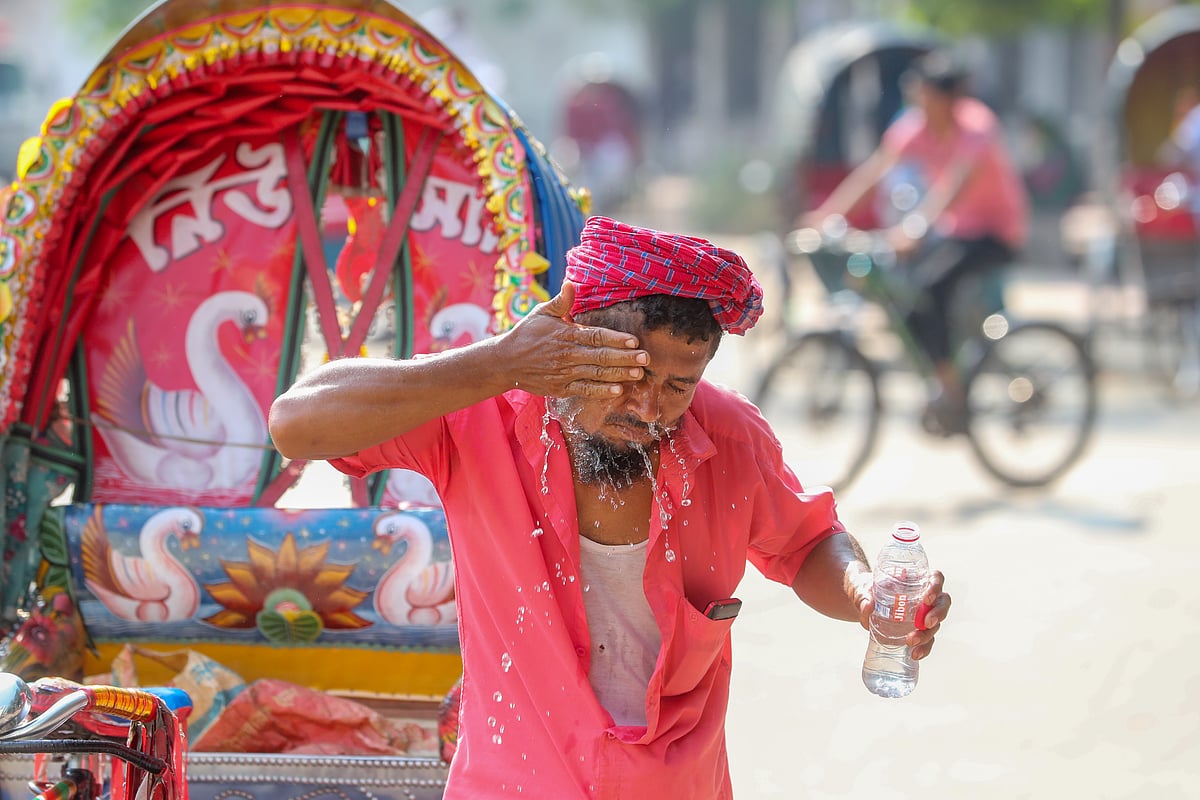
Photo Collected
Extreme heat is causing significant economic and health crises for Bangladesh’s informal labor sector, with workers losing an estimated 77 billion taka annually due to heat-related productivity decline and medical expenses. A joint study conducted by the International Institute for Environment and Development (IIED) and the Ovibashi Karmi Unnayan Program (OKUP), titled “Too Hot to Work, Too Poor to Rest,” reveals that outdoor laborers lose an average of 23.7 workdays per year, while indoor workers lose 13.5 days.
The research, which surveyed 175 informal sector families in Dhaka, highlights a critical vulnerability in a workforce that accounts for 84.9 percent of national employment. Workers in sectors such as construction and rickshaw pulling, who operate primarily outdoors, face severe physical stress. Asadul Islam, a 56-year-old rickshaw puller, described the growing intensity of the heat, noting that he collapsed from exhaustion during his shift last June. These laborers, who often live in overcrowded, poorly ventilated rooms with tin or asbestos roofs, are frequently unable to recover adequately during off-hours, compounding the physical toll.
Economically, the impact is profound. Outdoor workers lose an average of 148.9 dollars in annual wages, while indoor workers lose 89.1 dollars. These losses push worker families further below the living wage threshold in Dhaka. The study estimates that the total economic loss, including productivity decline and long-term health complications such as kidney disease, equates to 6.22 billion dollars, or 1.38 percent of the country’s GDP.
Health risks extend beyond temporary fatigue. The study indicates that 23.1 percent of surveyed workers suffer from kidney-related issues, and researchers estimate that approximately 6 percent of the total informal workforce could develop chronic kidney disease due to prolonged heat exposure. Despite these risks, the report notes that 19 out of every 20 workers who have experienced heatstroke did not seek professional medical treatment.
Experts emphasize that the current legal framework is insufficient to address these environmental hazards. While existing labor laws mandate basic access to water and ventilation, there are no specific regulations governing safe temperature limits for work or mandatory rest breaks based on heat indices. Furthermore, heat-related ailments are not formally recognized as occupational diseases.
Economist Hossain Zillur Rahman stated that while specific figures regarding the economic loss may be subject to debate, the underlying reality of the multidimensional crisis facing laborers is undeniable. The research team recommends the implementation of a comprehensive support package, including temperature-based cash assistance, mandatory rest periods, and improved access to hydration and shade. They estimate such a safety net would cost between 873 million and 1.65 billion taka annually—a fraction of the current economic damage.
0%
0%
0%
0%
More News from Business