
Hoolock Gibbon Populations Face Critical Habitat Challenges in Bangladesh Amid Conservation Efforts
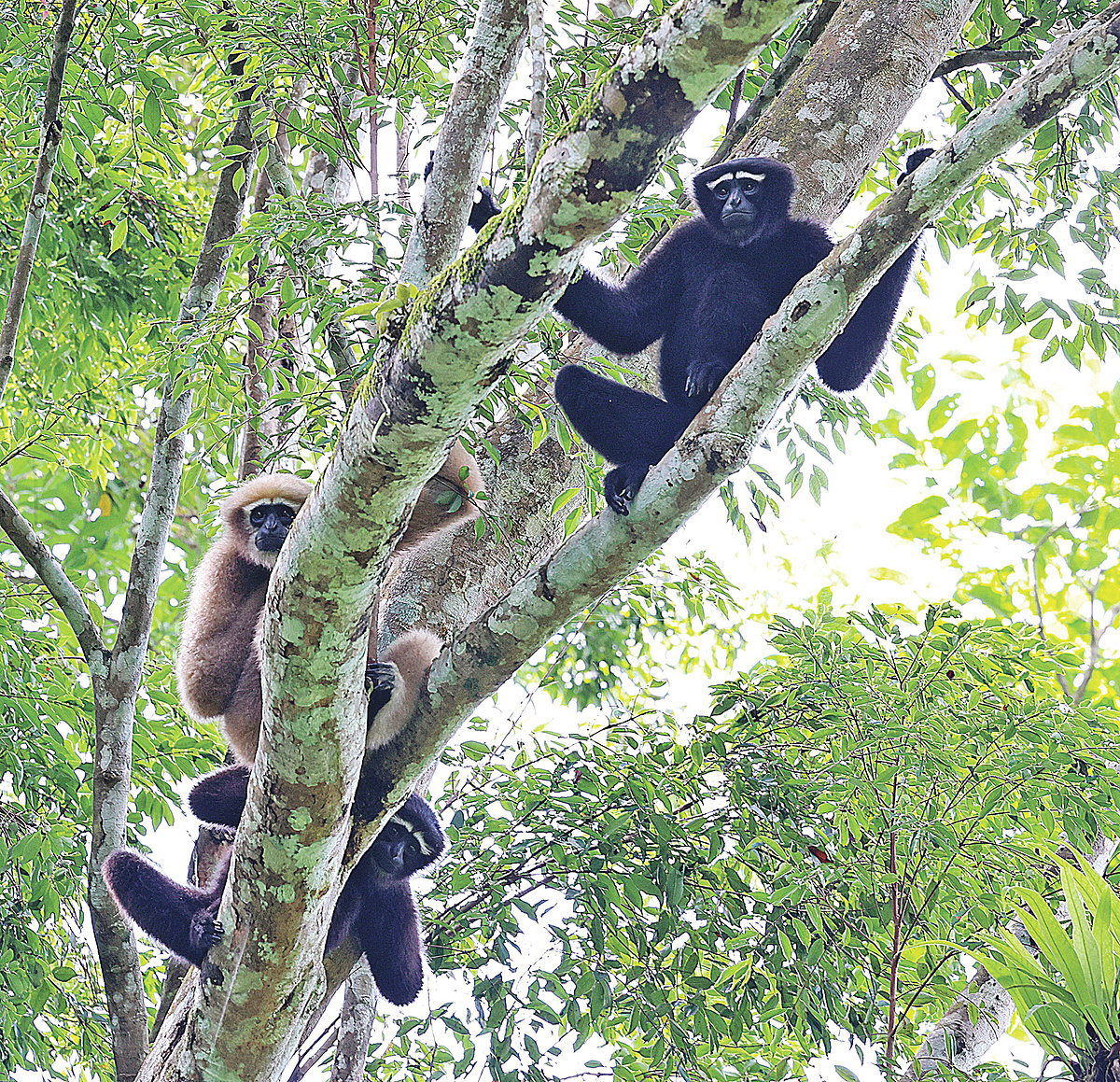
Photo Collected
LAWACHARA, Bangladesh — Populations of the critically endangered hoolock gibbon are showing signs of recovery in Lawachara National Park, though conservationists warn that their long-term survival across Bangladesh remains under threat due to habitat fragmentation and illegal poaching.
Recent field observations in Lawachara, conducted as part of an initiative to update the national red list of threatened species, revealed multiple family groups of gibbons moving through the forest canopy. Researcher Tariq Kabir estimates that Lawachara currently hosts between 15 and 20 groups, totaling approximately 70 to 80 individuals. While these numbers suggest a localized increase, conservation experts note that the species continues to face significant pressure from human activity and high tourist foot traffic within the protected area.
The crisis facing the hoolock gibbon is reflected in broader national statistics. According to data from the International Union for Conservation of Nature (IUCN), the species is listed as critically endangered in Bangladesh. While current analysis by Kabir suggests a national population of roughly 816 individuals across 254 groups, this represents a sharp decline from an estimated 3,000 in the 1970s. Discrepancies in historical survey methodologies have made precise longitudinal comparisons difficult, but the overall downward trend remains clear.
Field surveys conducted across the Sylhet division highlight the varied state of gibbon habitats. While the Rajkandi forest area, particularly the Korma Beat, serves as a significant stronghold with an estimated 100 gibbons across 36 groups, other regions like the Adampur forest maintain smaller populations. Researchers observed five gibbons in Adampur during an August expedition, underscoring that while small clusters persist, the animals are increasingly isolated.
The primary challenges to the species’ survival include the loss of large, fruit-bearing trees, which are essential for the gibbons’ diet and nesting. Furthermore, the expansion of railways and road networks through forest corridors has fragmented habitats, preventing natural migration between forest patches. Because gibbons are strictly arboreal and avoid descending to the ground, this isolation poses a severe risk to their genetic diversity and resource access.
Conservationists are advocating for the installation of canopy bridges in Sylhet’s forests to facilitate safe movement between fragmented sections of the canopy. Additionally, experts emphasize that stricter enforcement against illegal hunting and better management of tourism are critical to preventing further population losses. As development continues to encroach upon their natural territory, the restoration of native forest structures remains the most vital strategy for the preservation of one of Bangladesh’s most vulnerable primates.
0%
0%
0%
0%