
Bangladesh Ranks Near Bottom in Global Environmental Performance Index
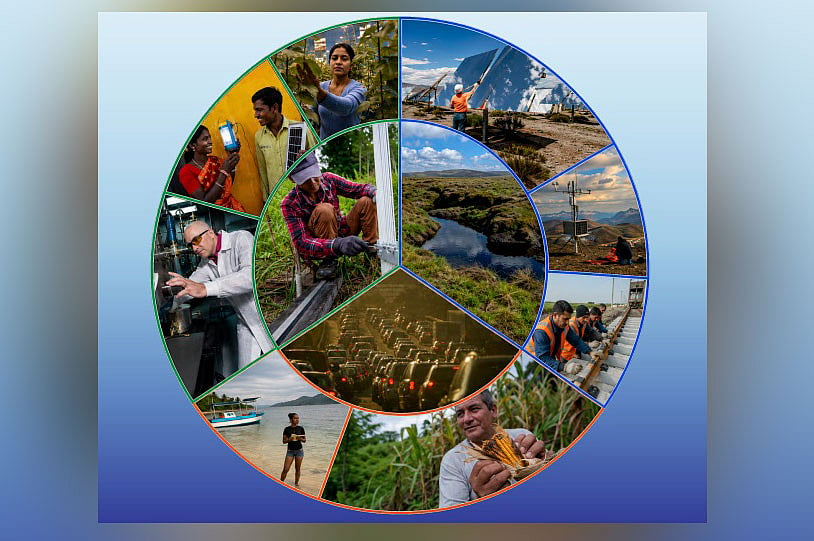
Photo Collected
Bangladesh has ranked near the bottom of a major global index measuring environmental protection, securing the 175th position out of 177 countries. The Environmental Performance Index (EPI), released recently by the United States Environmental Protection Agency, evaluates the efficacy of environmental initiatives worldwide. The index was developed by researchers from Yale and Columbia Universities with support from the McCall MacBain Foundation.
With a score of only 23.46, Bangladesh has failed to achieve even 25 percent of the benchmarks required for effective environmental management. The index assesses performance across three primary domains: environmental health, ecosystem vitality, and climate change. These areas are evaluated using 47 distinct indicators, including air quality, water and sanitation, waste management, biodiversity, habitat preservation, and greenhouse gas emission reduction.
Within South Asia, Bangladesh continues to lag behind most of its neighbors. Of the eight countries in the region, only India ranks lower, at 176th. Bhutan leads the regional rankings at 52nd place, followed by Sri Lanka at 94th, Nepal at 128th, Afghanistan at 135th, Pakistan at 157th, and the Maldives at 171st.
Experts attribute this decline to unbridled economic competition, severe air pollution, unplanned urbanization, and poor management of plastic waste. Sharif Jamil, a prominent environmental activist and former general secretary of the Bangladesh Environmental Movement (BAPA), stated that the index accurately reflects the dire state of the country’s natural resources. He noted that the nation’s soil, water, and air are severely contaminated, with virtually no river remaining free of pollution, a direct consequence of long-term, unscientific industrialization.
Jamil criticized the government for failing to translate environmental pledges into meaningful action. He emphasized a critical lack of long-term, science-based planning, noting that impulsive, short-term decisions—such as dredging encroached canals without restoring their original flow—often exacerbate the degradation. According to Jamil, policymakers must abandon the misconception that industrialization and environmental conservation are mutually exclusive. He warned that without rigorous legal enforcement and a strategic, scientific approach, the country will remain stuck at the bottom of global environmental rankings.
Globally, European nations continue to dominate the top of the index. Estonia claimed the top spot with a score of 74.79, followed by Luxembourg and the United Kingdom. The United States holds the 27th position, while China ranks 129th. The lowest-ranked countries in the report are Laos at 177th, followed by India, Bangladesh, Mali, and Vietnam.
0%
0%
0%
0%