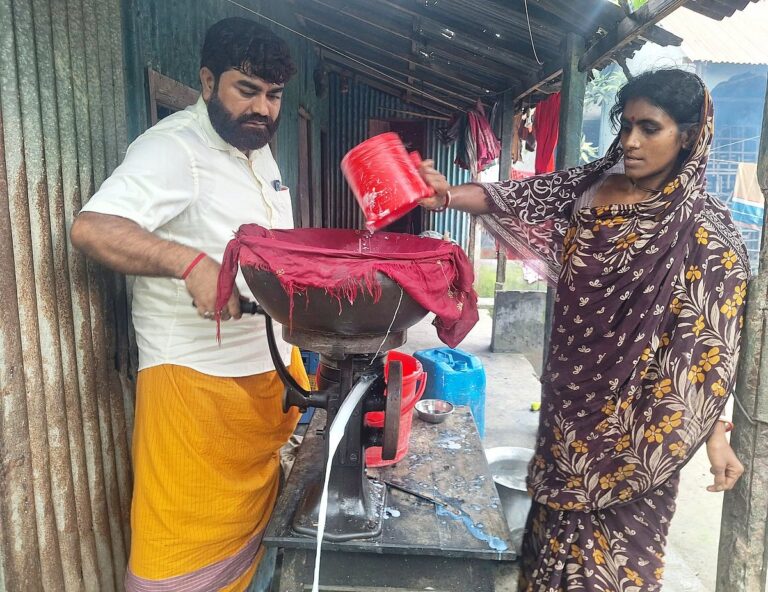

Severe Gas Crisis Drives Industrial Reliance on Diesel and Furnace Oil as Production Costs Surge
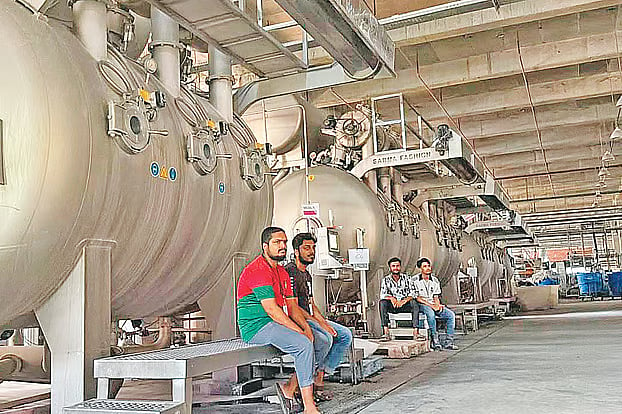
Photo Collected
Severe natural gas shortages across Bangladesh have forced major industrial sectors, including steel, pharmaceuticals, and textiles, to significantly increase their reliance on diesel and furnace oil to maintain production. This shift has triggered a sharp spike in fuel consumption, placing immense pressure on both industrial operating costs and national energy reserves.
Steel manufacturer BSRM is among the companies currently operating at less than half of its total production capacity by utilizing diesel and furnace oil as alternatives to natural gas. Similar patterns have emerged in industrial zones such as Gazipur and Pabna, where pharmaceutical and textile factories are increasingly relying on generators and boilers fueled by oil to bypass gas shortages.
Data from the state-owned oil marketing companies—Padma Oil, Meghna Petroleum, and Jamuna Oil—reveals a drastic surge in fuel sales during the first 15 days of August compared to the same period last year. Padma Oil reported a 29% increase in diesel sales and a 174% surge in furnace oil sales. Meghna Petroleum saw diesel sales rise by 21% and furnace oil by 152%, while Jamuna Oil recorded a 33% increase in industrial diesel sales and a 224% jump in furnace oil demand for industrial and power generation purposes.
The energy crisis intensified following an explosion at the Excelerate Energy floating LNG terminal in Moheshkhali on July 21. While the situation showed signs of recovery by mid-August, the lack of new LNG cargo deliveries led to a supply drop, with current national grid gas supply hovering around 2.22 billion cubic feet per day against a demand of 3.8 billion. Petrobangla officials have indicated that the situation may improve with the arrival of new LNG shipments expected this Sunday.
Industrial executives report that the transition to oil is economically unsustainable. Tapan Sengupta, Deputy Managing Director of BSRM, stated that the company’s fuel usage has increased by 70%, pushing production costs up by at least four times. The pharmaceutical sector faces similar strain; Zakir Hossain, former Secretary General of the Bangladesh Association of Pharmaceutical Industries, noted that generating electricity via diesel generators costs between 41 and 42 taka per unit, compared to approximately 15 taka when using grid electricity. This shift is driving overall fuel expenses up by 75% to 80%, compounded by frequent maintenance costs for overused generators.
Despite the surge in demand, the Bangladesh Petroleum Corporation (BPC) maintains that there is no risk of a fuel shortage. BPC Chairman Md. Manjur Alam Prodhan confirmed that imports remain regular and that the current national stock includes approximately 349,882 tonnes of diesel and 51,348 tonnes of furnace oil, as of August 15.
Corporate records underscore the magnitude of the industrial shift. Major companies, including Incepta Pharmaceuticals, SKF Pharmaceuticals, and AKM Knitwear, have reported massive year-on-year increases in diesel procurement, with some companies reporting consumption spikes as high as 300% to 700% for the first half of August compared to the same period in 2023.
0%
0%
0%
0%