
Bay Leaf Cultivation Transforms Livelihoods of Hundreds of Farmers in Kaunia
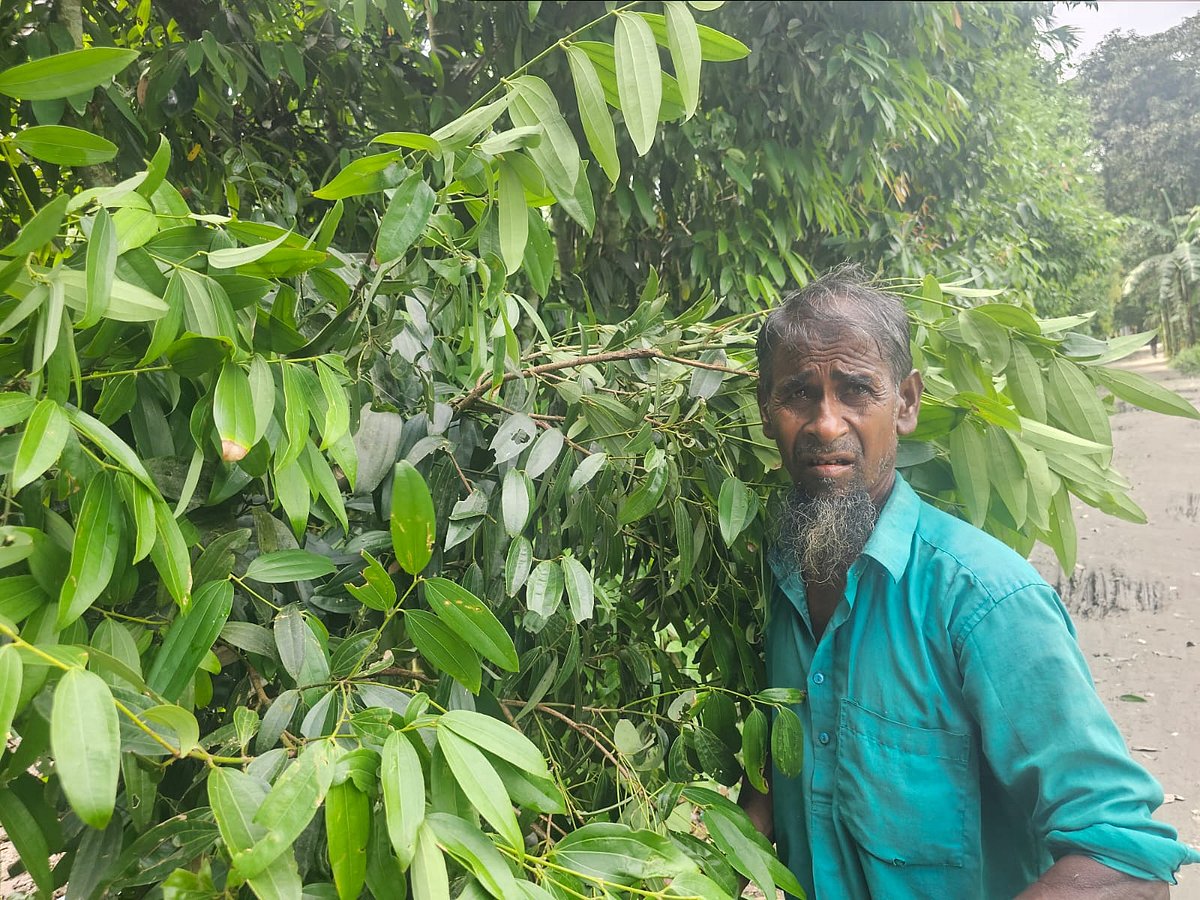
Photo Collected
KAUNIA, RANGPUR — Once a struggling day laborer forced to abandon his education in the fourth grade to support his family, 63-year-old Goljar Hossain has transformed the agricultural landscape of Kaunia Upazila. What began as a modest experiment with 14 bay leaf saplings has flourished into a regional industry, with over 1,000 farmers now cultivating the spice across 883 hectares of land in six unions.
Born in 1963 and orphaned at age eight, Hossain spent his youth laboring in fields and herding livestock to survive. Seeking a way out of perpetual poverty, he bought 14 bay leaf saplings while returning from a trip to Bogura. He planted them in his homestead in Bajemajkur village, and within two years, the harvest yielded 5,000 taka. He reinvested the profit to lease 80 decimals of land and scale up his production, incorporating companion crops like ginger and turmeric.
Today, Hossain’s success has turned him into a local mentor. His model of integrated spice farming—where bay leaf trees are intercropped with ginger and turmeric—has been widely adopted across the region. In Bajemajkur village alone, approximately 95 percent of residents have turned to spice cultivation. Local leaders, including Tepamdhupur Union Parishad Chairman Rashedul Islam, credit Hossain’s initiative for providing a sustainable livelihood to hundreds of families who once relied solely on traditional paddy farming.
The economic shift is significant. According to local agricultural data, an acre of land dedicated to paddy traditionally yielded an annual profit of 30,000 to 40,000 taka. By contrast, farmers cultivating bay leaves alongside ginger and turmeric on the same plot can net approximately 200,000 taka, with production costs remaining as low as 12,000 to 14,000 taka per acre.
Kaunia Upazila Agriculture Officer Tania Akter confirmed that the department is providing ongoing support to farmers as interest in the crop grows. The bay leaf plant, which thrives in diverse locations such as pond banks, roadsides, and homesteads, offers a long-term return; a single tree can provide leaves for up to a century.
The “scent” of Kaunia’s bay leaves has now reached wholesale markets across the country, attracting major corporations due to the superior quality of the produce. For residents like Zohra Khatun, a former laborer who now supports her family and has acquired additional land through bay leaf sales, the crop represents a secure future.
Hossain, who now earns an annual profit of 400,000 taka from his two-acre farm, continues to provide free technical advice to neighbors. Having built a home and educated his children through spice farming, he remains committed to ensuring the community’s collective prosperity. “There is no loss in bay leaf cultivation,” farmers frequently note, citing the low input costs and consistent year-round demand as key factors in their success.
0%
0%
0%
0%