Visionary artist Binode Behari Mukhopadhyay and the forgotten history of his childhood in Rajshahi Godagari rail colony
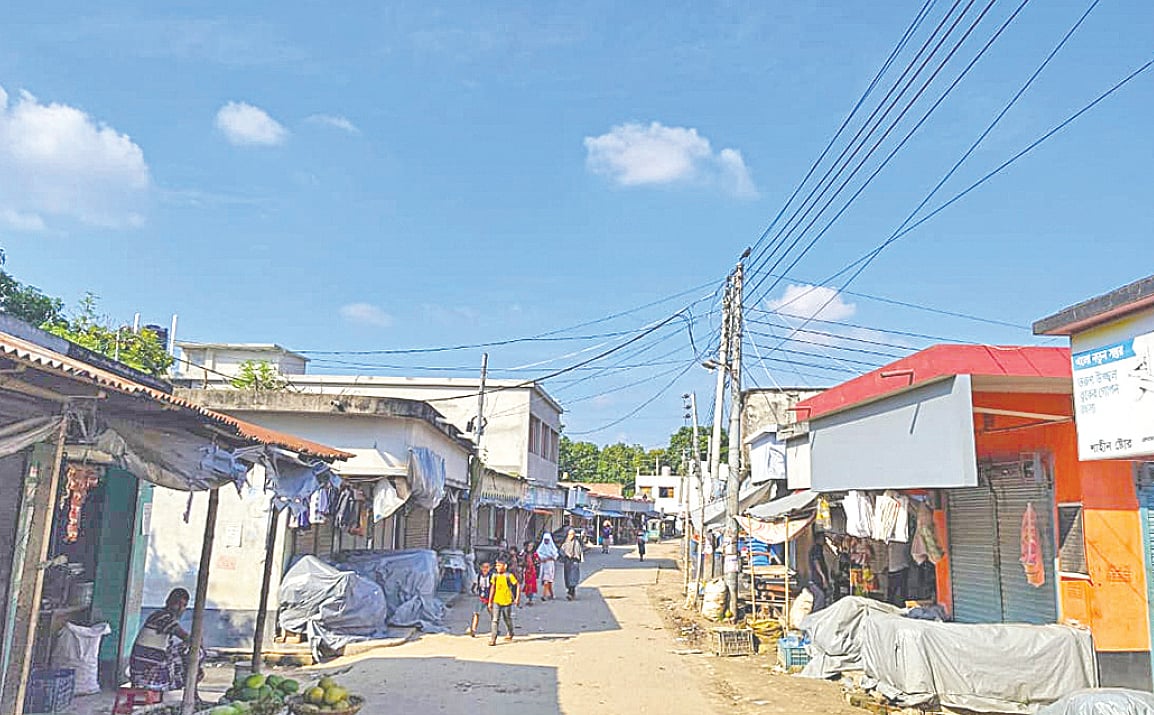
Photo Collected
Binode Behari Mukherjee, a pioneer of 20th-century Indian modern art and a formative mentor to legendary filmmaker Satyajit Ray, left an indelible mark on the cultural history of the Indian subcontinent. While primarily known for his contributions to Visva-Bharati University and his remarkable ability to create evocative landscapes—most notably of the Kopai River—after losing his eyesight, Mukherjee’s early childhood was defined by a brief but vivid sojourn in the Godagari Rail Colony of Rajshahi, in present-day Bangladesh.
Mukherjee documented these formative memories in his book *Chitrakar*, published in Calcutta in 1978, two years before his death. The memoirs describe the life of his brother, Bonbehari Mukherjee, who served as a physician at the Godagari Rail Colony a century ago. The young artist accompanied his mother to the region to live with his brother, providing him with a stark contrast to his urban upbringing in Behala, Kolkata, where he was born in 1904.
In his writing, Mukherjee vividly recalled the colonial-era bungalow that served as his residence. He described a large, straw-roofed structure enclosed by high walls, featuring a sprawling, overgrown garden filled with wild vegetation, banana groves, and local produce. He noted the presence of a cook named Mahadev, who had never traveled beyond Samastipur and Godagari, and whose limited worldview stood in contrast to the tales Mukherjee brought from the bustling streets of Kolkata.
The artist’s recollections offer a window into a quiet, semi-rural existence. He described long, solitary days spent wandering through thickets, observing the local flora, and interacting with the few visitors to the colony, including a sanitary inspector and a police officer who shared accounts of local crimes. During the evenings, under the guidance of his brother, Mukherjee spent hours stargazing, familiarizing himself with constellations such as Orion and the Great Bear before retreating indoors as the darkness deepened.
Mukherjee also provided a candid look at the local economy and infrastructure of Godagari at the time. He detailed trips to the local market, where large fish—including chital, rui, and katla—were available for remarkably low prices, and described the modest hospital facilities where his brother practiced, consisting of rudimentary straw-roofed structures.
The narrative of his time in Godagari concludes with a sharp reflection on the hazards of the region, particularly the prevalence of snakes. Upon receiving news of a transfer back to the urban environment of Kolkata, the family packed their belongings, including a souvenir that served as a grim reminder of their tenure: a glass jar preserved in spirits containing two cobra heads, which his brother mockingly labeled as a “Memory of Godagari.”
Today, the landscape of the Godagari Rail Colony has changed significantly. While the land remains under the jurisdiction of railway authorities, the encroaching expansion of residential dwellings and commercial shops has obscured the wild, overgrown environment that once inspired the childhood observations of one of India’s most celebrated artists.
0%
0%
0%
0%