
Century-old boat-making tradition defines Dumuria village in Comilla as a local hub
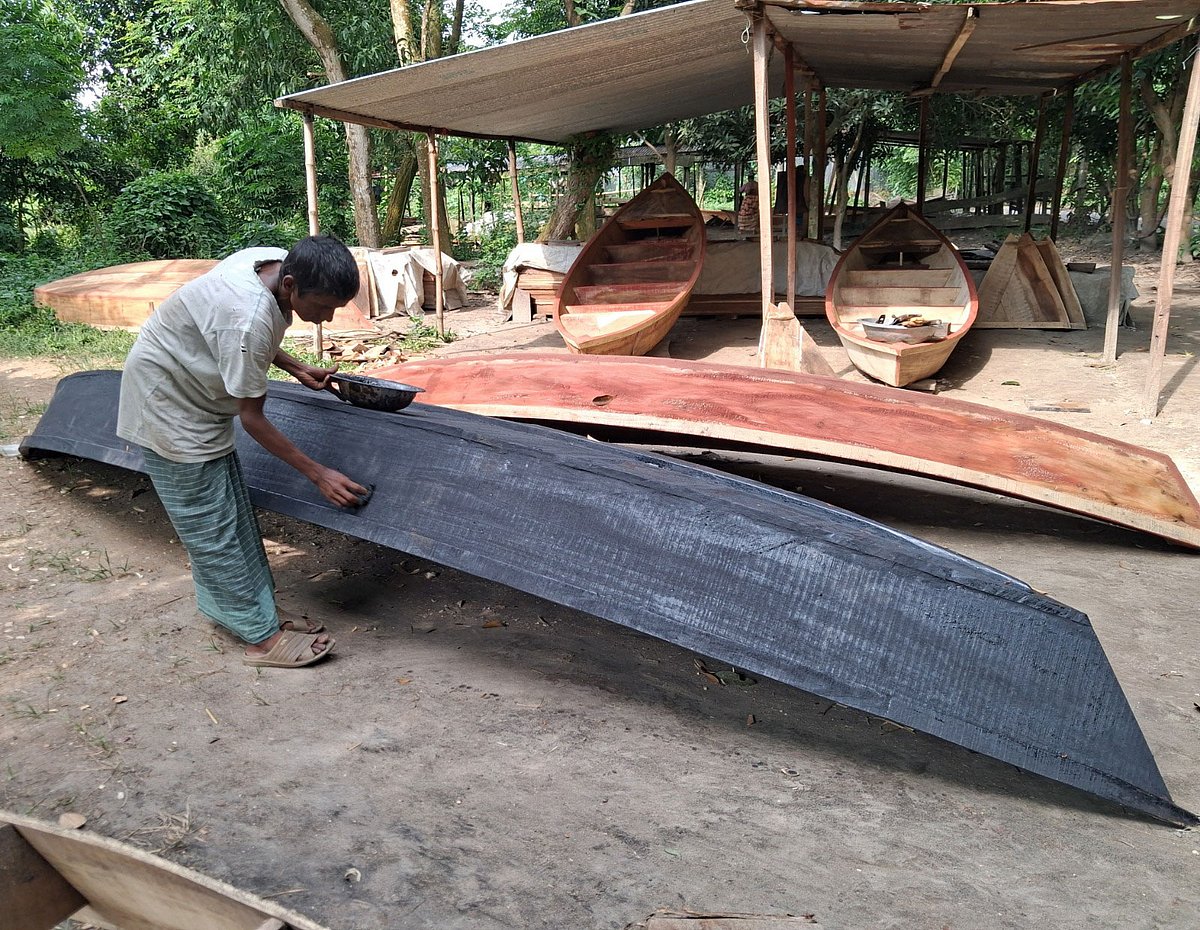
Photo Collected
As the first light of dawn breaks, the rhythmic sounds of hammers hitting wood resonate across the courtyards of Dumuria village in Comilla’s Homna Upazila. This flurry of activity, signaling the start of the monsoon season, transforms the village into a bustling hub of craftsmanship as 15 local families dedicate their days to the construction of traditional wooden boats.
Located approximately three kilometers southwest of the Homna administrative headquarters, Dumuria has earned a reputation as the region’s “boat village.” Despite the expansion of modern road networks, boats remain essential in this riverine landscape, where the Meghna, Gumti, and Titas rivers converge. Residents continue to rely on these vessels for transportation, commercial fishing, livestock management, and navigating the vast network of canals and wetlands.
The village’s tradition of boat building dates back nearly 150 years. According to local artisan Amarika Chandra Sarkar, the craft was pioneered by Manmohan Chandra Sarkar over a century ago. The skills were subsequently passed down through generations, with families teaching one another the intricacies of naval joinery. Veteran craftsman Sadhan Chandra Sarkar, who learned the trade from his father Rajani Chandra Sarkar, has now passed the skill onto his own sons, ensuring the continuity of this ancestral occupation.
The construction process is a communal effort involving entire families. While a skilled artisan typically spends a full day building a single boat, women and children frequently assist in tasks ranging from applying sealant to painting. The artisans produce various types of vessels, including the Digla, Kosha, and Patailla-kosha, which retail for prices ranging between 4,500 and 12,500 taka, depending on size and design.
To build these boats, craftsmen procure timber—including Raintree, Koroi, Chambul, and Mahogany—from markets in Barisal, Daudkandi, Gouripur, and Brahmanbaria’s Bancharampur. Once the wood is dried and cut to precise specifications, it is assembled into a frame, sealed with a mixture of wood apple resin and flour, and finished with paint or wood tar for durability.
The peak season leading up to the monsoon provides a significant portion of the artisans’ annual income. When the demand for boats wanes after the rains, these skilled workers transition to crafting furniture and building residential structures to sustain their livelihoods.
The reputation of Dumuria’s craftsmanship extends well beyond the village borders. Merchants and residents from surrounding areas, including Elliotganj, Gouripur, and Bancharampur, visit the village to purchase boats, often placing custom orders in advance. Mosleh Uddin, a ward member of the Mathabhanga Union, noted that while the artisans may not be wealthy, they hold a position of distinct respect within the community for maintaining the village’s historic trade.
0%
0%
0%
0%