Regional Newspaper Seeks Personal True Stories from Readers
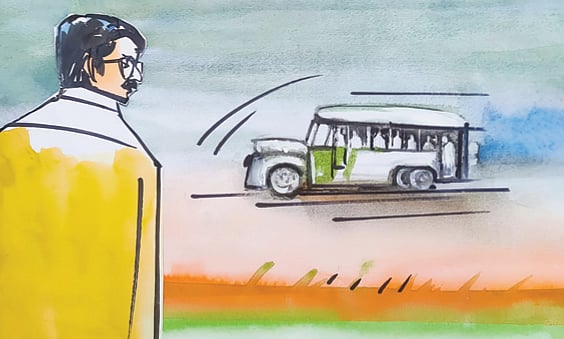
Photo Collected
The experience of childhood discovery often carries a weight that modern convenience can never replicate. In 1982, for a young student living in a remote corner of Kurigram, the world was defined by the reach of one’s own feet. Motorized transport was a myth, and the journey to a major city like Rangpur was a day-and-night expedition involving wooden carts, country boats, and the long, arduous trek to Pateshwari Ghat. Local lore even equated a trip to Rangpur with a journey to the afterlife, such was the daunting nature of the transit.
The arrival of a single diesel-powered minibus on the Pateshwari-Bhurungamari route, introduced by a local businessman named Gendu Mia, was a tectonic shift for the rural community. The vehicle, which required a manual crank to start, became the primary subject of village gossip. Driven by sheer curiosity, the narrator and three friends trekked across wide fields, braving the scorching sun, to reach Byapari Hat in hopes of witnessing this mechanical wonder.
Upon arriving at the small bazaar, the group narrowly missed the bus’s initial departure but waited under the persistent encouragement of one of the friends. When the vehicle finally returned, it was a weathered, dusty relic with broken windows and a rattling engine that spewed thick plumes of black smoke. Yet, to the onlookers, it was a masterpiece of modern engineering. They watched in awe as the conductor managed paper currency with practiced ease and the driver operated the clanking, heat-radiating machine.
Touching the warm, vibrating metal of the bus became a defining moment of the day, leaving the boys transfixed as the vehicle eventually roared off toward Nageshwari.
Decades later, the landscape of Kurigram has been transformed. The construction of the Dharla Bridge in 2003 and the development of double-lane paved roads have integrated the region into the national transit network. Today, sleek, illuminated buses ferry passengers to Dhaka, Chittagong, and beyond with high-speed regularity. Despite the comfort and aesthetic appeal of modern transport, the memory of Gendu Mia’s smoke-filled, hand-cranked bus remains etched in the narrator’s mind as a singular, irreplaceable encounter with the progress of time.
0%
0%
0%
0%