From Screen Villain to Social Guardian: Former Actor Elias Kobra Finds New Life in Teknaf
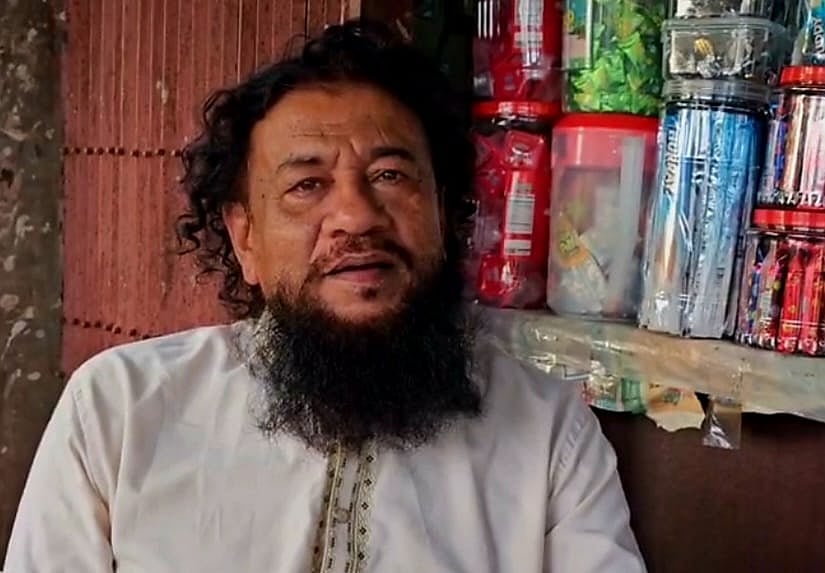
Photo Collected
Once a formidable antagonist on the Bangladeshi silver screen, martial artist and actor Elias Kobra has traded the spotlight of Dhaka’s film industry for a quiet, pastoral life in his native Teknaf. After a four-decade career spanning over 500 films, the actor—born Mohammad Elias in 1961—has settled permanently in Noakhaliyapara, Baharchhara, where he now focuses on farming, livestock management, and community service.
The actor’s transition to village life is marked by a unique local legacy: the establishment of the “Elias Kobra Bazar.” Founded approximately 11 years ago, the market has grown from a single grocery shop to a bustling hub of over 45 stores. Local residents, who once traveled 15 kilometers to Teknaf to trade their goods, now find essential supplies, fresh fish, and local produce readily available. The market was named by villagers in 2015 as a gesture of appreciation, and it has since become a landmark for tourists visiting the region’s historic forests and mountain waterfalls.
Despite the relative tranquility of his new life, Kobra remains deeply embedded in the challenges facing his community. The region has seen a rise in criminal activity, including kidnappings and human trafficking. In response, Kobra has helped mobilize a civilian patrol consisting of roughly 100 volunteers, organized into rotating shifts to monitor the area. He maintains that this grassroots initiative, supported by law enforcement, has been instrumental in curtailing criminal incursions from the nearby hills.
Kobra’s career, which began in 1987 with the film *Maruf Shah*, saw him become a household name in the 1990s as a quintessential villain in action-packed, martial arts-driven cinema. Beyond acting, he produced the film *Bhaiya Number One* and served as an executive in the Bangladesh Film Artists’ Association. Today, however, those accolades occupy the past. As the president of the local Sagarpar Jame Mosque committee, he is heavily involved in social infrastructure, including the renovation of religious sites, expansion of burial grounds, and the procurement of land for a new primary school.
For Kobra, the shift from cinematic fame to rural altruism is a deliberate choice. Living with his family in the village he never truly left—even during his peak years in Dhaka—he finds fulfillment in addressing the daily concerns of his neighbors. As he moves between his farm, the mosque, and the marketplace that bears his name, the man once known for his menacing roles on screen is now recognized primarily as a pillar of his community, dedicated to spiritual devotion and the upliftment of his village.
0%
0%
0%
0%