Gulistan Remains Hotbed of Crime and Extortion Despite Proximity to State Power Centers
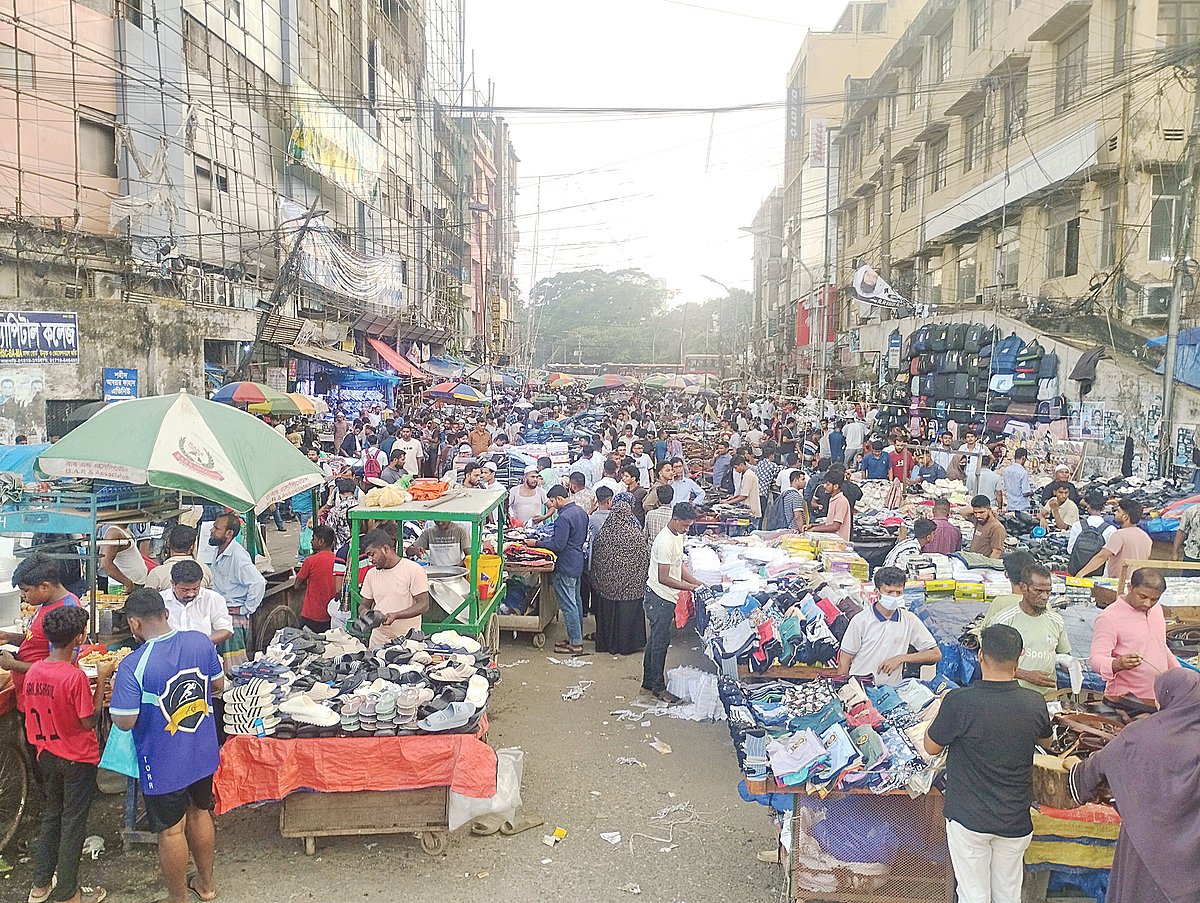
Photo Collected
Gulistan, a bustling commercial hub situated in the heart of Dhaka, has increasingly become synonymous with rampant street crime and unchecked extortion. Despite its strategic location—directly opposite the presidential residence, Bangabhaban, and within 600 meters of the Police Headquarters—the area remains a notorious sanctuary for pickpockets, muggers, and organized extortion syndicates.
Field observations conducted over three consecutive days in August revealed that the streets and sidewalks are almost entirely occupied by unauthorized hawkers. These vendors are subjected to systematic daily or monthly extortion, with local enforcers often demanding between 100 and 200 BDT per day, or monthly rents ranging from 5,000 to 12,000 BDT. Some extortionists even issue formal-looking receipts to legitimize these collections, though the Dhaka South City Corporation has confirmed that such documentation is fraudulent.
The landscape of criminal control in Gulistan has shifted following the political transition in July 2024. Local traders and hawkers allege that while the faces of the extortionists have changed, the practice remains institutionalized. Various local political figures, including members of the Bangladesh Nationalist Party (BNP), have been named in allegations regarding the protection of these syndicates. While some accused individuals, such as Ward-20 BNP convener Monir Hossain, denied direct involvement, others claimed that their names are being used by rogue elements or that they are being maligned by political rivals.
The area is also a hotspot for brazen public crime. Muggers frequently target commuters, snatching mobile phones, jewelry, and valuables in broad daylight. Even police officers stationed at local traffic boxes admit to being cautious, often avoiding the use of their mobile phones in public to prevent them from being snatched. The presence of drug users, who operate openly near transit points and police stations, further exacerbates the sense of lawlessness.
Historically, Gulistan was a center for arts and culture, famously housing the city’s first air-conditioned movie theater. Today, however, that legacy has been eclipsed by the area’s reputation for disorder. Jurisdiction over the area is fragmented, falling under the overlapping responsibilities of the Paltan, Shahbagh, and Bangshal police stations, which critics argue complicates law enforcement efforts.
Mohammed Osman Gani, Additional Commissioner (Crime and Operations) of the Dhaka Metropolitan Police, acknowledged the ongoing challenges. He stated that while the police are committed to curbing criminal activities, recidivism remains a significant hurdle, as many offenders return to the streets shortly after obtaining bail. He suggested that sustainable improvement would require a structural approach involving all stakeholders and a rigorous application of the law.
Despite the persistent danger, Gulistan remains an unavoidable transit point and commercial center for thousands of Dhaka residents daily. Civil society members, such as Javed Jahan of the Adi Dhakabashi Forum, argue that the persistent neglect and the normalization of these criminal activities by authorities have left ordinary citizens vulnerable in one of the capital’s most critical transit hubs.
0%
0%
0%
0%