
BJP Spent 287 Crore Rupees on West Bengal Assembly Elections Alone
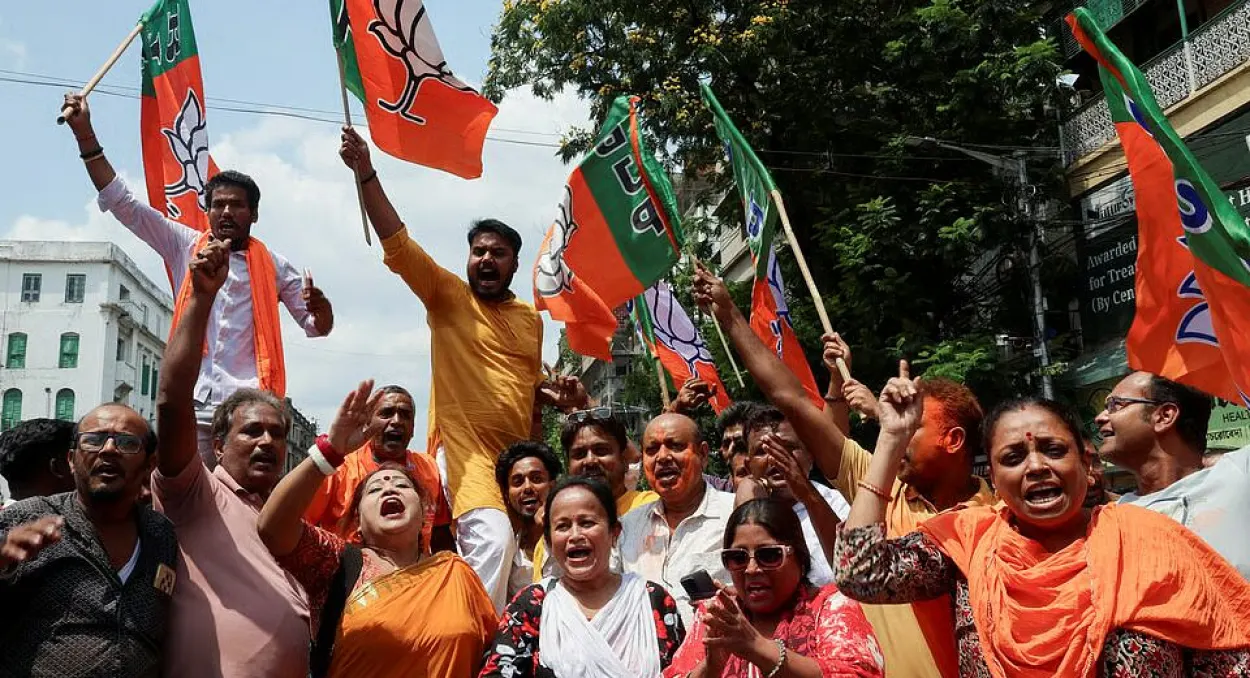
Photo: Collected
India's ruling Bharatiya Janata Party (BJP) spent nearly half of its total campaign funds for five state and union territory assembly elections this year on West Bengal alone, according to official data submitted to the Election Commission of India (ECI).
The party expended approximately 287 crore rupees in its maiden bid to secure power in West Bengal, making up a significant portion of the total 529 crore 38 lakh rupees spent across Assam, Tamil Nadu, Kerala, and the union territory of Puducherry during the mid-year elections. Despite these massive expenditures, the BJP reported retaining a substantial party fund of 7,689 crore 6 lakh rupees, an amount that surpasses the combined annual income of India's six major national political parties. Furthermore, the party declared receiving 1,494 crore rupees in donations during the election period.
Detailed financial reports filed by the BJP outline that the party spent 217 crore 16 lakh rupees on general electoral campaigns in West Bengal, alongside 69 crore 83 lakh rupees allocated for candidates. This included 59 crore 80 lakh rupees distributed directly to nominees, bringing the state's total expenditure to 286 crore 99 lakh rupees. In comparison, the party spent 96 crore 26 lakh rupees in Assam, 82 crore 67 lakh rupees in Kerala, 51 crore 56 lakh rupees in Tamil Nadu, and 11 crore 89 lakh rupees in Puducherry.
While the Election Commission of India enforces strict spending ceilings for individual candidates in parliamentary and assembly elections, political parties face no such statutory expenditure limits or regulatory caps. However, parties are legally mandated to submit comprehensive financial accounts to the ECI following the conclusion of each election cycle.
The BJP's party coffers have expanded exponentially over the past 12 years since assuming power at the federal level in New Delhi. To promote transparency and curb the influence of black money in politics, the BJP-led federal government introduced the controversial electoral bonds scheme, announced in the 2017 federal budget and implemented in 2018.
Under the now-defunct system, any Indian citizen or corporate entity could purchase electoral bonds from the state-owned State Bank of India in denominations ranging from 1,000 to 10 million rupees. These anonymous bonds were then deposited into the bank accounts of political parties of choice, which could encash them within 15 days. Because the bonds bore no purchaser identification, neither the general public nor the ECI had access to donor details, with information restricted solely to bank authorities.
Opposition parties consistently accused the ruling BJP of leveraging this anonymity for disproportionate financial gains, leading to legal challenges in India's highest court. On February 15, 2024, a five-judge constitution bench of the Supreme Court of India, led by former Chief Justice D. Y. Chandrachud, unanimously struck down the electoral bonds scheme. The Supreme Court ruled that the mechanism violated citizens' right to information and fostered a culture of quid pro quo, wherein corporate donors could potentially secure governmental favors in exchange for anonymous funding.
More News from World