

US President Trump Halts Joint Airstrikes with Saudi Arabia Against Yemen Houthis Amid Policy Dilemmas
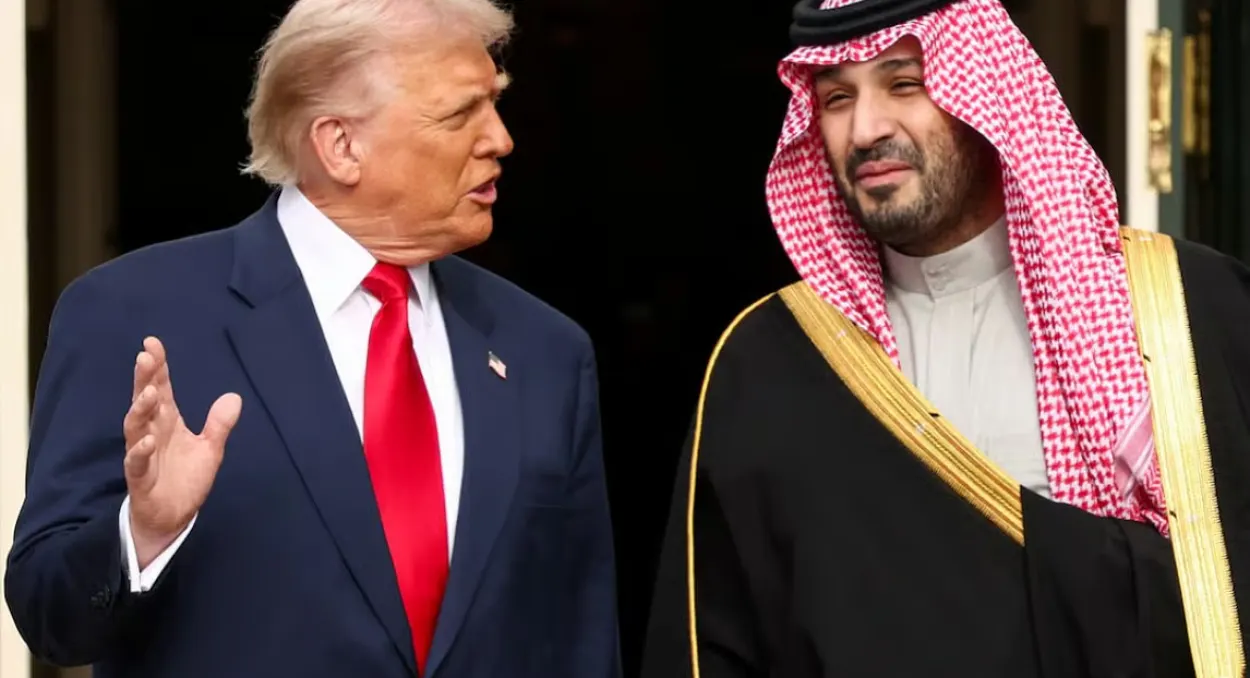
Photo: Collected
United States President Donald Trump has decided, at least for now, not to join Saudi Arabia in joint airstrikes against the Houthi movement in Yemen, despite facing intense internal conflict and pressure from Riyadh, according to US administration officials.
The question of whether to order the US military to strike Houthi positions at the request of Saudi Arabia had weighed heavily on President Trump for two consecutive weeks. Engaging in such an offensive risked opening a new front in the ongoing conflict with Iran, a confrontation that has persisted for nearly seven months while triggering global economic shocks.
Amid persistent Middle Eastern volatility, the Iran-backed Houthi armed group launched operations against the Saudi-backed government forces in Yemen and carried out attacks inside Saudi Arabia. This prompted Riyadh to appeal for US military assistance, leaving President Trump deeply hesitant.
The matter resurfaced last Thursday when Saudi Arabia's Crown Prince Mohammed bin Salman, a key partner in the US military campaign against Iran, telephoned President Trump to urgently press for intervention. Just a day prior, President Trump had informed his advisers that he did not favor launching strikes against Houthi targets in Yemen. However, following the conversation with the Saudi Crown Prince, he reversed his stance and directed the US Department of Defense, the Pentagon, to prepare for airstrikes against the Houthis.
By Sunday afternoon, however, President Trump seemingly changed his mind once again. Administration officials, speaking on the condition of anonymity due to a lack of authorization to discuss military planning, stated that no US airstrikes against the Houthis would take place, at least for the time being.
The White House press office declined to officially comment on the discussions. A senior administration official stated only that the United States maintains a defense agreement with Saudi Arabia and will always protect its allies.
According to a senior administration official, the majority of President Trump's inner circle held deep reservations or were outright opposed to joining the Saudi-led fight against the Houthis, primarily due to the strain the US military is already facing from the ongoing conflict with Iran.
Two US officials noted that President Trump’s decision to pull back or at least delay strikes on Houthi targets came at a critical juncture, with military commanders having already approved target lists and troops loading ordnance onto designated US warplanes in preparation for the mission.
On Sunday morning, during a telephone interview with US media outlet Fox News, President Trump told journalist Trey Yingst that he was still in the decision-making process regarding the broader conflict with Iran. Regarding the Houthis, the US President stated that America maintains communication channels with the group, adding that the Houthis had thus far agreed to refrain from fighting US forces.
This fluctuating stance highlights the dilemma confronting President Trump. While his assertion that the Houthis have refrained from targeting US ships is accurate, the group's continued military campaigns against Saudi Arabia have created a complex security predicament for Washington.
Some US military officials have argued that Washington relies on the support of the Saudi monarchy in its confrontation with Iran. Conversely, Saudi officials have demonstrated a willingness to withhold cooperation if US backing is not reciprocated. In May, for instance, Saudi Arabia denied the United States permission to use its airspace and domestic airbases, severely hindering US military plans to escort commercial oil tankers through the Strait of Hormuz.
Officials indicated that had the United States ultimately joined the Saudi offensive, the operation would have coincided with a newly planned ground campaign by Yemeni government forces—a force that has frequently proven ineffective against the Houthis.
The Houthis have been engaged in a protracted conflict against Saudi Arabia and the internationally recognized government of Yemen since 2014. Although a 2022 ceasefire temporarily reduced violence, the Houthis declared a blockade on Saudi shipping in the Red Sea this summer, escalating regional tensions and compounding the wider Middle Eastern conflict.