

Germany Faces Political Polarization As Far Right Gains Ground And Immigrant Origin Lawyer Nears Berlin Mayoralty
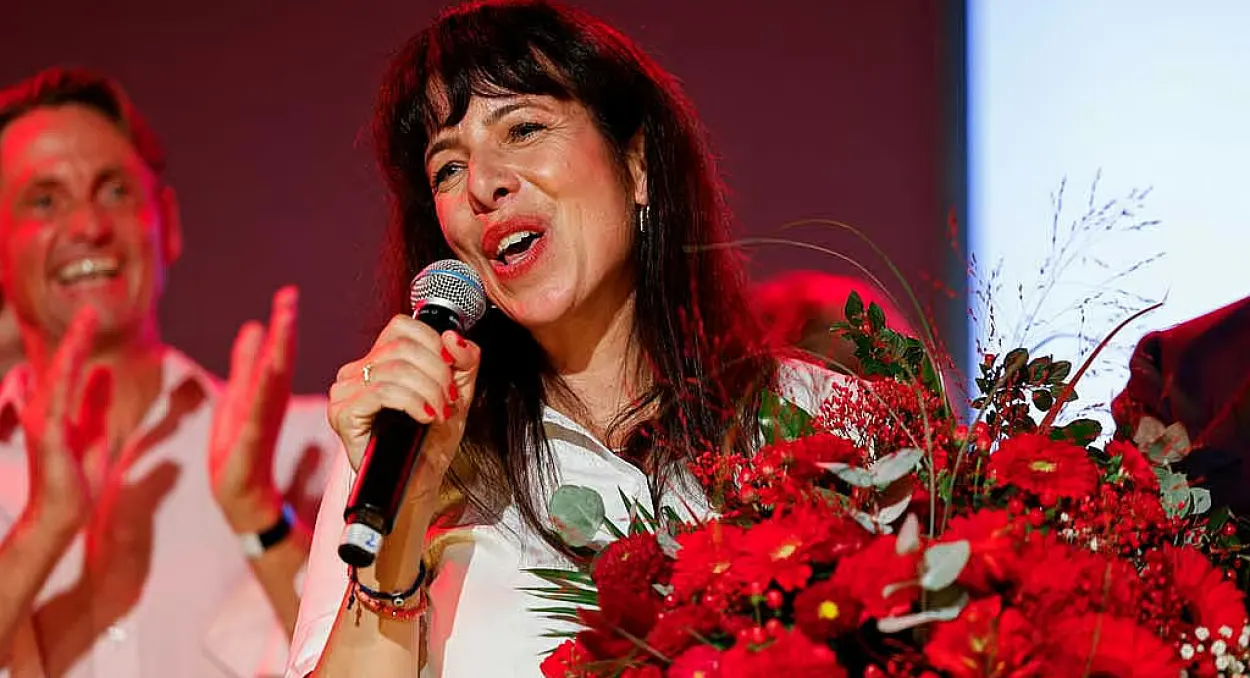
Photo: Collected
Political instability and acute anxiety have gripped Germany over the past few weeks, driven by the continuous rise of the anti-immigration and far-right party Alternative for Germany (AfD). This upward trajectory of the far-right group could not be halted even in the state elections held on Sunday in Mecklenburg-Vorpommern.
However, a contrasting picture has emerged in the German capital of Berlin, where a woman with an immigrant background is on the path to potentially becoming the governing mayor for the first time. With the leftist party Die Linke advancing in the state elections, its top candidate and Turkish-descent lawyer Elif Eralp faces strong prospects of becoming the head of Berlin's city government. This dual trend in German politics has sparked fresh debate regarding the nation's democratic politics and future trajectory.
Political turmoil intensified in Germany following the September 6 elections in the eastern state of Saxony-Anhalt, where the AfD secured a record victory with 43.8 percent of the vote. The party maintained its strong momentum in Sunday's election in Mecklenburg-Vorpommern.
Preliminary final results show that the AfD claimed first place in Mecklenburg-Vorpommern by securing 38.2 percent of the vote. Their closest rival, the center-left Social Democratic Party (SPD), garnered 35.5 percent. Meanwhile, German Chancellor Friedrich Merz's center-right Christian Democratic Union (CDU) suffered a major blow, failing to cross the minimum 5 percent threshold by securing only 4.9 percent, thereby being completely eliminated from the state parliament. Citing the urgency of his presence in Berlin amid the situation, Chancellor Merz even cancelled a scheduled trip to New York to attend the United Nations General Assembly session, though his party ultimately failed to secure parliamentary representation.
Analysts are reluctant to attribute the AfD's success solely to economic crises. In an analysis published in the German newspaper Die Zeit, Jochen Mueller, a political scientist at the University of Greifswald, stated that the rise of the AfD in former East German states cannot be explained merely by regional deprivation or weak rural infrastructure.
According to Mueller, public perceptions surrounding immigration and anxieties over cultural change play a greater role than direct experiences with immigration. Fears of losing local traditions and cultural concerns have become major political capital for the ultra-right, compounded by long-standing voter distrust in traditional political parties, leaving voters firm in their support despite controversies surrounding the AfD.
While anti-immigration factions celebrate victories across the states, 43-year-old lawyer Elif Eralp is poised to make history in Berlin. Once formal state parliament elections and coalition government formation processes are concluded, she could become the governing mayor of Berlin for the next four years.
Eralp's family migrated to Germany in the wake of political persecution following the September 1980 military coup in Turkey. Born in Munich in 1981, her father worked as a physician.
After completing her legal studies at the University of Hamburg, Eralp passed her second state legal examination in 2009. During her education and legal training period, she served at a local court in Hamburg, the office of the United Nations High Commissioner for Refugees (UNHCR) in Berlin, and the German Embassy in Ottawa, Canada.
Upon moving to Berlin in 2010, Eralp began working as a legal and political policy advisor for the Die Linke parliamentary group in the German Bundestag. She was subsequently elected as a member of Berlin's House of Representatives in 2021. Now, running as the top candidate for Die Linke in the state elections, she is in line to become the governing mayor of Berlin.