


Two Years After Bangladesh Uprising, Iconic Protesters Voice Growing Disillusionment over Unmet Reform Goals
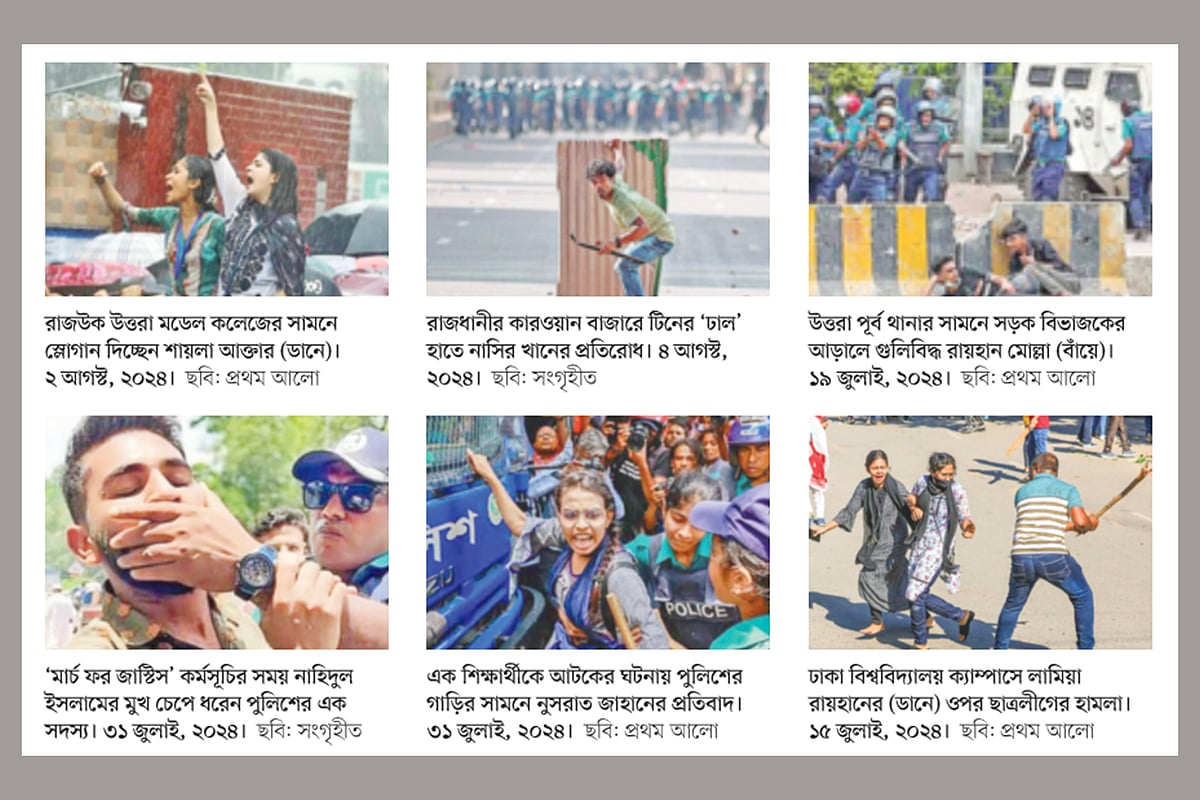
Photo Collected
Two years after the 2024 July uprising that dismantled the Awami League government, the figures who became the iconic faces of the movement find themselves grappling with a profound sense of disillusionment. While the overthrow of the regime and the restoration of voting rights are viewed as historic milestones, these activists argue that the core aspirations of the revolution—state reform, the rule of law, and the eradication of systemic corruption—remain largely unfulfilled.
The voices of seven individuals who rose to prominence during the protests—ranging from students shielding others from police to those carrying the bodies of the fallen—reflect a collective sentiment that the “new Bangladesh” envisioned by protesters has yet to materialize. Many feel that the movement has been sidelined by partisan interests, leaving the families of martyrs and the injured to navigate their recovery with little institutional support.
বিজ্ঞাপন
Shayla Akter Shoshi, a Brac University student whose image during a rain-soaked protest in Uttara became a symbol of the uprising, expressed deep frustration with the status quo. Despite the fervor of the movement, she believes the systemic rot remains intact. For Shoshi and several others, the transition has merely replaced one set of political actors with another, failing to honor the sacrifice of those who died for a more equitable state.
This sentiment is echoed by others, such as Mohammad Nasir Khan, a sanitation worker who famously confronted police with a makeshift shield made of corrugated tin. While Nasir acknowledges that the interim government requires time to implement complex reforms, he remains critical of the slow progress in addressing extortion, law and order, and the lack of recognition for wounded “July warriors” in official state records.
বিজ্ঞাপন
For individuals like Raihan Molla, who was shot by police while protesting on the Dhaka-Mymensingh highway, the path forward must be defined by accountability. Raihan, who is currently documenting the uprising’s history, maintains that the revolution’s goal was to establish a transparent, meritocratic system. He contends that until justice is served for the killings and corruption is curtailed, the spirit of the revolution will remain stifled.
Others, including student activist Nahidul Islam and Stamford University student Nusrat Jahan, highlighted the dangers of the movement being appropriated by specific groups. They warn that failing to deliver on the promises of the uprising risks alienating the youth generation, potentially setting a precedent for future instability.
Some, like Mim Akter—who now works with the July Shaheed Smriti Foundation—and Lamia Raihan, whose image of fleeing campus violence went viral, noted the irony of their icons being used in commemorative programs while the structural issues they fought against persist. They collectively argue that the true measure of their sacrifice will not be found in historical images, but in the establishment of a state where equality and the rule of law are the standard, rather than the exception.
0%
0%
0%
0%