

The finance minister compared the economy of the last year of Khaleda and Hasina governments in the parliament
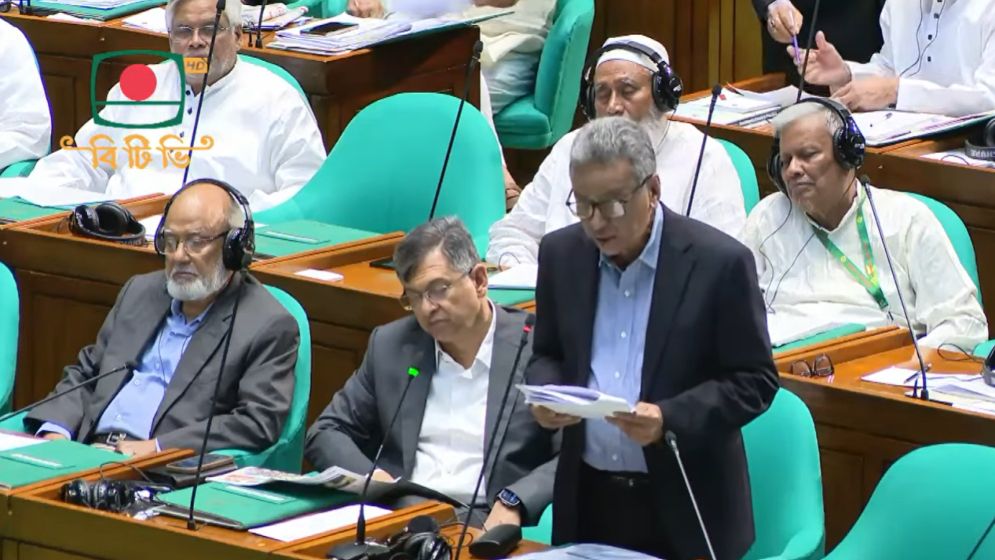
Photo Collected
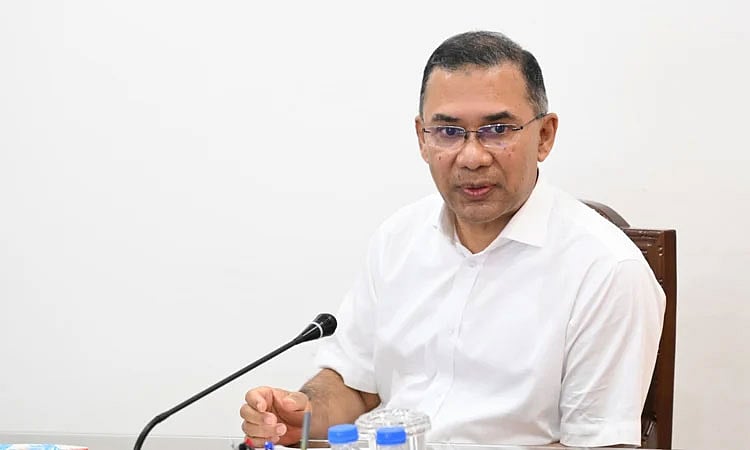
Finance Minister Amir Khosru Mahmud Chowdhury presented a comparative picture of the economy of the last year of the Sheikh Hasina government.
Finance Minister Amir Khosru Mahmud Chowdhury presented a comparative picture of the economy of the country in the last year of the BNP-Jamaat coalition government led by Khaleda Zia two decades ago with the economy of the last year of the Sheikh Hasina government.
বিজ্ঞাপন
He said that although the size of the economy has increased over the span of a century and a half, several structural weaknesses have gradually become apparent.
On Friday (10 April) morning, Speaker Hafiz Uddin Ahmed presided over the session of the parliament in the 300 rules, he made a statement in this regard.
বিজ্ঞাপন
According to this rule, a minister can make a statement on matters of public interest with the permission of the Speaker. There is no opportunity to ask any questions at this time.
Amir Khusru Mahmud Chowdhury said the BNP came to power with an absolute majority by exercising people’s suffrage in a “free and fair election” and believes in “accountability, transparency and accountability” to the people.
He described the rule of the Awami League government as a period of “fascist government mismanagement, wrong policies and ruined economy”.
‘Growth down, inflation up’
According to the data provided by the Finance Minister, the GDP growth at constant prices was 6.78 percent in the last financial year (2005-06) under the leadership of late Khaleda Zia. At that time inflation was 7.17 percent.
He said, at the end of the fiscal year 2023-24, the growth has come down to 4.22 percent, and inflation has increased to 9.73 percent.
The finance minister also highlighted the slowdown in the growth of the industrial and agricultural sectors.
While describing the country’s employment picture, Amir Khosru Mahmud Chowdhury said that due to lack of sufficient jobs in the industry and service sector, a large part of the youth has been pushed into agriculture. This has increased pseudo-unemployment and reduced productivity.
He said, in the last decade, the value addition in the agricultural sector has decreased by about 4 percent, but the employment in this sector has increased by 4.8 percent. On the other hand, the contribution of industry and service sector has increased but the employment has decreased.
Currently, the agriculture sector contributes 11.6 percent of the total national value addition, but about 41 percent of the total employment is dependent on this sector, said the finance minister. He thinks that this situation is indicative of the risk of ‘growth without employment’.
Finance Minister Amir Khosrow also spoke about the balance of investment and savings.
According to the data provided by him, during the period 2001 to 2006, national saving was 29.94 percent of GDP and total investment was 28.75 percent. On the other hand, investment increased to 30.70 percent of GDP in 2023-24, but savings decreased to 28.42 percent.
According to the Finance Minister, reliance has been placed on foreign sources to meet this shortfall, thereby increasing pressure on the external sector.
The finance minister said that in 2005-06, the value of the rupee against every dollar was 67.2 taka. In 2023-24 it will be 111 taka, and in 2024-25 it will stand at 121 taka.
He said, due to continuous devaluation, the value of rupee has almost halved in 15 years.
The finance minister also portrayed the slowness in currency supply.
In fiscal year 2005-06, gross money supply or M2 growth was 19.3 percent, reserve currency growth was 23.9 percent. In FY 2023-24, M2 growth slowed to 7.7 percent, while reserve currency growth was 7.9 percent.
He said, in June 2006, the growth of domestic wealth was 19.5 percent, which will decrease to 6.7 percent in 2025.
Amir Khosru Mahmud Chowdhury said that the growth of domestic credit has decreased from 21.1 percent to 8 percent, which indicates slow investment in the private sector and liquidity pressure in the banking sector.
He said that the growth of credit in the private sector has come down from 18.3 percent in 2005-06 to 9.8 percent in 2023-24 and 6.5 percent in 2024-25.
Amir Khosru Mahmud Chowdhury, Finance Minister of the Tariq Rahman government, thinks that the desired progress has not been made in revenue collection.
According to the data provided by him, the total revenue in 2005-06 was Rs 439 billion, which is 8.2 percent of the GDP. Expenditure at that time was 11.1 percent of GDP, resulting in a budget deficit of 2.9 percent.
In 2023-24, the revenue will increase to 4 thousand 90 billion rupees, but it remains at 8.2 percent of GDP. At the same time expenditure rose to 12.2 per cent, resulting in a deficit of 4.05 per cent.
Amir Khosru said that not only the deficit increased, but the quality of expenditure was also questionable. In addition to overestimation in mega projects, feasibility studies have not been done properly in most cases. As a result, people could not enjoy the expected benefits of that investment. Lakhs of crores of rupees have been smuggled abroad through looting, which has been sadly reflected in the report of the ‘White Paper Drafting Committee’ formed by the Interim Government.
Interest cost picture ‘worrisome’
Finance Minister Amir Khusru Mahmud Chowdhury commented that there has been an ‘unhealthy change’ in the structure of government debt during the Awami League government.
According to his data, total public debt was 37.8 percent of GDP in 2005-06. Out of this, domestic debt was 14.5 percent and foreign debt was 23.3 percent. At that time the amount of interest payment was 85 billion rupees.
In 2023-24, the ratio of total debt remained almost the same, but domestic debt increased to 21.5 percent, and external debt to 17.1 percent.
The finance minister said that a part of the foreign loans are non-concessional or market-based in many cases, which has created pressure on the stability of the loans.
Describing the picture of the interest expenditure of the Sheikh Hasina government as ‘worrisome’, he said that the interest payment has increased from Tk 85 billion in 2005-06 to Tk 1,147 billion in 2023-24. That means more than 13 times increase.
Highlighting the picture of the external sector, the finance minister said that in 2005-06, exports were 10.5 billion dollars and imports were 13.3 billion dollars. At that time, export growth was 21.6 percent, import growth was 12.2 percent. Remittances were $4.8 billion and reserves were $3.5 billion.
In 2023-24, exports increased to 40.8 billion dollars and imports to 63.2 billion dollars, but the growth of these two indicators was negative, he said.
At the same time, remittances increased to 23.9 billion dollars, but due to hundi and money laundering, the reserves decreased to about 20 billion dollars, he claimed.
Amir Khosru also gave the information that remittances increased to 30.3 billion dollars during the interim government and gross reserves increased to 33.2 billion dollars last December.
Finance Minister Amir Khosru Mahmud Chowdhury commented that despite the increase in per capita income, its benefits have not reached everyone.
He said, despite the increase in income, the bulk of that income was in the hands of a handful of beneficiaries.
As an indicator of inequality, he highlighted the data of Bangladesh Bureau of Statistics household income and expenditure survey. According to him, the income-based Gini coefficient was 0.467 in 2005, which increased to 0.499 in 2022.
In 2005, the income of the richest 5 percent was 35 times that of the poorest 5 percent, which increased to 81 times in 2022, he said.
Amir Khosru Mahmud Chowdhury also commented that inclusive development has been hindered as the scope and amount of allowances of social security programs are not consistent with inflation.
The Finance Minister remarked in Parliament that the financial sector is on the ‘brink of collapse’ due to lack of good governance in the banking sector, rising delinquencies and weak supervision.
According to the data provided by him, in December 2005, the default rate in the overall banking sector was 13.6 percent. In December 2024, it increased to 20.20 percent.
He said that the capital adequacy ratio or CAR has come down from 7.3 percent in 2005 to 3.08 percent in 2024.
Finance Minister Amir Khosru said, besides the lack of transparency and accountability in revenue administration, there was also a problem in information management for a long time.
He said there was a long-standing data breach of $10 billion exaggeration in exports, which was recently rectified.
He commented that due to the weakness of the market management and control structure, abnormal price increase and disruption of the supply system have occurred.
Finance Minister Amir Khosru Mahmud Chowdhury also highlighted the initiatives and plans taken by the current government in the statement.
He said, with the aim of non-discriminatory socio-economic development and increasing state capacity, initially 50 lakh ‘family cards’ have been given, which will be given to all families gradually. Piloting of ‘Krishak Card’ for actual farmers, fishermen and livestock farmers has started.
Agriculture loan waiver with interest up to Tk 10,000 has already been implemented, said the finance minister. Besides, Amir Khosru Mahmud Chowdhury highlighted the goal of creating 1 crore jobs. Among them, one million jobs in the ICT sector, modernization of road-rail-navigation and port infrastructure, one million jobs in green economy and eco-tourism, 5 lakh jobs by forming regional creative hubs, launch of the ‘Created in Bangladesh’ brand, new budding sports program, increasing the tax-GDP ratio to 15 percent by 2035 and making Bangladesh a trillion dollar economy by 2034, he highlighted.
Finance Minister Amir Khosru Mahmud Chowdhury also told the parliament that as part of the government’s development philosophy, initiatives have been taken to identify and cancel unimportant, long-running and unfunded ‘zombie’ projects.
He said steps are being taken to increase the quality of project feasibility study, adhere to implementation period and strengthen monitoring.
He also talked about transparency in revenue collection, automation of taxation system, reduction of indebtedness, reform of the legal framework of the central bank, restoration of good governance in the banking sector, communication with international organizations to recover money laundered, SME-friendly credit environment and expansion of social security.
Middle East war ‘new stress’
He said war had erupted in the Middle East just 10 days after taking office, creating new uncertainty in global energy markets, supply chains and international trade.
According to Amir Khosro, the prices of fuel oil and LNG have more than doubled in the international market. As a result, the government will have to pay more than Tk 36 thousand crores in addition to the fixed subsidy on electricity, energy and LNG from March to June.
The finance minister believes that as the budget deficit will increase, the additional import costs of about 3 billion dollars will put pressure on foreign currency reserves.
Amir Khosru Mahmud Chowdhury also highlighted in the parliament the initiative of closing government and autonomous offices one hour earlier, increasing the use of daylight, controlling the temperature of AC, closing markets and supermalls by 7 pm, collecting energy from alternative sources, releasing subsidy money on time and extra budget support to deal with the situation.
He said that despite the high international price of energy, keeping in mind the “suffering of the people”, the government has maintained the previous price without adjusting the price for the time being.
Stating that the work of budget formulation for 2026-27 financial year has started, Finance Minister Amir Khosru said that people’s expectations about the first budget of the new government are high, but there are also limitations due to inherited problems.
Our goal this time is not just growth, but building a sustainable, transparent and inclusive economy.
Source: Jugantor
0%
0%
0%
0%