


Quota Reform Protests Shift to Mass Uprising Following Fatal Crackdown
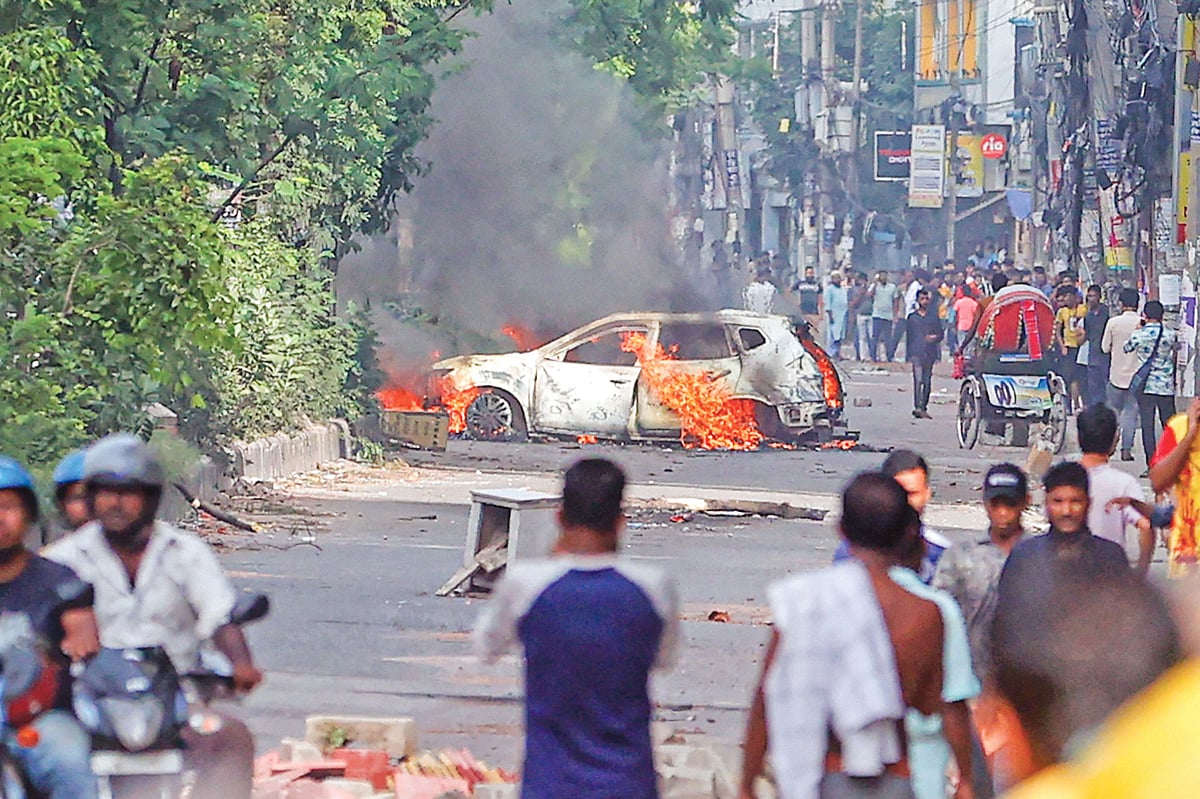
Photo Collected
The movement for quota reform in Bangladesh, which began as a peaceful protest by students and job seekers, escalated into a nationwide uprising following a brutal state-led crackdown. As the government intensified its efforts to suppress the demonstrations through violence, the movement gained momentum, drawing widespread public support and evolving into a broader demand for accountability.
According to media reports, the situation turned lethal as law enforcement agencies, supported by activists from the then-ruling Awami League and its affiliated wings, opened fire on protesters. By July 20, 2024, the death toll from the government’s crackdown had reached 177, transforming the nature of the protests from a localized demand for policy reform into a movement seeking justice for the fallen.
বিজ্ঞাপন
Even as the Supreme Court’s Appellate Division delivered a verdict on July 21, 2024, mandating that 93 percent of government jobs be filled based on merit—with the remaining 7 percent reserved for quotas—the ruling failed to pacify the public. The sentiment of the protesters was encapsulated by the slogan, “Keep your quotas, give us back our brothers,” as the focus shifted from bureaucratic changes to the demand for accountability for the lives lost.
The unrest occurred under the shadow of a nationwide curfew and the deployment of the military. On the day the court ruling was announced, 19 more people were killed, including seven individuals who succumbed to previous injuries. The movement’s coordinators subsequently declared that the protests would continue, demanding justice for the indiscriminate killing of demonstrators.
বিজ্ঞাপন
The government’s crackdown extended to the targeted abduction and torture of student leadership. Notably, Nahid Islam, a key coordinator of the movement who later became a member of the interim government, was seized by intelligence agents from a residence in Dhaka on July 19. He was subjected to severe physical abuse before being abandoned on the side of a road in the Purbachal area early on July 21.
The roots of the 2024 conflict trace back to a protracted legal battle over the quota system. Following widespread protests in 2018, the government had issued an executive order abolishing all quotas. However, in 2021, descendants of freedom fighters challenged this order in the High Court. On December 6, 2021, the High Court struck down the circular that had abolished the quotas, effectively reinstating the previous system.
The government appealed that decision, but tensions spiked when the Supreme Court postponed a hearing on the state’s petition for a stay on the High Court’s ruling, originally scheduled for July 4. This judicial delay, combined with escalating state violence, served as the catalyst for the sustained and historic mass uprising that ultimately redefined the nation’s political landscape.
0%
0%
0%
0%


