Prosecution accuses former Bangladesh police chiefs of staging militant killings to silence dissent
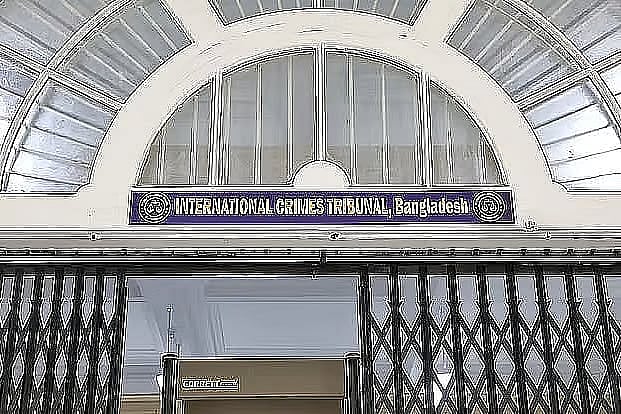
Photo Collected
The International Crimes Tribunal-1 in Dhaka heard allegations on Sunday that the previous Awami League government orchestrated staged “militancy dramas” to execute political critics under the guise of the global “War on Terror.” Prosecution lawyer Gazi Monawar Hossain Tamim presented the claims during a hearing on the formal framing of charges in a case involving the 2016 extrajudicial killings of seven individuals in Gazipur’s Joydebpur.
The case implicates 10 high-ranking former security officials, including former Inspector General of Police (IGP) AKM Shahidul Hoque, former IGP Mohammad Javed Patwary, former Dhaka Metropolitan Police (DMP) Commissioner Asaduzzaman Mia, former Counter Terrorism and Transnational Crime (CTTC) chief Monirul Islam, and former Detective Branch official Mohammad Harun-or-Rashid. While Hoque and Mia were produced in court from custody, the remaining defendants remain at large.
The prosecution argued that the state deliberately used law enforcement agencies to eliminate dissenting voices. According to the prosecution, victims were often targeted for social media posts criticizing the government. As a case in point, prosecutor Tamim cited the killing of a madrasa student named Ibrahim, who was abducted and held at a house in Joydebpur alongside six others before being killed in a staged counter-terrorism raid. The prosecution asserted that these individuals had no prior criminal records or links to extremism, noting that since the fall of the Awami League administration, reports of such militant activity have vanished.
The hearing further detailed the alleged involvement of the Special Weapons and Tactics (SWAT) unit, which operated under the CTTC. Tamim claimed that SWAT members were trained and equipped by the United States but were utilized to execute pre-selected individuals. He stated that the SWAT teams were often unaware of the victims’ identities, simply following orders to conduct raids and shoot the occupants of targeted locations.
The prosecution emphasized that the responsibility for these actions rests with the “superiors” who formulated the policies and issued the directives. These senior officials allegedly created an environment where the judiciary was discouraged from reviewing cases involving claims of militancy, leading to prolonged imprisonment without trial for many individuals who might otherwise have faced standard legal proceedings.
The tribunal has scheduled the next hearing for August 10, when the defense counsel is expected to present their arguments regarding the formal framing of charges.
0%
0%
0%
0%