



Heavy Monsoon Rains Trigger Flooding and Landslides Across Cox’s Bazar
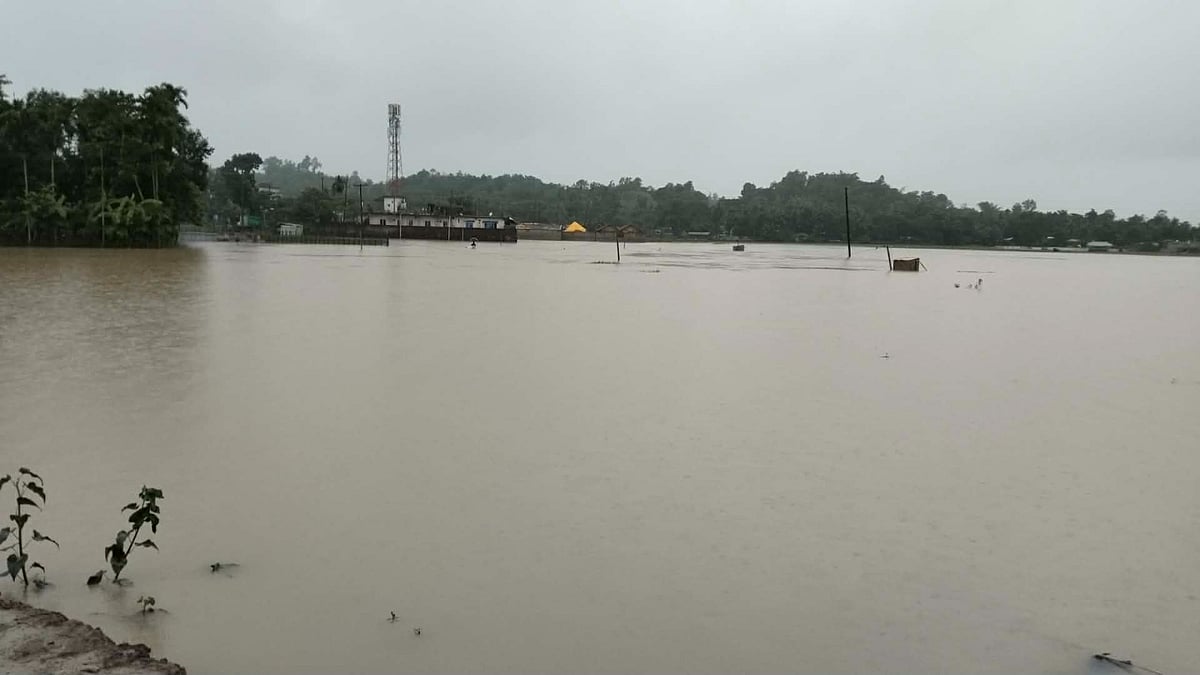
Photo Collected
Persistent heavy rainfall has inundated at least 33 unions across nine sub-districts in Cox’s Bazar, leaving thousands of residents stranded as rising river levels and mountain runoff trigger widespread flooding. According to the local meteorological office, the district recorded 129 millimeters of rainfall in the 24 hours leading up to Tuesday morning, with forecasts suggesting the downpours will continue for at least two more days.
The deluge has caused significant devastation, with the Matamuhuri and Bakkhali rivers overflowing and submerging large swaths of Ramu and Chakaria. The flooding, exacerbated by heavy runoff from the hills, has destroyed or damaged hundreds of homes. Tragically, the extreme weather has claimed 10 lives, including eight Rohingya refugees and one local resident killed in landslides, and a child in Pekua who died when a mud-walled house collapsed.
বিজ্ঞাপন
In response to the escalating crisis, local authorities have launched emergency evacuation operations. District Administrator Md. Abdul Mannan stated that approximately 1,000 people living in high-risk hillside areas in Cox’s Bazar city, Ramu, Ukhiya, and Teknaf have been moved to safer locations. Officials are utilizing public address systems to urge residents in vulnerable zones to evacuate, as forecasters warn that continued rain will heighten the risk of further landslides.
Teknaf remains the hardest-hit area, where floodwaters have trapped more than 500 families in Hnila, Whykong, Sabrang, and Baharchhara unions. Local officials report that hundreds of makeshift homes have been damaged and essential road infrastructure has been compromised. The severe weather and turbulent sea conditions have also severed transportation links to St. Martin’s Island for five consecutive days, raising concerns about potential food shortages among residents and stranding students who were unable to reach the mainland to sit for their Higher Secondary Certificate (HSC) examinations.
বিজ্ঞাপন
In the district center, urban infrastructure has buckled under the rainfall, causing severe waterlogging in major tourist and residential hubs, including the hotel-motel zone, Kolatoli, and Sugandha. The damage extends to rural infrastructure as well; in Kutubdia, a dilapidated bridge on the Lemshikhali-Koiyarbil road collapsed, effectively isolating two communities.
While District Administrator Mannan noted that water levels have begun to recede in some areas, authorities remain on high alert. The district administration has appealed to the Ministry of Education to provide alternative examination arrangements for the stranded students and is coordinating with the Coast Guard to ensure future access for those affected by the transport blockade.
0%
0%
0%
0%