
Government declares new eco-park in Mymensingh Santoshpur forest sparking conservation hopes and displacement fears among local farmers
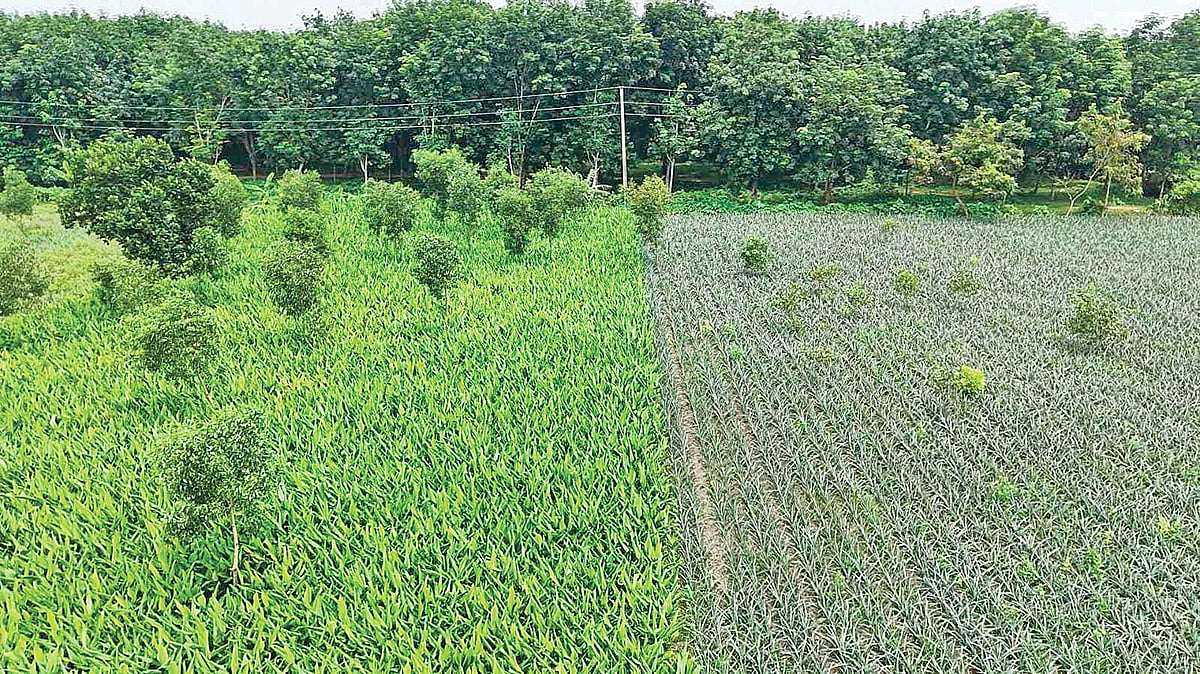
Photo Collected
The government has designated 565 acres of the Santoshpur forest in Mymensingh’s Phulbaria Upazila as an eco-park, sparking both optimism for environmental restoration and anxiety among local residents regarding their livelihoods and potential displacement. The Ministry of Environment, Forest and Climate Change issued a notification on August 3, formalizing the status of the land under the Wildlife (Conservation and Security) Act to protect biodiversity, facilitate research, and provide public recreation.
Historically, the forest covered approximately 3,659 acres, characterized by expansive natural Sal and Gajari trees. Over time, human encroachment and agricultural expansion have reduced the natural Sal forest to roughly 50 acres. The remaining land now consists of social forestry projects, rubber plantations, and fruit and medicinal tree gardens managed under various government initiatives. According to forest department data, approximately 1,500 people are currently involved as partners in these social forestry programs.
Local farmers and participants in the social forestry scheme fear that the development of the eco-park could lead to their eviction. Many residents have relied on the forest land for decades, cultivating pineapple, turmeric, bananas, and lemons. According to Phulbaria Upazila Agriculture Officer Nur Mohammad, these agricultural activities generate approximately 3 billion BDT in annual economic value. He suggested that the project would be more effective if it integrated local agriculture rather than displacing it.
Forest officials have sought to alleviate these concerns. Mymensingh Divisional Forest Officer Kazi Mohammad Nurul Karim emphasized that the development process would include the local community as partners. “We are implementing development work while involving local people,” he stated, noting that the forest department has successfully reclaimed 112 acres of previously encroached land over the past two years and has filed 42 cases related to illegal logging and land grabbing since the 2023-2024 fiscal year.
Plans for the eco-park include extensive infrastructure development, such as perimeter fencing, gates, observation towers, walking paths, and lake excavation for boating. The project is currently in the initial proposal phase, with officials aiming to attract visitors while supposedly maintaining the rights of the residents. Local Member of Parliament Md. Kamrul Hasan dismissed fears of mass displacement, asserting that the project would be implemented in consultation with the community.
Environmental experts view the initiative as a potential turning point for the area’s depleted wildlife, which once included wild boars, jungle cats, and langurs, but is now limited to a few smaller species. Professor M.A. Farooque of the Bangladesh Agricultural University noted that while the eco-park is a positive step, authorities must ensure it does not evolve into a purely commercial tourist hub at the expense of ecological integrity and local socio-economic stability.
0%
0%
0%
0%
More News from Local