


A Mothers Grief Remains Amidst New Walls: The Lingering Legacy of Student Martyr Abu Sayed
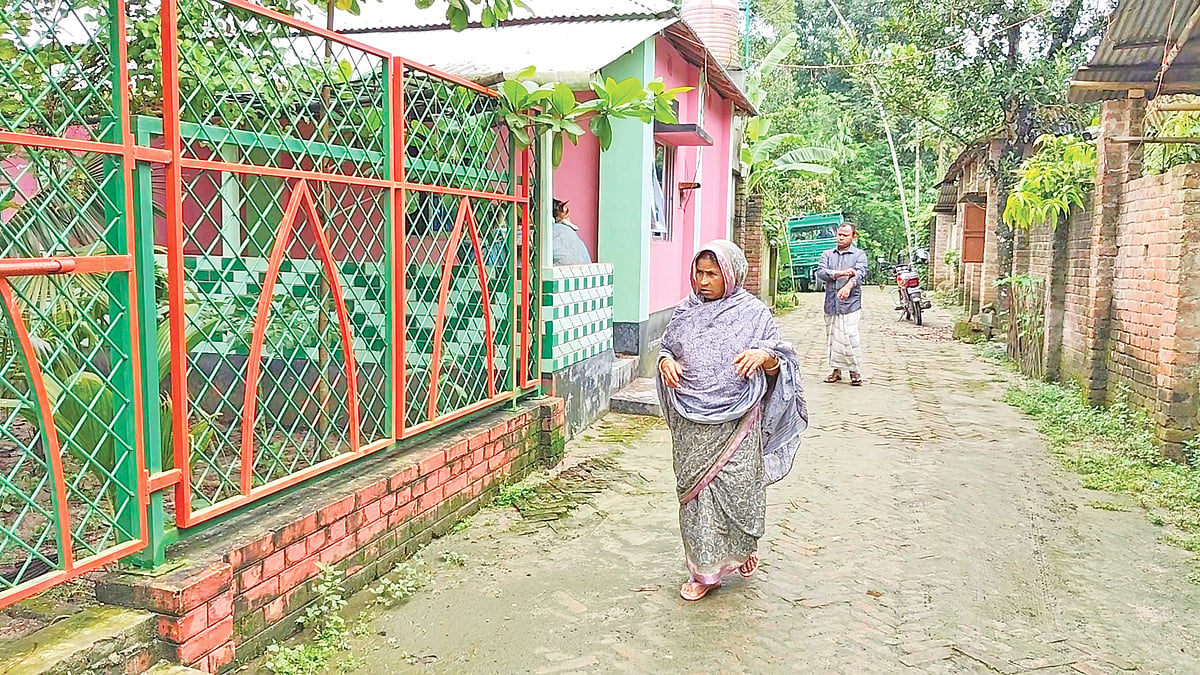
Photo Collected
In the quiet village of Babunpur, located in the Pirganj sub-district of Rangpur, three freshly constructed pink brick houses with gleaming tin roofs stand as a stark, poignant monument to a life cut short. While these homes, built as part of state-sponsored support for the families of those killed during the July 2024 mass uprising, signal a transition from poverty to material stability, they offer little solace to the parents of Abu Sayed. For Monowara Begum and Mokbul Hossain, time remains frozen at the moment they learned of their son’s death.
Abu Sayed, a student of English at Begum Rokeya University, emerged as a defining figure of the anti-discrimination student movement that ultimately catalyzed a historic political transformation in Bangladesh. On July 16, 2024, the 25-year-old was killed by police gunfire near the university’s main gate. His death, which occurred alongside five others that day, became a visceral symbol of the movement’s resolve. His parents, who had viewed his academic success as their only path out of long-standing financial struggle, still grapple with a void that no amount of state aid can fill.
বিজ্ঞাপন
According to government records and reports from Prothom Alo, the families of martyrs from the uprising have received 3 million taka in savings certificates, alongside a monthly allowance of 20,000 taka. While these measures have eased the family’s economic burden, replacing their former mud house with a sturdy new structure, the emotional toll remains pervasive. Monowara Begum often finds herself clutching her son’s old clothes, still struggling to process the loss of the child who once dreamed of becoming a civil servant to uplift his family.
Legal proceedings following the killing have resulted in convictions, with the International Crimes Tribunal sentencing two individuals to death and three to life imprisonment on April 9, alongside varying sentences for 25 others. Despite these judicial developments, Mokbul Hossain has expressed reservations, emphasizing that the justice process will only hold meaning if the sentences are fully and swiftly executed.
বিজ্ঞাপন
Commemorating the second anniversary of his death, Begum Rokeya University has organized a series of events, including memorial lectures, prayer sessions, and a procession. Although the university laid the foundation stones for a memorial arch, a museum, and a commemorative monument in July 2025, construction has yet to commence. Addressing the delays, Vice-Chancellor Professor Shawkat Ali stated that work on the arch is scheduled to begin later this month, with the remaining projects to follow.
For the family in Babunpur, however, the official ceremonies and physical structures serve as distant echoes of a reality they live every day. Each time Mokbul Hossain visits his son’s grave, located just steps from their new home, he is reminded of the fundamental reversal of life’s natural order. “This was supposed to be the site of my grave,” he said. “Instead, I have had to bury my son here.”
0%
0%
0%
0%