
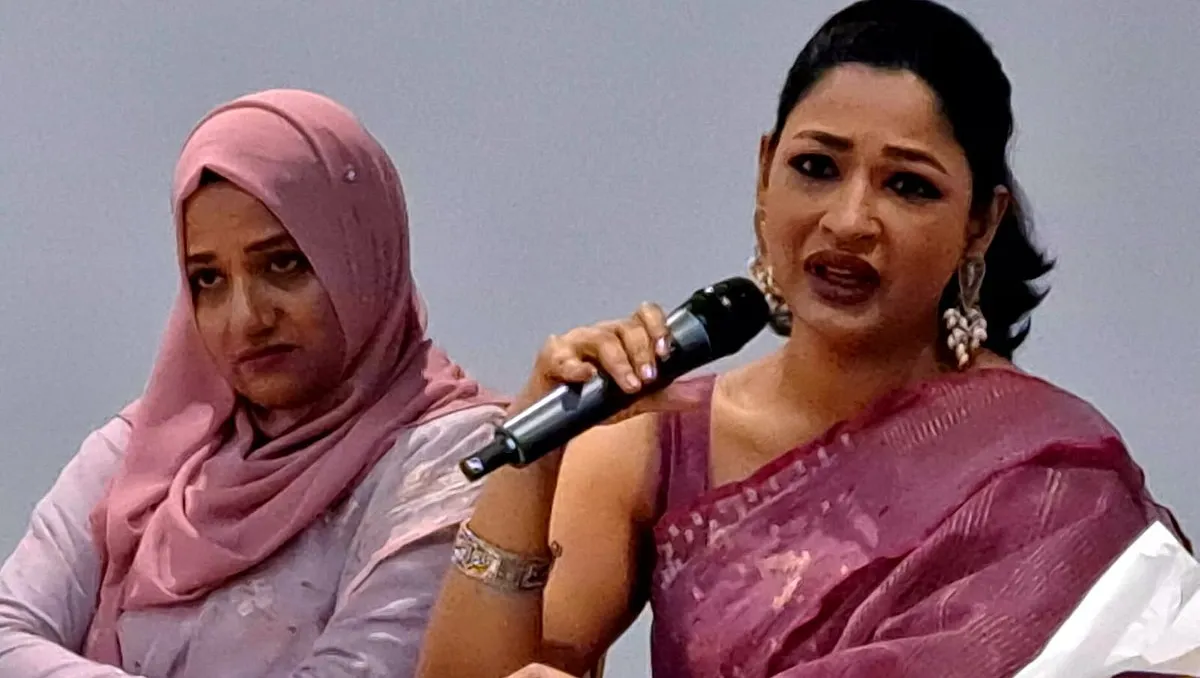
DHAKA — Four mothers shared harrowing accounts of their legal battles for child custody during a dialogue in Dhaka on Saturday, highlighting systemic challenges that often favor fathers under existing laws. The event, held at the Drikpath Bhaban in Shukrabad, was organized by the Coalition for Guardianship Expansion (CGE) and supported by the Nagorik Coalition to address the legal and social realities surrounding child custody.
Actress Azmeri Haque Badhon, who secured full legal guardianship of her daughter in 2024 after a seven-year court battle, underscored the inequity inherent in the current system. Following her 2017 petition, the High Court not only granted her custody but also ordered the formation of a committee of experts to establish comprehensive guidelines for guardianship of minors. Badhon noted that despite these legal victories, she continues to face hurdles in ensuring shared financial and emotional responsibility from the child's father.
Other speakers, including musician Warda Ashraf, educator Atkia Asima, and activist Kaniz Fatema Mithila, recounted personal experiences of abandonment, emotional manipulation, and prolonged court struggles. Ashraf described being forced to leave her home with only the clothes on her back in 2018, later enduring a custody battle during which her children were alienated from her. Asima shared the trauma her 11-year-old son faced due to mandated visitation sessions where he was subjected to negative rhetoric about his mother, prompting the child to write a poignant account of her struggle titled "The Struggle of a Single Mother."
Legal experts at the event pointed to the 1890 Guardians and Wards Act as the foundation of the current legal framework, which traditionally designates the father as the natural guardian, often relegating the mother to the role of caretaker. Advocate Dilruba Sharmin, convenor of the CGE, noted that these limitations persist across various religious personal laws, leaving mothers in a disadvantaged position.

Sarah Hossain, honorary executive director of the Bangladesh Legal Aid and Services Trust (BLAST), criticized discriminatory provisions that penalize mothers for remarriage, a standard not applied to fathers. She advocated for an urgent overhaul of these gender-biased statutes.
The discussion also featured broader policy recommendations. ActionAid Bangladesh Country Director Farah Kabir called for the establishment of a Uniform Family Code to govern marriage, divorce, and guardianship, emphasizing the need for positive parenting models. Member of Parliament and lawyer Fahima Nasreen expressed support for these legislative reforms, promising to raise the issue within the national assembly.
International perspectives were also represented, with Ambassador Irene Khan, Bangladesh’s Permanent Representative to the United Nations, suggesting the formation of a parliamentary caucus dedicated to women and children to facilitate policy changes and behavioral shifts. The event drew a wide range of human rights activists, legal professionals, and academics, all of whom demanded a more equitable system that ensures both parents share the responsibility of raising children, regardless of their marital status.




