
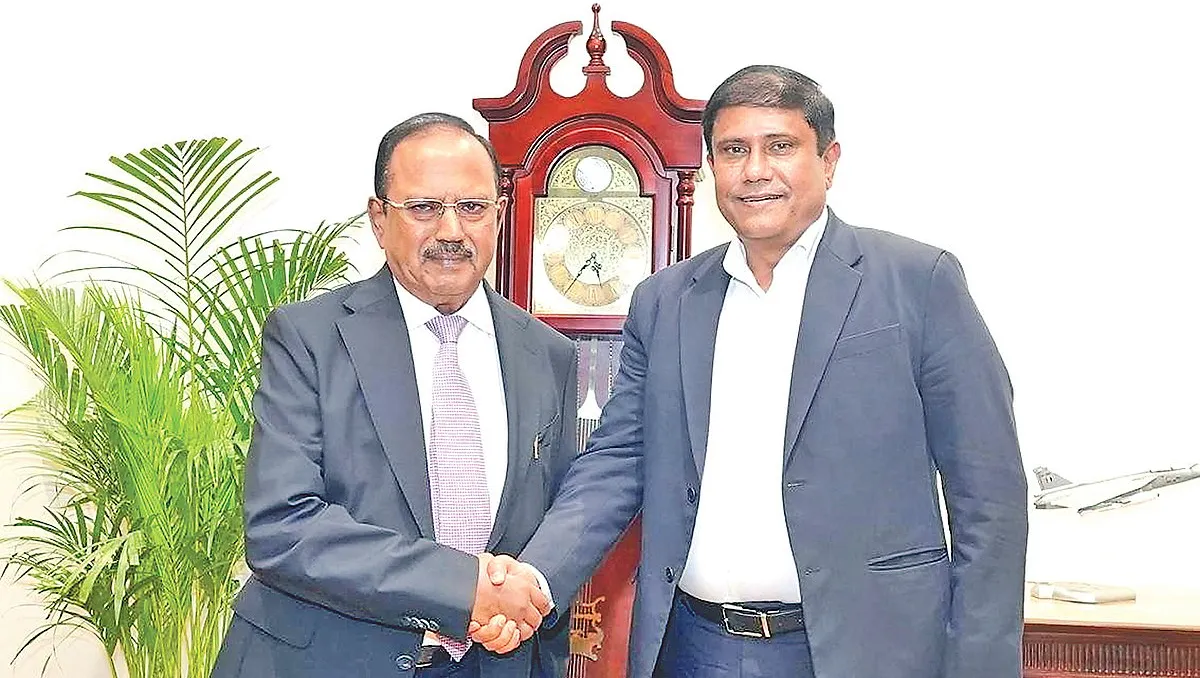
Bangladesh’s defense advisor to the Prime Minister, retired Brigadier General A.K.M. Shamsul Islam, met with India’s National Security Advisor Ajit Doval in New Delhi on July 15. While neither government has officially disclosed details of the meeting, the high-level engagement occurs amid mounting geopolitical complexities and regional security concerns.
The meeting took place on the eve of the fifth conference of national security chiefs from the Bay of Bengal Initiative for Multi-Sectoral Technical and Economic Cooperation (BIMSTEC) member states. According to diplomatic sources and regional analysts, the timing of the discussion carries significant weight, following Prime Minister Tareque Rahman's recent visit to China and ongoing bilateral frictions between Dhaka and New Delhi.
Tensions have simmered recently over reports of forced border crossings, or "push-ins," and the continued presence of former Prime Minister Sheikh Hasina in India, where her recent political commentary has caused diplomatic unease. Experts suggest the private talks between Islam and Doval likely addressed these bilateral irritants alongside broader concerns regarding regional security, counter-terrorism, maritime stability, and shifting geopolitical alignments.
Indian media confirmed the meeting took place at Doval’s office, noting that while the Indian National Security Advisor held talks with several regional counterparts—including those from Thailand, Sri Lanka, and Myanmar—the session with the Bangladeshi advisor was notably held in private. Reports from WION indicated that while the agenda for other delegations was partially outlined, the specific content of the discussion with the Bangladeshi representative remained undisclosed.

This encounter marks the second high-level dialogue between the two nations since the Bangladesh Nationalist Party-led government took office. It follows an April visit to New Delhi by Foreign Minister Khalilur Rahman, where potential future visits by Prime Minister Rahman were also discussed.
Analysts observe that the frequency of these high-level security consultations—involving three different senior Bangladeshi representatives over the past eight months—signals that both nations remain committed to maintaining open lines of strategic communication despite underlying political tensions. By prioritizing security and intelligence cooperation, both Dhaka and New Delhi appear to be insulating their core defense relationship from the volatility of broader bilateral challenges.




