
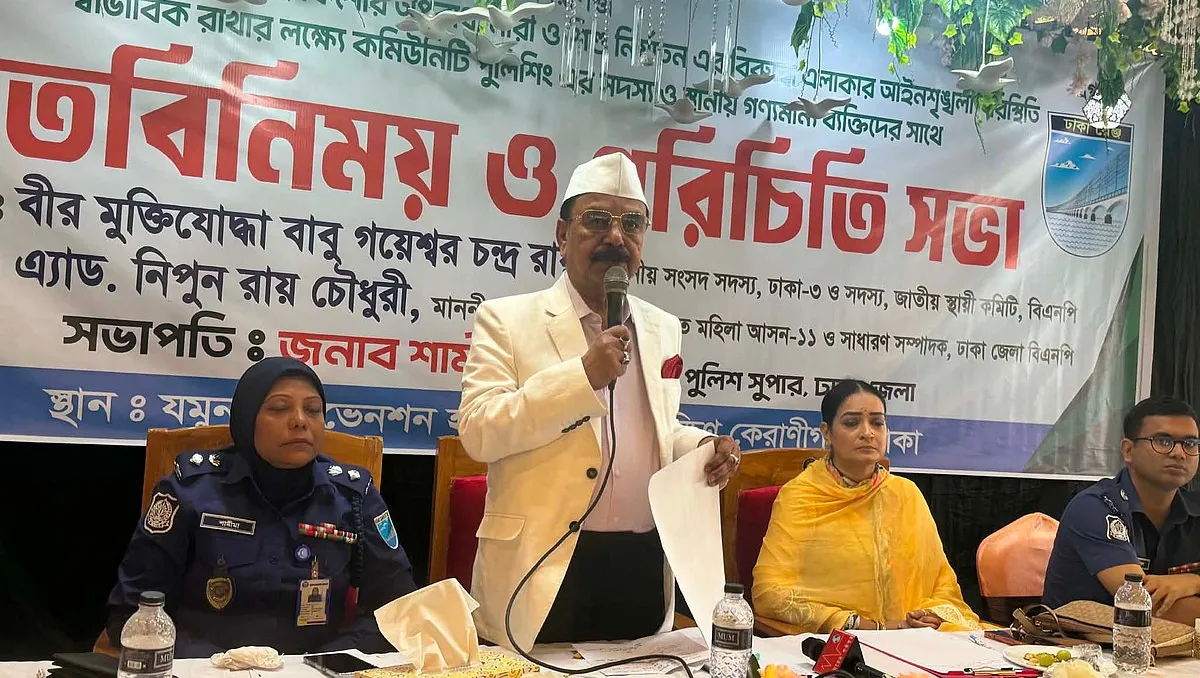
Dhaka-3 lawmaker Goyeshwar Chandra Roy has alleged that prisons have become the most secure environment for drug consumption, claiming that narcotics are often more accessible inside correctional facilities than on the streets. Speaking at a community policing event organized by the Dhaka District Police in the Ikuria area of South Keraniganj on Thursday, the Bangladesh Nationalist Party (BNP) Standing Committee member urged authorities to investigate the financial syndicates operating within the prison system.
Drawing on his personal experience with incarceration, Roy asserted that he had witnessed drug trafficking firsthand while behind bars. He noted that while obtaining narcotics inside prison may command a premium price, the trade is systemic. Beyond the prison walls, Roy expressed concern over the persistent state of crime in specific pockets of his constituency, such as Baghail and Chitakhola, where he noted that despite infrastructural development, criminal activity remains rampant. He specifically identified the vicinity of the Kadamtali intersection near the Babubazar Bridge as a primary hub for drug distribution, citing frequent traffic congestion as a cover for outsiders to conduct illicit exchanges.
Addressing the mechanics of the trade, the lawmaker explained that drug syndicates frequently exploit women—often domestic workers who evade suspicion—to transport and sell narcotics, effectively insulating the primary ringleaders from law enforcement. He argued that sporadic arrests of low-level dealers are insufficient to address the crisis, calling instead for a fundamental political commitment and a comprehensive strategy from the government.

Roy proposed a shift in policy, advocating for the establishment of more drug rehabilitation centers and hospitals rather than relying solely on incarceration for first-time offenders. He contended that treating individuals rather than punishing them is essential for long-term societal recovery. Furthermore, he emphasized the need to dismantle the supply chain at its source and suggested that police operations are currently hampered by intelligence leaks. He concluded that without stricter internal oversight to prevent the disclosure of operational plans, meaningful progress in curbing the drug epidemic remains unattainable.
The event, which focused on raising awareness regarding narcotics, gambling, extortion, and violence against women and children, featured remarks from senior police officials and local community leaders, including Additional Superintendents of Police Tarikul Islam and Jamilul Haque.




