
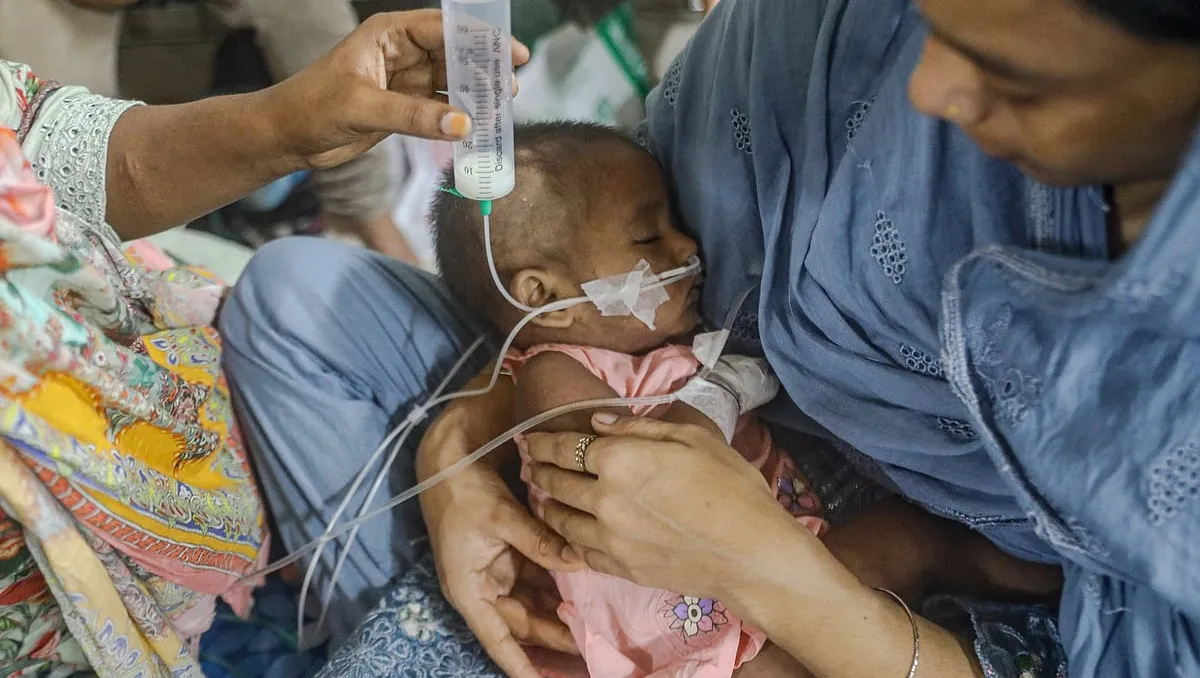
Three children died in Dhaka over the past 24 hours due to measles-related symptoms, bringing the national death toll to 745 since the current outbreak began on March 15. According to the latest report released by the Directorate General of Health Services (DGHS), the Dhaka division remains the epicenter of the crisis, accounting for 283 deaths linked to symptoms and 57 confirmed fatalities.
Data spanning the last 116 days reveals that a total of 108,180 people have presented with measles symptoms, with 91,270 requiring hospital admission. While 13,070 cases have been laboratory-confirmed, the surge in suspected infections continues to strain the healthcare system. As of Wednesday morning, 796 patients were reported with symptoms, including 748 newly hospitalized children, the majority of whom are in the Dhaka, Chattogram, and Barishal divisions.
The outbreak, which began on March 15, has seen 652 deaths attributed to measles symptoms and 93 confirmed by medical diagnosis. Amidst the rising numbers, health officials noted a slight reprieve as 784 patients were discharged from hospitals in the last 24 hours, adding to the 87,628 people who have successfully recovered and been released since the start of the reporting period.
Measles is caused by a highly contagious virus from the *Paramyxoviridae* family, which spreads easily through respiratory droplets from coughing or sneezing. Clinical symptoms typically manifest eight to 12 days after exposure, starting with high fever, dry cough, runny nose, and red, watery eyes. These are often followed by the emergence of characteristic white spots inside the mouth and a progressive red rash that spreads from the face to the rest of the body.

Dr. Imonul Islam Imon, a professor in the Department of Pediatrics at Bangabandhu Sheikh Mujib Medical University, emphasized that timely immunization remains the most effective defense against the disease. Health guidelines mandate the first vaccine dose at nine months of age, followed by a booster dose at 15 months.
Medical experts advise parents to maintain strict hygiene by keeping children’s hands clean, avoiding direct contact with the eyes, and practicing respiratory etiquette. If a child develops a fever or rash, they should be isolated for at least five days to curb transmission, and caregivers are urged to seek professional medical intervention immediately.




