
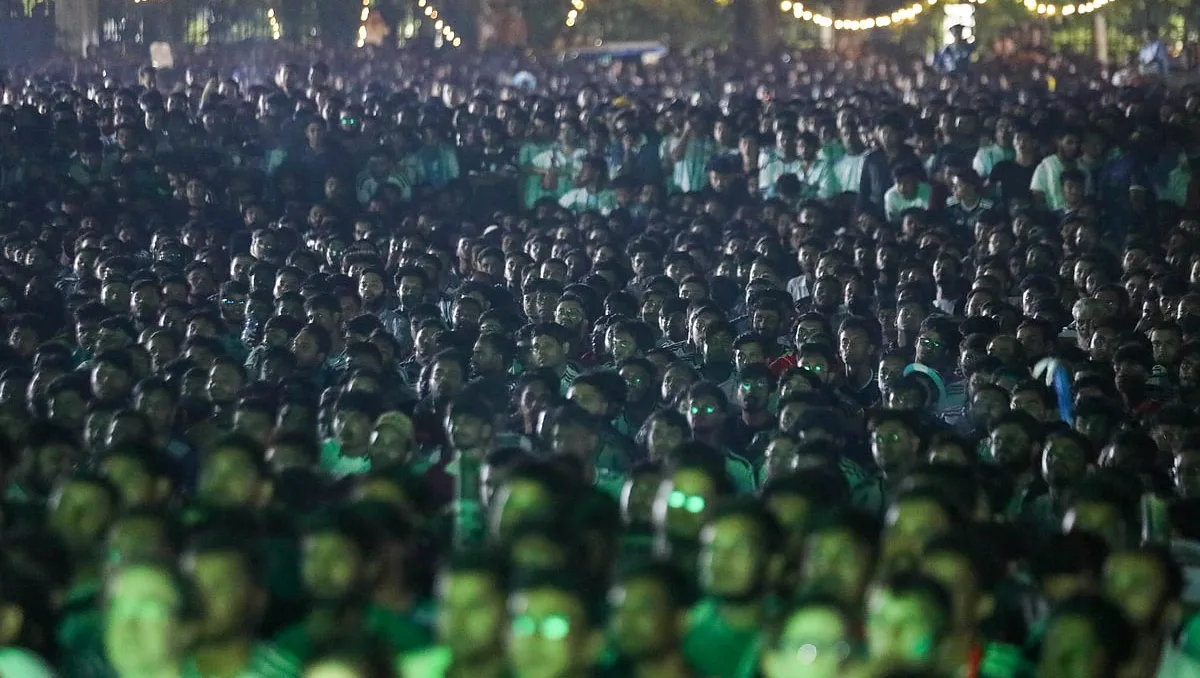
The final whistle may have signaled the end of the match, but in the heart of Dhaka, the celebration was only beginning. Thousands of fans, draped in sky-blue and white, erupted in rhythmic chants of "Messi! Messi!" as the digital screen displayed the outcome of a decisive hat-trick by the Argentine captain. For a moment, the scene resembled the bustling streets of Buenos Aires, yet it unfolded 17,000 kilometers away, in a city where the national team has never qualified for a FIFA World Cup.
In Bangladesh, the biennial ritual of supporting Argentina—and arch-rivals Brazil—has transcended sport to become a cultural phenomenon. For 50-year-old Abdul Hai, this fervor traces back to 1986, when Diego Maradona led Argentina to glory. "I fell in love with Maradona’s game, his emotion, and his sheer brilliance," Hai said, noting that seeing Lionel Messi finally hoist the trophy in 2022 provided a sense of cathartic closure that decades of devotion had been building toward.
Former national player and coach Shafiqul Islam Manik observes that this deep-seated affinity took root following the 1986 World Cup. The post-Falklands War context of Argentina’s victory, coupled with Maradona’s individual genius, solidified a bond that only deepened when Argentina suffered a heartbreaking loss in the 1990 final. "When Maradona wept after that final, it touched the hearts of the Bangladeshi people," Manik said. "That is when the support became permanent."
This grassroots passion has even influenced diplomatic relations. In 2023, Argentina reopened its embassy in Dhaka, forty-five years after it was shuttered by a military regime. While commercial interests exist, officials acknowledge that the profound connection between the two nations, forged on the football pitch, acted as the primary catalyst for renewed ties.
For the younger generation, the icons have shifted, but the intensity remains unchanged. While Gen Z supporters like Deen Islam may not have witnessed Maradona in his prime, their devotion to Messi is absolute. For many, this loyalty is a hereditary legacy, passed down through families like a rite of passage. Even the inconvenient time zones of global tournaments—often forcing fans to watch matches in the dead of night—fail to dampen the enthusiasm.

However, the contrast between this fervor and the state of domestic football remains a point of contention among experts. With the Bangladesh national team languishing at 181 in the FIFA rankings, critics point to a lack of infrastructure, investment, and long-term planning as the reason for the disconnect.
"Seeing this unbridled joy brings me happiness, but it also brings pain," says sports journalist Shahnur Rabbani. "We have the passion, but we lack the institutional framework to turn that energy into our own sporting success." Rabbani highlights the trajectory of Bangladesh’s cricket team as a blueprint for what is possible with proper investment, arguing that if sport is a source of national pride, the country must bridge the gap between spectator fervor and professional development.
Despite these systemic critiques, the passion remains undimmed. As night falls over Dhaka, the streets are once again awash in the colors of the *Albiceleste*. For the fans, the identity of the team they support is more than just a preference; it is a shared language of joy and community that persists regardless of the hour, the distance, or the lack of a path for their own team to reach the global stage.




