
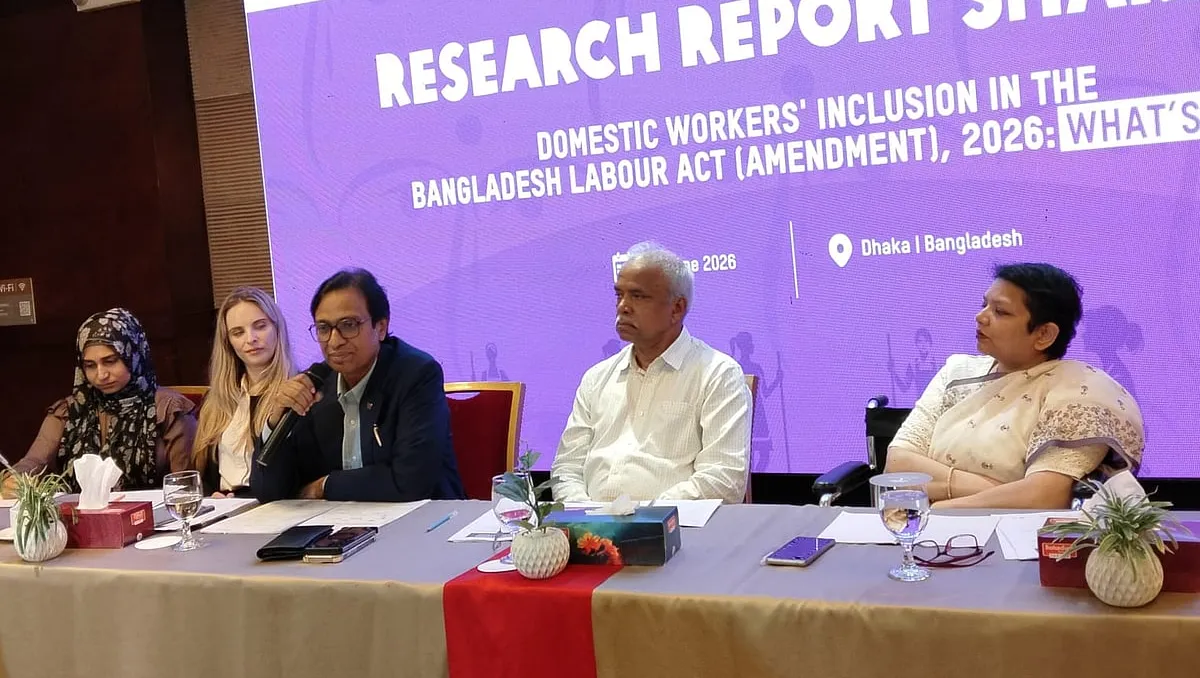
Despite the inclusion of domestic workers under the Bangladesh Labour Act, their fundamental rights remain largely unprotected due to a lack of clear implementation guidelines regarding working hours, wages, leave, and compensation for workplace accidents. Experts warn that the upcoming 2026 amendments to the Labour Act may fail to provide tangible benefits unless comprehensive regulations, derived from the Domestic Workers Protection and Welfare Policy of 2015, are enacted.
These findings were presented on Sunday in Dhaka during a seminar titled "Inclusion of Domestic Workers in the Bangladesh Labour Act (Amendment) 2026: Future Actions." The research, conducted by Oxfam in Bangladesh in collaboration with Adhuna Bangladesh Ltd., highlighted that the sector remains largely informal despite being heavily reliant on female labor. While the 2026 legislative framework aims to introduce limited protections—including provisions for unionization and dispute resolution—researchers argue that without specific, enforceable bylaws, these workers will continue to exist in a legal vacuum.
To bridge this gap, the study recommends mandating written employment contracts, ensuring legal and social security, and digitizing wage payments through mobile banking or official receipts. Furthermore, it advocates for a robust compensation framework for workplace injuries and the establishment of an accessible registration system to help workers prove their employment status in legal disputes. Given that most domestic workers currently rely on informal, verbal agreements, experts believe that formal documentation is critical for their legal standing.
Addressing the seminar, Department of Labour Director General Md. Abdus Samad Al Azad emphasized the government's commitment to curbing child labor in the sector. He noted that the state aims to develop a national action plan to prohibit the employment of children under 14, requiring coordinated efforts across multiple ministries. Similarly, representatives from the International Labour Organization (ILO) stressed that enhancing the skill sets of domestic workers is essential for their economic empowerment and long-term protection.

The discussion also featured calls for greater accountability from employers and policymakers. Syed Sultan Uddin Ahmed, Executive Director of the Bangladesh Institute of Labour Studies (BILS), urged the formation of a dedicated task force to combat child labor and ensure the government fulfills its oversight responsibilities. International stakeholders, including representatives from the Canadian High Commission, echoed the need for urgent implementation of the research recommendations to elevate the social and living standards of domestic workers.
Ultimately, the consensus among labor rights activists, legal experts, and trade union representatives is that domestic work must be transitioned from the informal sector into a regulated environment. By establishing area-based trade unions and implementing worker-friendly dispute resolution mechanisms, Bangladesh can ensure that the labor force fueling the nation's households receives the dignity and legal security guaranteed by law.




