
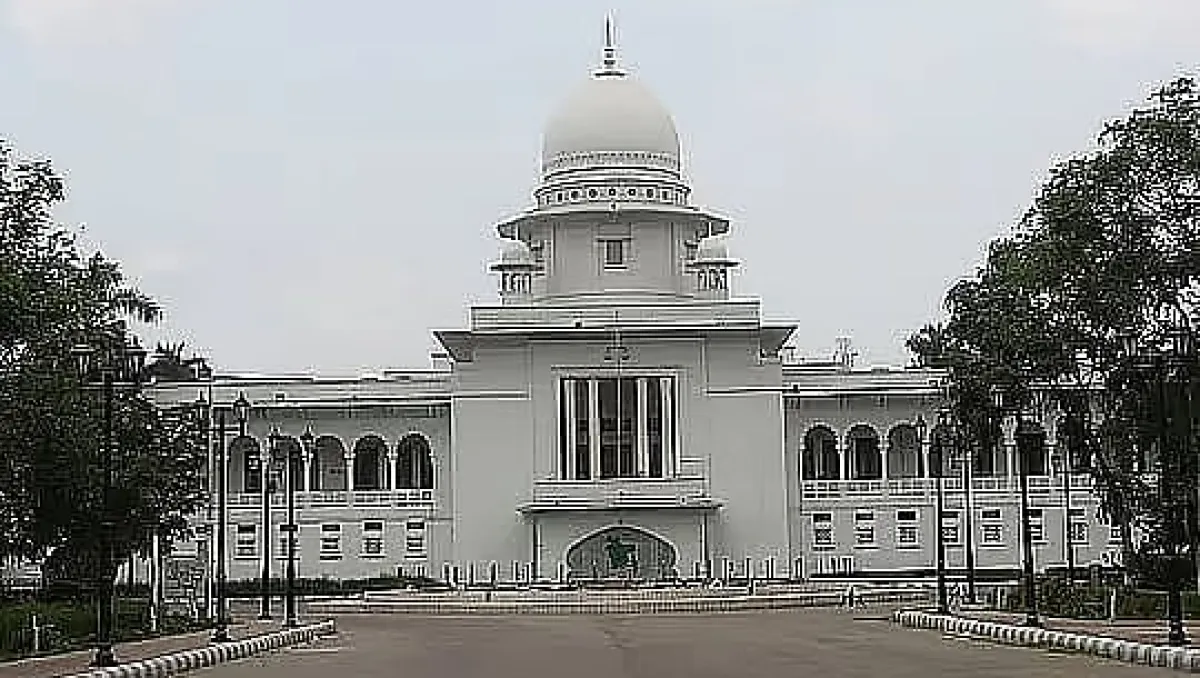
The High Court is set to prioritize the adjudication of 20 critical death reference cases, including the high-profile murders of Feni madrasa student Nusrat Jahan Rafi and a minor in Magura. A specially constituted bench, led by Justice Bhishmadev Chakrabortty and Justice K.M. Rashaduzzaman Raja, will commence hearing these matters on Sunday following an administrative directive from Chief Justice Zubair Rahman Chowdhury aimed at expediting cases involving violence against women and children.
Among the cases slated for review is the 2019 killing of Nusrat Jahan Rafi, which shocked the nation. The incident began on March 27, 2019, when the principal of Sonagazi Islamia Fazil Madrasa, Siraj Ud-Daula, sexually harassed the student in his office. After the victim refused to withdraw the subsequent criminal complaint, she was lured to the school rooftop on April 6, doused in kerosene, and set ablaze. She succumbed to her injuries at the Dhaka Medical College Hospital burn unit four days later. Following a swift judicial process, a trial court sentenced all 16 accused individuals to death in October 2019, and the case documents were forwarded to the High Court for confirmation of the sentences.
The bench will also hear an appeal concerning a child rape and murder case from Magura. In May 2023, a tribunal sentenced Hitu Sheikh to death for the crime, while acquitting three other defendants. The convict subsequently appealed the verdict, leading to the case being transferred to the High Court’s death reference branch for final review.

Concurrent to these major proceedings, the High Court is preparing to hear jail appeals filed by Sohel Rana and his wife, Swapna Aktar, regarding their death sentences in a separate murder case. The couple was convicted by a Dhaka tribunal in June for the rape and murder of an eight-year-old child in the capital’s Pallabi area. The judgment, delivered just 19 days after the crime, also imposed significant financial penalties on both defendants. The couple’s appeals against these convictions are listed for admissibility hearings before a bench comprising Justice Mohammad Ali and Justice Md. Saiful Islam.
These judicial developments signal a broader push to clear a backlog of sensitive cases, with the High Court utilizing specifically designated benches to ensure that complex matters involving capital punishment are processed with both legal rigor and necessary urgency.




