
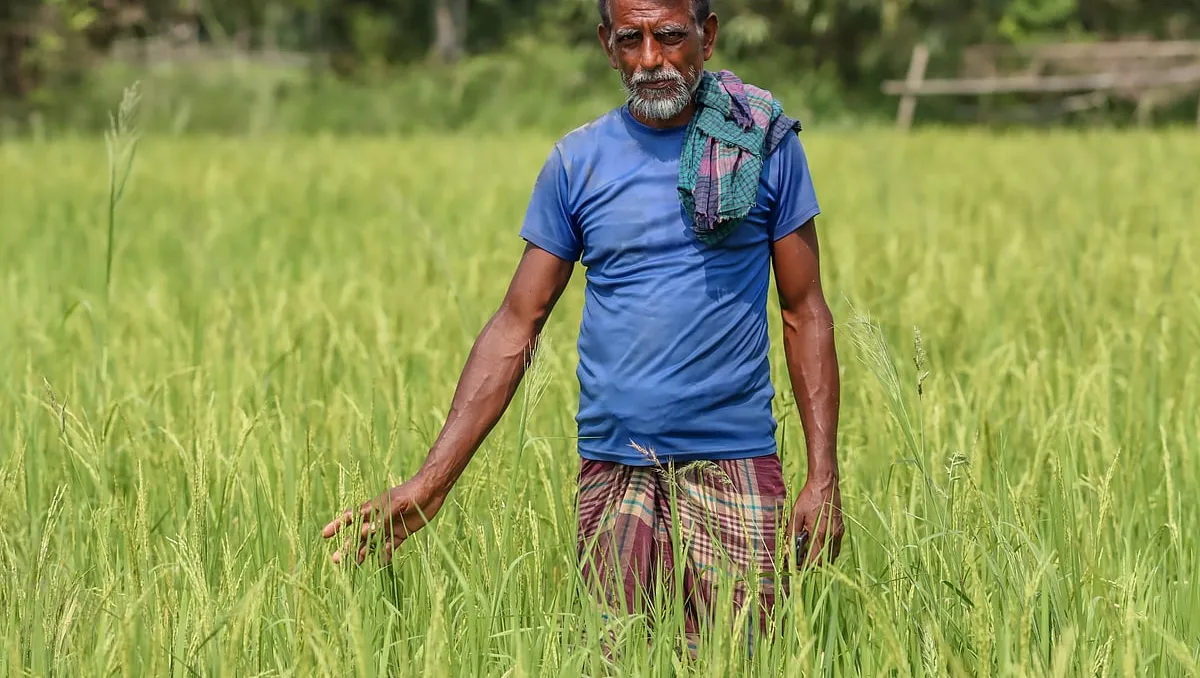
Electricity load-shedding in Barisal amid intense summer heatwave has brought life to a standstill. People in rural areas are especially fed up with load shedding. They are suffering from extreme heat. At the same time, due to loadshedding and diesel-crisis, the farmers are worried about not being able to irrigate properly in the current boro season. Apart from this, there has been a recession in business.
The Western Zone Power Distribution Company (Ojopadico) supplies electricity to six district headquarters of Barisal division. There are about five lakh customers in six district cities under this organization. Among them, the number of customers in Barisal Nagar is more than one and a half lakh. On the other hand, Palli Vidyut Samiti (POBIS) supplies electricity at the upazila headquarters and union level. There are about 21 lakh 65 thousand customers under the five branches of the department.
According to Barisal National Grid sub-centre, the daily electricity demand in Barisal, Bhola, Patuakhali, Jhalkathi, Barguna and Pirojpur districts of the division is 550 to 600 MW. There is about 400 MW of supply available.
Executive Engineer of Power Grid Substation Barisal. Aktaruzzaman Palash told Prothom Alo on Sunday, "The demand for electricity fluctuates during peak and off-peak hours. But currently 25 percent of our demand is less than electricity. For this, it is being coordinated by load shedding. He further said that in view of the actual situation, the distribution authorities coordinate electricity with less load shedding in more important areas including industrial areas. For this the level of load shedding at customer level may seem less.
Ojopadico has two distribution divisions in Barisal Nagar. Out of this, the daily electricity demand in Distribution Division-1 is 50 to 61 MW. On Wednesday, demand was 61 MW, supply available at 40 MW. The situation was similar on Thursday. Saturday demand was 54 MW, available 48 MW.
Deepak Chandra Mistry, Assistant Engineer of Distribution Division-1, said that the number of times loadshedding takes place during the day and night depends on the availability of electricity against the demand.
On the other hand, the daily demand of Distribution Division-II is around 40 MW. On Thursday, there was a supply of 20 MW. While there was no shortage against 30 MW on Friday, 25 MW was available on Saturday against the demand of 35 MW.
Executive Engineer of Distribution Division-2. Manjurul Islam told Prothom Alo, "For 10-12 days there is a shortage of electricity according to demand. So we have to coordinate with loadshedding. When asked why less electricity is available than the demand, he said, "The generation is decreasing. So there is a shortage.
"I can't get diesel, I will irrigate with electric motor, I can't get electricity for that. Therefore, even if the profit in boro cultivation is far away, heavy losses have to be counted. I don't know how we will survive. Masud Sardar, a Boro farmer of Barthi area of Gournadi in Barisal, said such fears.

On Sunday afternoon, Masud Sardar said, now is the time to take out the paddy. Extensive irrigation is needed at this time. But due to not being able to provide the necessary irrigation, there is concern about the yield. He said, in his block, about 70 farmers have planted boro on 36 acres of land. He is also the Manager of Irrigation Management Committee. The farmer also said that diesel-crisis has been going on since the beginning of Boro season. Pump owners are not giving diesel for various reasons. Now the farmer card is being asked. Fuel is not available as required. So even if we rely on electricity for so long, the electricity condition is very fragile for 10-12 days.
Local farmers said that they have to irrigate in two stages—first from the Ariyal Khan river to the Wapda canal, and then from there they have to take water to the land. The cost is already high. But under present conditions irrigation has almost stopped. The land is drying up, the sheaves of paddy cannot come out.
Farmer Ghiyas Uddin cultivated Boro on about 10 acres of land in Kashipur area of Barisal. He said that the paddy of early cultivated land has started ripening, but due to lack of irrigation in late cultivated land, paddy is not emerging properly. He said, 'The rice that has ripened will be harvested with a harvester machine; But I am not getting oil to run the machine. I can't irrigate again. I have spoken to the officials of the agriculture department, they have assured to arrange diesel.
An agricultural officer at the field level said that the most irrigation is required for boro eating when the ear emerges from the paddy stalk. At this time, it is important to have four to six inches of water in the land. If not, production may drop significantly.
The power crisis has also affected business. Due to the order to close the business establishments by 7 pm, business has already reduced. On top of that, load shedding multiple times a day has further complicated the situation.
A businessman in the Girja Mohalla area said, "Since the shop opened at 10 in the morning, the electricity went out five or six times. Every time it is closed for half an hour, sometimes more. It has to be closed again at seven in the evening. How will we sustain the business if it goes on like this?'
Imran Sheikh, manager of the leading tailor and fashion company 'Top Ten Fabrics and Tailor Limited' on Sadar Road in the city, told Prothom Alo, "We are in a crisis of fuel and electricity. The showroom has to be closed by seven in the evening. Load shedding of electricity during intense heat during the day. During load shedding, the fuel required to run the generator is not available. In addition to suffering, business has also suffered.




