
Experts Highlight Critical Shortfalls in Medical Oxygen Access Across Bangladesh at IUB Policy Dialogue
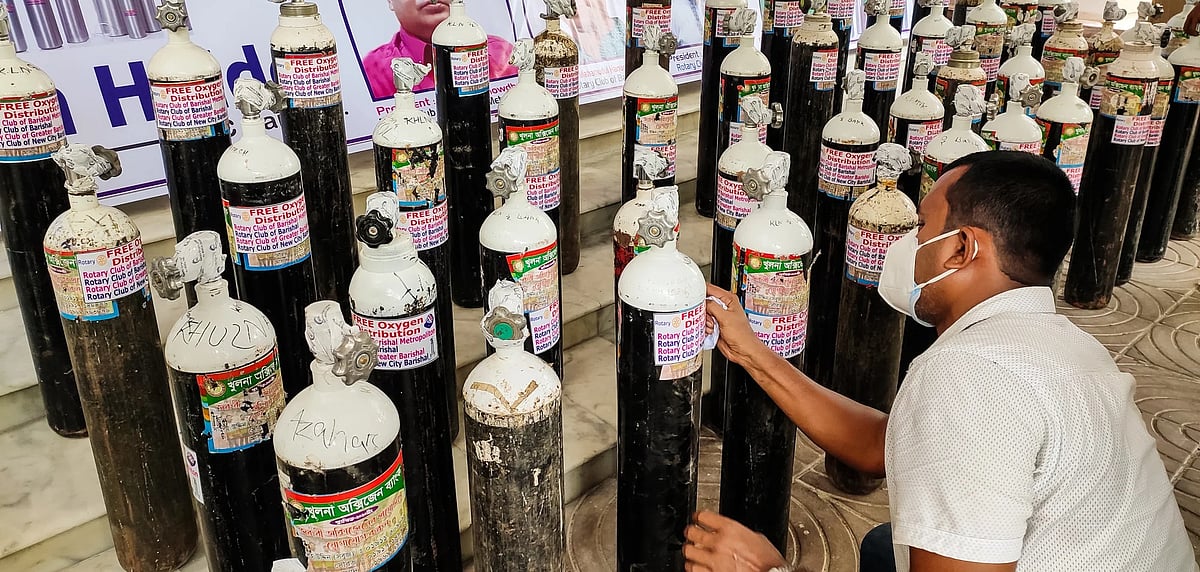
Photo Collected
Approximately 70 percent of patients in developing nations, including Bangladesh, fail to receive essential medical oxygen when required, according to experts speaking at a policy dialogue held Tuesday at Independent University, Bangladesh (IUB). The event, organized by the university’s Centre for Health, Implementation and Policy Sciences, highlighted critical systemic failures, revealing that nearly 20 percent of oxygen plants in Bangladesh are currently non-functional.
Data presented by International Centre for Diarrhoeal Disease Research, Bangladesh (icddr,b) scientist Ahmed Ehsanur Rahman indicated that among 100 people in developing countries requiring oxygen, 46 never seek care due to logistical or socioeconomic barriers. Of those who do reach hospitals, 8 percent find facilities unprepared to provide services, while another 8 percent are unable to access care due to staffing shortages or lack of quality standards. Rahman, who co-authored a recent Lancet Commission report on global medical oxygen, noted that Bangladesh faces a supply deficit, producing 22 million cubic meters of oxygen against an annual demand of 23.8 million cubic meters.
A 2025 assessment of the country’s 101 oxygen plants revealed that only about 34 are fully operational. Roughly 47 plants were found to be intermittent, while 20 percent were completely unusable. During the discussion, Professor Foara Tasmim, Additional Director General (Planning and Development) of the Directorate General of Health Services, acknowledged that much of the oxygen infrastructure hastily established during the COVID-19 pandemic is no longer viable.
The dialogue underscored the multifaceted nature of the crisis. Professor Abid Hossain Mollah, a pediatric specialist, argued that oxygen therapy is not yet fully integrated into standard clinical practices, while experts like Dr. Shams El Arifeen emphasized the need for more rigorous research to ensure equitable access. Practical challenges remain severe, even in major institutions; Professor Nusara Sultana of Dhaka Medical College reported that staff often struggle to secure oxygen cylinders during surgeries.
Participants proposed several interventions to bridge the gap. World Health Organization official Mamun Rahman Malik suggested that hospitals must guarantee 24-hour supply, utilizing solar power in regions lacking reliable electricity grids. Nasser Shahriar Zahedi, Chairman of Radiant Pharmaceuticals, called for a unified effort between the government, private sector, and researchers to standardize oxygen quality.
IUB Vice-Chancellor Professor M. Tamim concluded the session by stressing the dual necessity of improving supply chain logistics and formalizing oxygen therapy protocols within the medical profession. The host institution announced that a follow-up international oxygen conference is scheduled for October to further address these systemic shortcomings.
0%
0%
0%
0%
More News from Health