Dhaka South City Corporation administrator stresses public participation in curbing mosquito menace
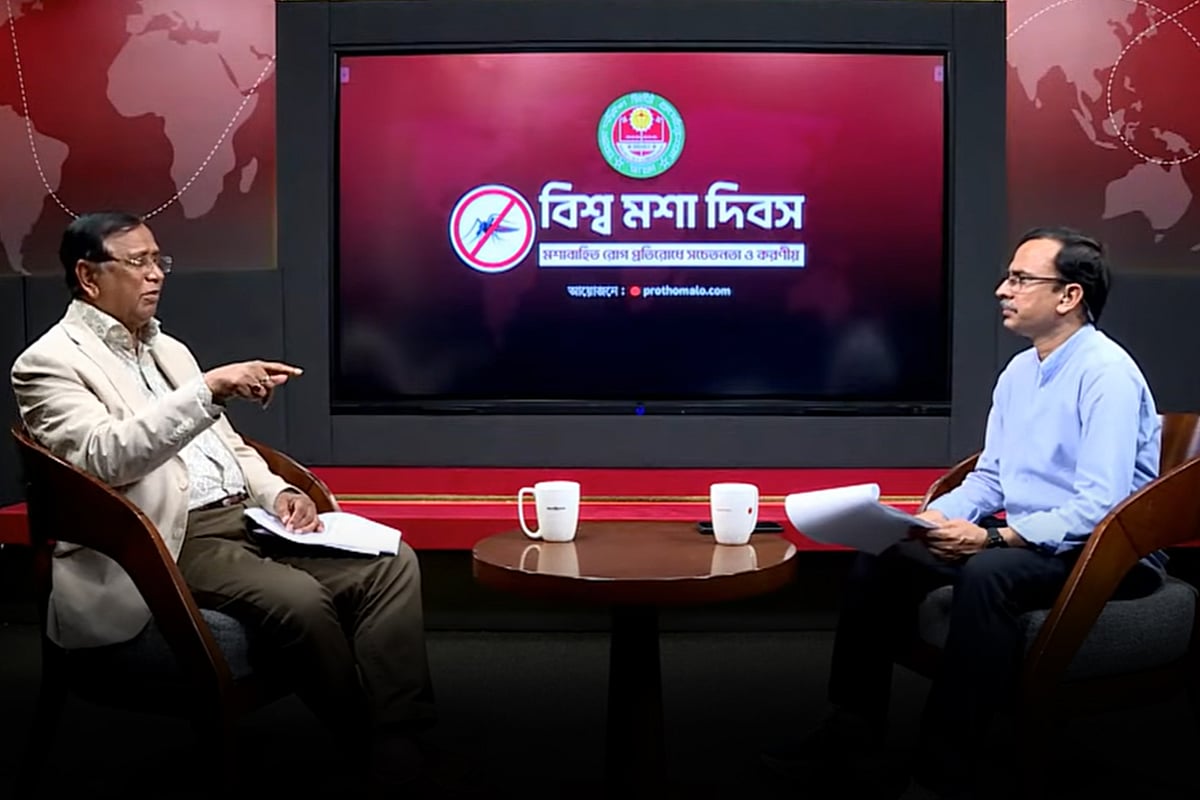
Photo Collected
Dhaka South City Corporation (DSCC) Administrator Md. Abdus Salam has urged citizens to take proactive responsibility for sanitation, citing a significant lack of awareness regarding mosquito breeding grounds in residential and commercial buildings. Speaking during a Facebook live discussion titled “Awareness and Actions to Prevent Mosquito-Borne Diseases,” hosted by Prothom Alo in observance of World Mosquito Day, the administrator emphasized that municipal efforts alone are insufficient without public cooperation.
Salam noted that discarded containers, polystyrene boxes, and stagnant water remain primary sites for larvae proliferation. While the city corporation maintains a sufficient supply of insecticides, he stressed that behavioral changes among residents are critical to curbing the spread of mosquito-borne diseases.
Addressing the current state of vector control, Salam reported that the density of mosquitoes in the capital has decreased compared to the previous year. Following a survey across 75 wards, the DSCC identified 27 areas as high-risk. In response, authorities have implemented “crash programs” and partnered with religious and social institutions to bolster public awareness.
Regarding insecticide protocols, the administrator explained that the DSCC uses Temephos in the morning to destroy larvae and malathion for fogging in the evening to eliminate adult mosquitoes. He clarified that all chemicals are vetted by an expert board, including entomologists from the University of Dhaka and Jahangirnagar University, before being approved for use by the Ministry of Health.
To ensure accountability, the DSCC has introduced a mobile application and provided control room contact numbers on its website and social media platforms for citizens to report stagnant water or breeding spots. Salam added that the corporation has intensified surveillance, including conducting joint operations with the health and public works departments to inspect high-rise construction sites and hospitals, with fines issued for non-compliance.
Addressing discrepancies in health data, Salam suggested that administrative records often misidentify a patient’s true location, as patients from other districts frequently register using the addresses of Dhaka-based hospitals. He underscored the need for precise tracking to ensure public awareness in affected neighborhoods.
Concluding the discussion, the administrator highlighted the direct oversight of the Prime Minister, who monitors the dengue situation through coordination meetings held every fifteen days. Salam reiterated that while the DSCC is scaling up its operations, the ultimate success of mosquito control relies on a shared commitment from the public to maintain clean surroundings.
0%
0%
0%
0%
More News from Health