

Coordination Failures and Oversight Gaps Hamper Dhaka City Corporations Anti-Dengue Initiatives
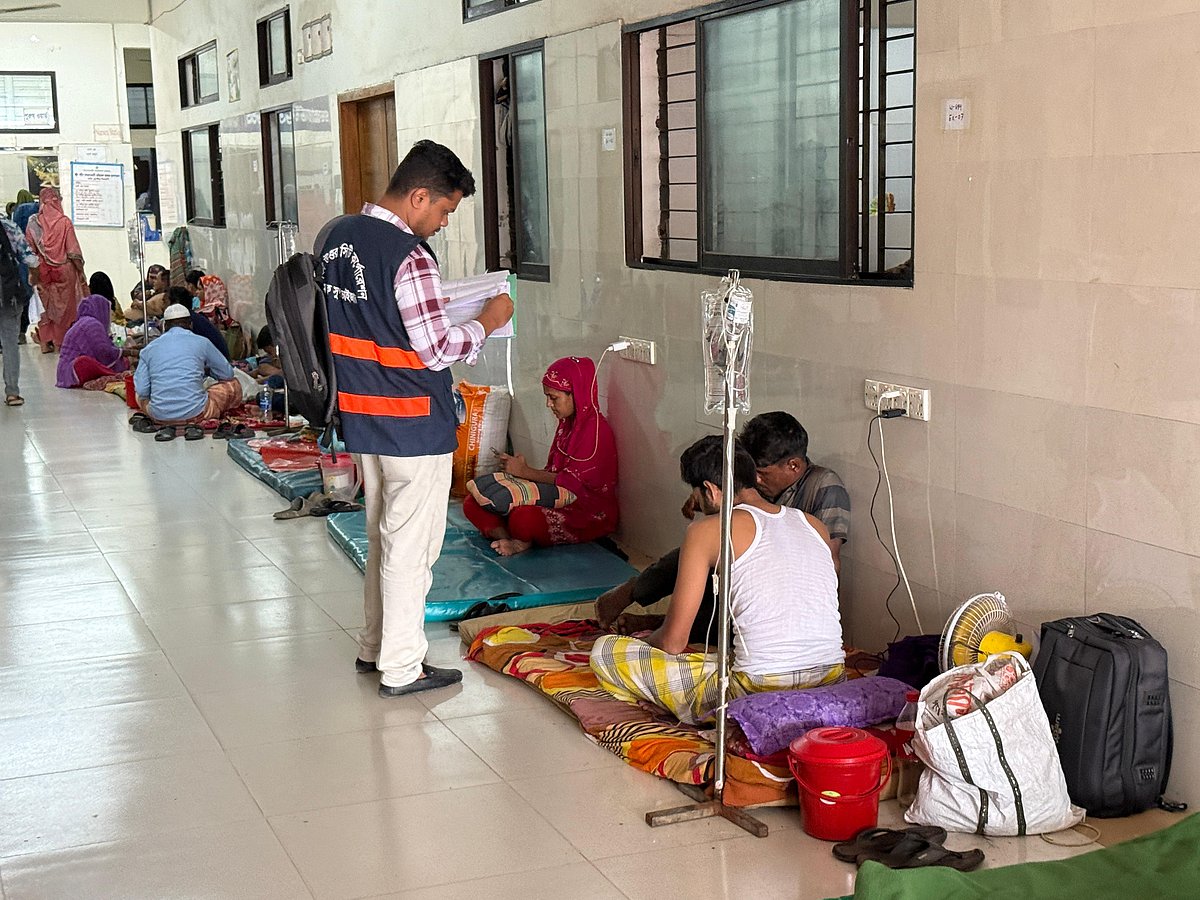
Photo Collected
Dhaka’s two city corporations are facing significant operational failures in their efforts to curb the rising dengue outbreak, as recent initiatives to track patients and monitor mosquito-control activities remain marred by poor coordination, absenteeism, and lack of oversight.
The Dhaka North City Corporation (DNCC) recently launched an initiative to collect patient data from hospitals to identify and destroy Aedes mosquito breeding grounds in patients’ neighborhoods. However, onsite inspections at major hospitals, including Shaheed Suhrawardy Medical College Hospital and Bangladesh Shishu Hospital, revealed that assigned field workers were frequently absent or failed to collect data on scheduled days.
DNCC officials admitted to gaps in coordination, citing a lack of specialized personnel and the nascent stage of the program. Chief Health Officer Imrul Kayes Chowdhury acknowledged the shortcomings, noting that while the initiative aims to deploy representatives daily to high-patient hospitals, the process remains under development.
Simultaneously, the Dhaka South City Corporation (DSCC) has failed to ensure the efficacy of its monitoring committees, which were formed across 10 administrative zones to oversee cleaning and mosquito-killing operations. Despite mandates for daily field inspections, committee members reported sporadic oversight, and several key positions—including a supervisory engineer post in Zone-5—have remained vacant for months without replacement.
These administrative lapses coincide with a sharp rise in national dengue statistics. Data indicates that between July 31 and August 18, the number of confirmed cases climbed from 15,310 to 25,601—a 67 percent increase in just 18 days. The death toll rose from 54 to 74 during the same period.
Financial records show that the two city corporations have spent 605 crore BDT over the past five years on mosquito control. Despite these massive expenditures, both authorities continue to rely on controversial methods. While experts advocate for targeted breeding site destruction, the corporations persist with fogging—a method previously criticized by city officials themselves as an inefficient use of public funds.
Serious questions have also been raised regarding the procurement of insecticides. Past instances of fraudulent supply and the blacklisting of contractors—some of whom have reportedly re-emerged under new company names—have triggered public skepticism. Furthermore, despite possessing substantial stocks of equipment and chemicals, the lack of effective field management persists.
Entomologist Kabirul Bashar, a professor at Jahangirnagar University, warned that identifying hotspots is insufficient. He emphasized that dengue control depends entirely on using patient data to systematically locate and destroy Aedes breeding sources, a process that requires active public participation and rigorous, consistent field supervision rather than the current fragmented approach.
0%
0%
0%
0%
More News from Health