Malaysia to Recruit Two Hundred Thousand Workers from Bangladesh as Potential Investment Reaches Two Billion Dollars
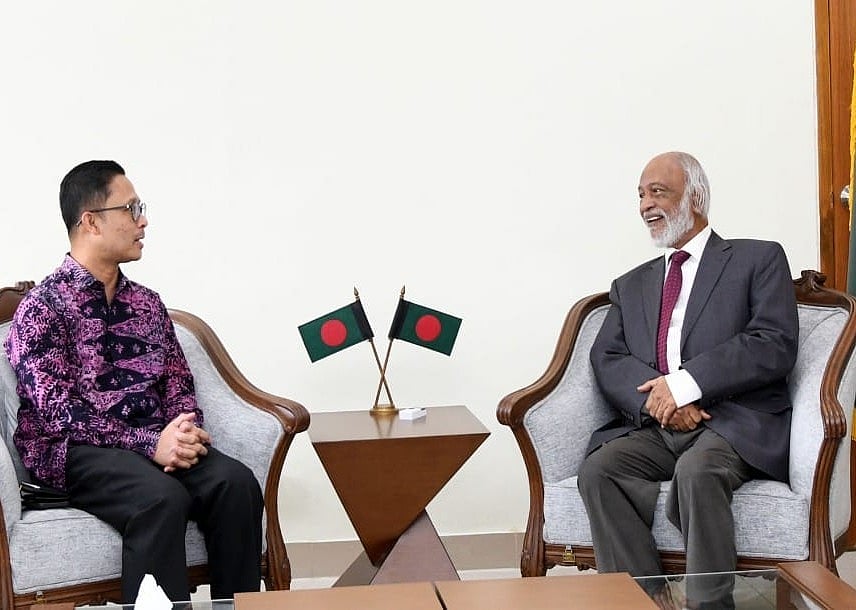
Photo Collected
Malaysia is set to begin recruiting 200,000 workers from Bangladesh by the end of next month, according to State Minister for Local Government Mir Shahe Alam. The recruitment process will be facilitated through registered companies, with an additional 10,000 workers expected to be deployed at no cost within the next six months.
The announcement followed a meeting at the Secretariat between Minister for Local Government Abdul Moin Khan and the Malaysian High Commissioner to Bangladesh, Mohammad Suhaili bin Osman. Minister Alam noted that while the Ministry of Expatriates’ Welfare and Overseas Employment is overseeing the migration process, the High Commissioner shared these developments during their courtesy call.
Beyond labor recruitment, the Malaysian government has pledged technical support for the use of polymer-modified or rubberized bitumen in Bangladeshi road construction. Minister Alam highlighted that Malaysia’s experience with rubberized bitumen has proven highly effective in maintaining road integrity despite heavy rainfall. The government plans to adopt this model, aiming to use rubberized bitumen for at least 20 percent of road construction projects to mitigate weather-related damage. The use of this technology was successfully piloted on a two-kilometer stretch in Bogura in 2005, a project that remains durable to this day.
Investment prospects were also a primary focus of the discussion. Minister Alam stated that Malaysia is preparing to invest approximately $2 billion in Bangladesh, specifically targeting the electric vehicle (EV) sector, solar energy, renewable power, and the halal food industry.
Regarding the domestic transportation sector, the State Minister addressed the impending rollout of regulations for e-rickshaws. New policies will mandate that e-rickshaws cannot be registered without certification from the Bangladesh University of Engineering and Technology (BUET) or government polytechnic institutes, alongside fitness clearance from the traffic department. Registration will be issued by city corporations and municipalities.
Under the forthcoming policy, which is currently awaiting vetting by the Ministry of Law, e-rickshaws will be prohibited from operating on main roads. The government plans to establish eight designated zones in Dhaka—four in the north and four in the south—with each zone assigned a specific color code to regulate vehicle movement.
Additionally, the government intends to mandate solar-powered charging stations for these vehicles, requiring charging points to obtain official licenses. Manufacturers of e-rickshaws will also be required to register and obtain licenses from local authorities, ensuring production adheres to standardized designs. While four and six-passenger e-rickshaws will be permitted in rural and district-level areas, only two and four-passenger models will be eligible for registration within Dhaka city limits.
0%
0%
0%
0%