


Farmers Face Fertilizer Shortage and Price Gouging Amidst Inadequate Supply in Rajshahi and Jessore
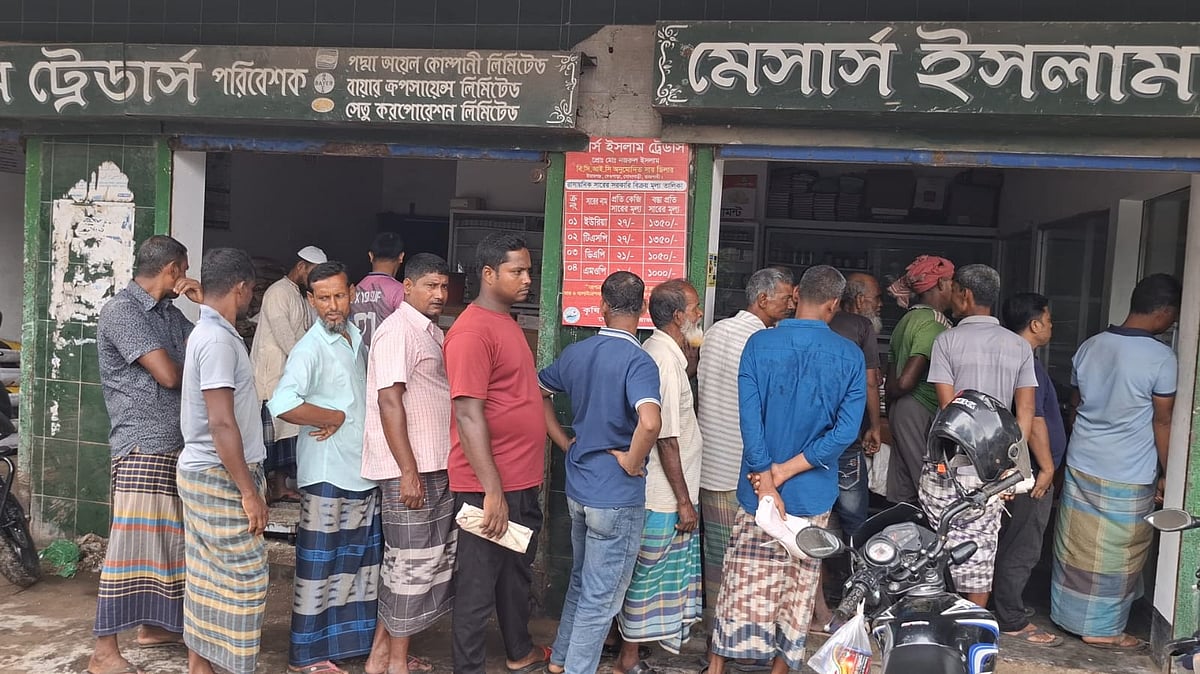
Photo Collected
Farmers in Rajshahi and Jessore are facing a severe shortage of essential fertilizers, disrupting the ongoing Aman paddy cultivation season. As demand peaks for urea, TSP, DAP, and MOP fertilizers, agriculturalists report that supplies at government-designated retail outlets remain inconsistent, leading to widespread price gouging and illegal hoarding.
In Rajshahi’s Godagari Upazila, frustration has reached a boiling point. Bablu, a 50-year-old farmer, recently waited hours in a long queue at a retail store in Deopara, only to be offered a mere 20 kilograms of fertilizer for his 10-bigha farm. Distressed by the inadequate supply, he chose to return home empty-handed. Similar scenes are reported across the district, where retailers often lack specific types of fertilizer, forcing farmers to travel between markets in search of supplies.
The crisis is exacerbated by allegations that designated distributors are diverting subsidized fertilizers to the black market, where they are sold at prices significantly higher than the government-mandated rates. According to local agricultural officials, administrative action has been taken against several retailers in response. Over the past three days, four distributors in Rajshahi were fined a total of 85,000 taka for unauthorized cross-border trade of fertilizers, while two distributors in Jessore were fined 10,500 taka on August 2 for overcharging.
Agricultural authorities in Rajshahi claim that the shortage stems from allocations falling consistently short of actual demand. For the 2026-27 fiscal year, the demand for urea in Rajshahi was projected at 77,470 metric tons, yet only 71,109 metric tons were allocated. Similar deficits exist for TSP, DAP, and MOP. Furthermore, local officials noted that fertilizers intended for crop fields are being diverted to satisfy the needs of commercial fish ponds—which hold 17,774 hectares in the region—leaving traditional farmers with even less of the allocated quota.
In Jessore, while the Department of Agricultural Extension (DAE) maintains that supplies are sufficient, farmers contradict these claims. Reports from the Nawa Para market—a primary fertilizer distribution hub—indicate that imported fertilizers are being sold at inflated prices, with black TSP fetching as much as 2,500 taka per sack, significantly higher than the official price of 1,350 taka. Farmers like Md. Abdul Alim report paying up to 52 taka per kilogram for TSP on the open market, citing a complete lack of availability at official retail points.
Local administrations are attempting to curb these practices through mobile courts. In Godagari, authorities recently seized 22 sacks of illegally hoarded MOP fertilizer from a dealer’s warehouse, along with 30 sacks of various fertilizers from another local trader. The seized stock was subsequently sold to farmers at official prices, with the proceeds deposited into the government treasury.
Despite these interventions, farmers remain skeptical. Many retailers claim their stocks are exhausted shortly after arrival, while farmers suspect intentional withholding to create artificial scarcity. As the critical period for paddy sapling growth continues, agricultural experts warn that the ongoing supply chain disruptions could jeopardize yield targets for the Aman season across both districts.
0%
0%
0%
0%