
Food Safety Authority Attributes Beef Discoloration in Paikgachha to Temperature Shock During Cooking
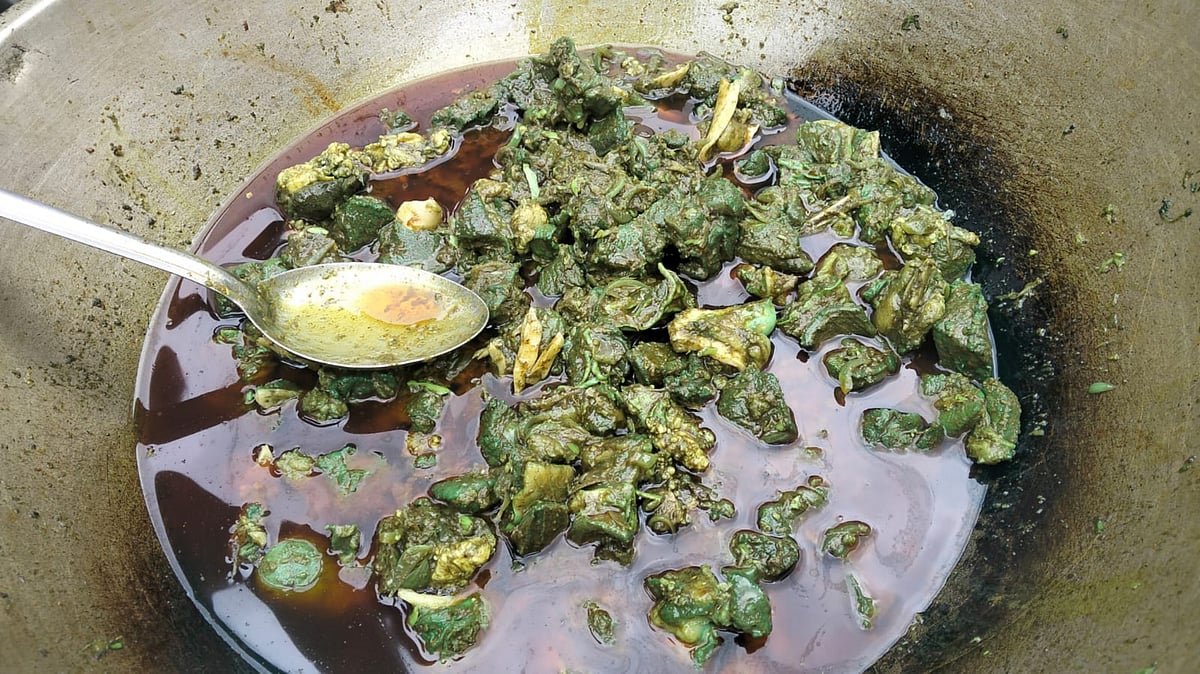
Photo Collected
The Bangladesh Food Safety Authority (BFSA) has attributed the mysterious discolouration of beef in Paikgachha, Khulna, to a rapid temperature change rather than contamination or bacterial growth. Official laboratory findings released on August 27 suggest that frozen meat, when subjected to high heat without being thawed to room temperature, undergoes a chemical shift in its myoglobin content, causing it to turn green.
The investigation was launched following an incident on July 22, when employees of Modern Bakery in the Paikgachha municipal area reported that four kilograms of beef—purchased from a local vendor named Ismail—turned a dark, bluish-green hue shortly after cooking began. The event sparked widespread public concern after videos of the discoloured meat circulated on social media, prompting the bakery employees to report the matter to local administrative offices and the police.
Following the report, Uday Kumar Mandal, a sanitary inspector and medical technologist, collected samples of both the cooked meat and approximately 600 grams of raw meat from the vendor’s refrigerator. These samples were subsequently sent to a laboratory at Sher-e-Bangla Agricultural University for professional analysis.
Mokleshur Rahman, the Food Safety Officer for the Khulna district, confirmed the receipt of the report on Sunday. He explained that the laboratory analysis found no evidence of harmful bacteria, spoilage, or synthetic dyes. The report, signed by BFSA food analyst Nazia Sultana, noted that the meat showed no signs of putrefaction, such as foul odours or a sticky texture, confirming that the discolouration was not the result of infection or decay.
According to the analysis, the sudden exposure of cold, stored meat to high-temperature oil likely triggered a chemical reaction in the myoglobin—the protein responsible for the red pigmentation in muscle tissue—leading to the visual shift in colour. While the findings provide a scientific basis for the occurrence, officials have framed the conclusion as a highly probable cause rather than a definitive assertion, as is standard practice for such laboratory interpretations.
Vendor Ismail has consistently maintained his innocence throughout the ordeal, noting that he sold meat from the same batch to other customers who reported no issues. Liton Hossain, a Modern Bakery employee, expressed relief upon learning the meat was not toxic, though he noted that the incident resulted in the disposal of the entire meal. No one consumed the meat, preventing any potential health risks.
0%
0%
0%
0%