
Prime Minister Tarique Rahman Launches Legal Reforms to Prosecute Enforced Disappearances and End Secret Detention Practices
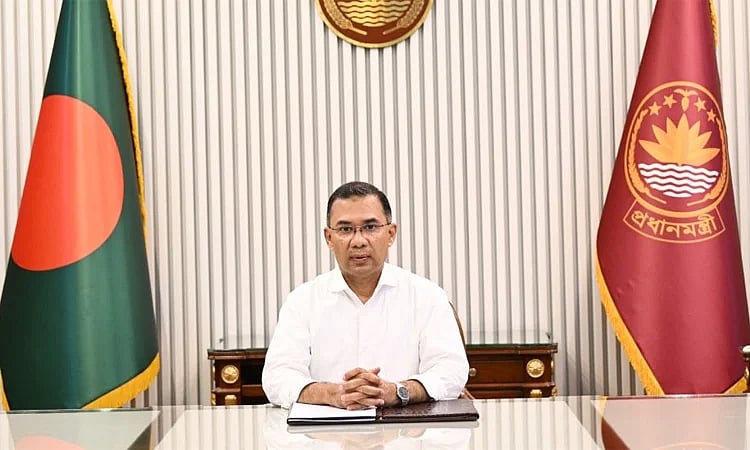
Photo Collected
Prime Minister Tarique Rahman has condemned enforced disappearance as one of the most heinous crimes against humanity, pledging that his administration is actively investigating past cases and pursuing legal recourse. The Prime Minister’s remarks came in a statement issued on Saturday to mark International Day of the Victims of Enforced Disappearances, observed globally on August 30.
In his message, posted on his official social media page, the Prime Minister expressed deep sympathy for the victims and their families. He characterized enforced disappearance as a global crisis frequently utilized by authoritarian regimes and forces within conflict-ridden regions to suppress dissent. He noted that state security and law enforcement agencies have historically employed these cruel tactics to target political opposition and activists.
The Prime Minister explicitly linked the practice to the previous administration, which he described as a fallen, fugitive fascist government. He stated that the former regime maintained secret detention centers, infamously known as the “Aynaghor,” where victims were held captive for months or even years. Citing data from domestic and international human rights organizations, he asserted that the ousted government was responsible for the disappearance of at least 700 individuals.
To address these grievances, the government has initiated comprehensive investigations into every recorded case of disappearance. Furthermore, the administration is establishing a robust legal framework to prevent future occurrences. The Parliament has already seen the introduction of the Enforced Disappearance Prevention and Remedy Bill, 2026, alongside the National Human Rights Commission Bill, 2026. Officials expect these measures will serve as a definitive deterrent against such crimes.
Reflecting on the human cost of these atrocities, the Prime Minister emphasized that a disappearance is more than a statistic; it represents the destruction of a family’s future and dreams. While noting that the 2024 student-led popular uprising resulted in the recovery of some detainees, he acknowledged that many others, including figures such as Ilias Ali and Chowdhury Alam, remain missing.
Reiterating the international commitment to justice, the Prime Minister highlighted Article 7(2) of the Rome Statute of the International Criminal Court, which classifies enforced disappearance as a crime against humanity. Emphasizing this year’s theme, “Victims First, Actions Now,” he called for global solidarity to hold individuals and institutions accountable for these inhumane acts.
0%
0%
0%
0%