
Rights Group Calls for Independent Forensic Probe Into Murder of Rangpur Family of Four

Photo Collected
The human rights organization Ain o Salish Kendra (ASK) has called for an impartial and comprehensive investigation into the murder of retired teacher Ganapati Chakraborty and three members of his family in Rangpur. In a statement released Thursday, the organization expressed significant concerns regarding the official narrative provided by police, highlighting gaps in forensic and digital evidence.
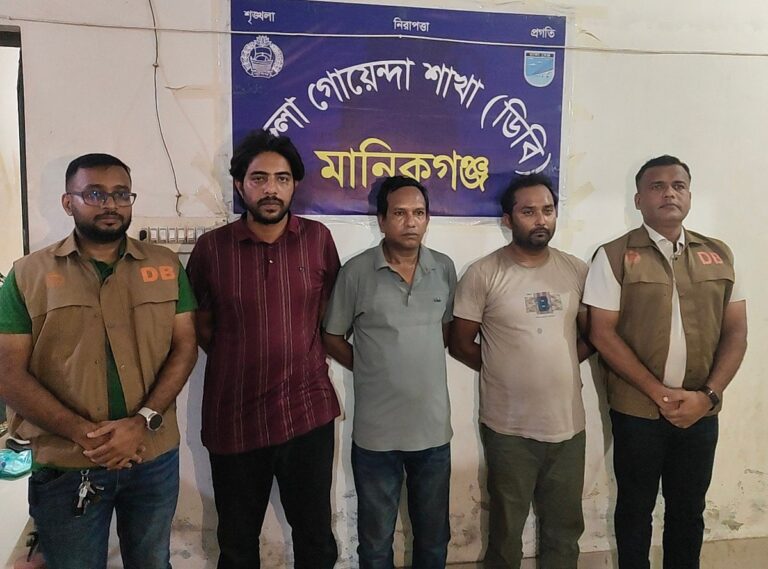
The victims—Ganapati Chakraborty, his wife Pritilata Chakraborty, and their children Agami Chakraborty and Ayush Chakraborty—were found dead in their home in the Mashuapara/Kamalkachna area of Rangpur on August 22. Law enforcement agencies subsequently arrested two individuals, but ASK noted that the police account conflicts with accounts from the victims’ relatives, local residents, and various media reports.
An ASK investigative team visited Rangpur on August 24 and 25, interviewing family members of the victims and the accused, as well as Rangpur Metropolitan Police Commissioner Mohammad Abdul Mabud and Deputy Police Commissioner of the Detective Branch (DB) Sanatan Chakraborty. During the inquiry, ASK raised critical questions regarding the timeline of the murders, the motive, and the method of killing.
A point of contention is a phone call made from the victim Pritilata Chakraborty’s mobile phone to her sister, Puja Chakraborty, at 2:40 a.m. on the night of the incident. ASK insists that investigators must determine who was using the phone, the duration of the call, the device’s location, and the precise timing of when the family’s mobile phones were deactivated.
The organization also questioned the police claim that the suspects remained at the crime scene after the killings to consume food and bathe. ASK argued that if this account is accurate, forensic evidence—such as DNA, fingerprints, hair, and skin cells—should be abundant. They urged investigators to clarify whether scientific analysis of the bathroom, dining utensils, and other surfaces has been completed and, if so, what those findings indicate.
Regarding the post-mortem examinations, the organization cited interviews with morgue staff, noting that the bodies were in a state of decomposition. While mortuary personnel reported no signs of sharp force trauma, the formal medical report remains the only reliable basis for determining the cause and nature of death. ASK emphasized that reliance on confession-based evidence alone is insufficient and that the investigation must prioritize independent, material evidence, including CCTV footage, call detail records, and DNA analysis.
Furthermore, ASK demanded an investigation into the circumstances surrounding the disconnection of electricity at the residence, suggesting it may be linked to the timeline of the killings and the movements of the suspects. The group stressed that the transfer of the case to the Detective Branch provides an opportunity to conduct a fresh, professional inquiry that addresses the concerns of the victims’ families rather than dismissing them.
“To maintain transparency and public confidence, the police must clarify how their initial explanations align with the material and forensic evidence gathered,” the statement concluded.
0%
0%
0%
0%