

Environmental experts demand transparency and public hearings on Padma Barrage project amid transparency concerns
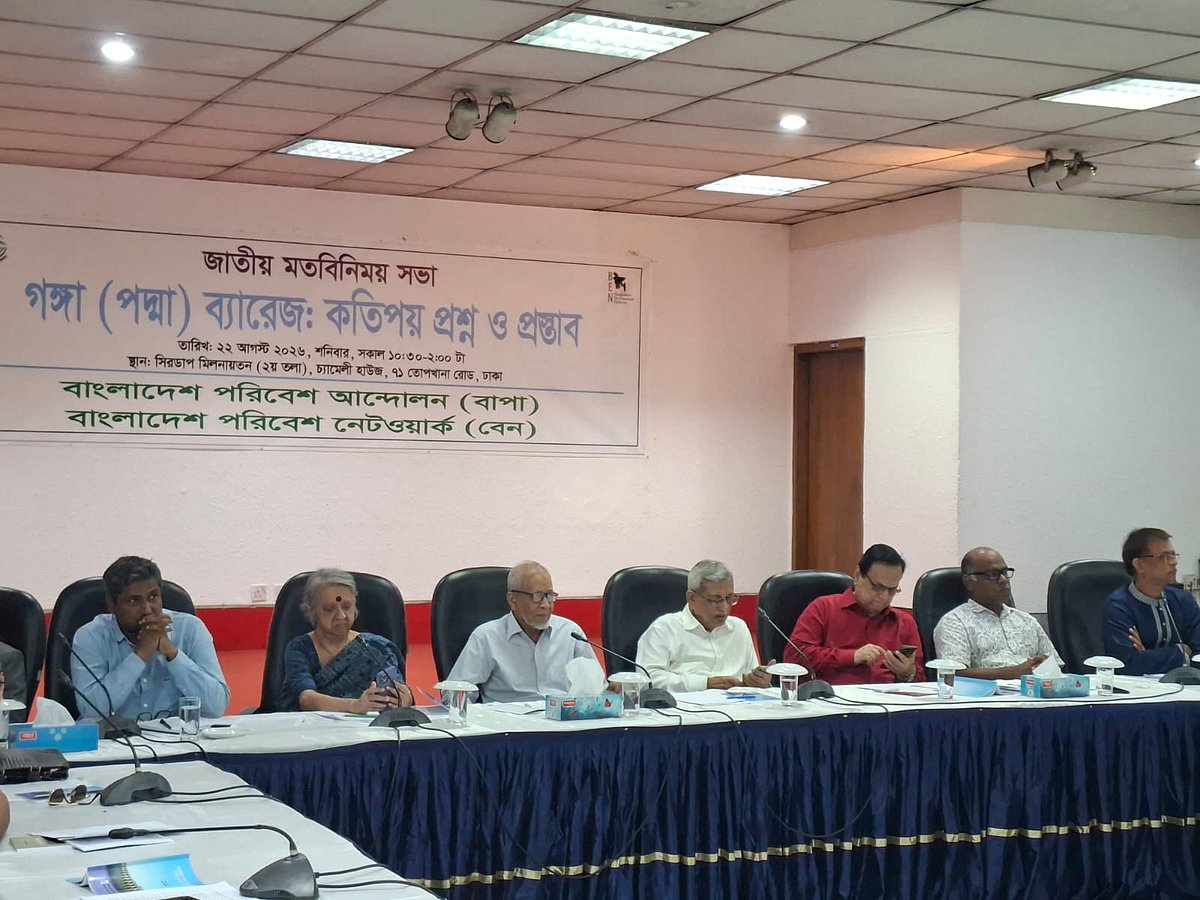
Photo Collected
Environmentalists and experts have called on the government to release all documentation and feasibility studies regarding the Padma Barrage project, citing a lack of transparency surrounding the multi-billion dollar infrastructure plan. During a discussion titled “Ganges (Padma) Barrage: Questions and Proposals” held Saturday at the CIRDAP auditorium in Dhaka, participants argued that the lack of public disclosure contradicts claims of administrative accountability.
Organized by the Bangladesh Poribesh Andolon (BAPA) and the Bangladesh Environment Network (BEN), the event highlighted concerns over the 34.497 billion taka project, which was approved by the government in May. Scheduled for completion by June 2033, the project involves constructing a 2.1-kilometer main dam in the Pangsha Upazila of Rajbari. While the Ministry of Water Resources maintains the project will secure water supplies for 37 percent of the nation’s land, revive five rivers, and reduce salinity in the Sundarbans, critics are questioning the technical and financial viability of the initiative.
Professor Nazrul Islam, Vice President of BAPA, presented a paper outlining ten critical concerns, including doubts over water supply projections. The analysis suggested that 70 percent of the promised water supply during the dry season would depend on current Ganges flows, potentially disrupting downstream water distribution. Furthermore, the paper argued that the region’s primary water issue is prolonged waterlogging caused by polders and embankments, which the project allegedly fails to address.
Experts also raised concerns regarding the 1996 Ganges Water Sharing Treaty, which is set to expire this year. They warned that proceeding with the barrage before negotiating a renewal could weaken Bangladesh’s diplomatic position. Additionally, questions were raised about the fiscal burden of such a massive project at a time when the nation faces significant foreign debt pressures.
Water management expert Malik Fida Khan criticized the government for failing to respond to formal requests for project documents, including applications filed under the Right to Information Act. He described the current situation as a “lack of transparency” that fosters one-sided analysis. Similar concerns were echoed by former Bangladesh Rice Research Institute Director General Shahjahan Kabir, who warned that the high silt load of the Padma River could make the barrage difficult and expensive to maintain.
Despite the criticisms, some experts urged the government to address environmental concerns while continuing with the project. Agricultural economist Jahangir Alam Khan emphasized the potential benefits for the estimated 70 million people in the southwestern region, while Professor Sirajul Islam of North South University noted that the economic significance of the project must be weighed alongside its environmental impact.
The meeting, chaired by BAPA President Nur Mohammad Talukdar, concluded with a renewed demand for the Ministry of Water Resources to publish all feasibility reports and hold a public hearing before the parliamentary standing committee to ensure the project is subjected to rigorous public scrutiny.
0%
0%
0%
0%