


Illegal Hill Cutting and Land Grabbing Surge in Chittagong Boroitali Prompts Government Eviction Warnings
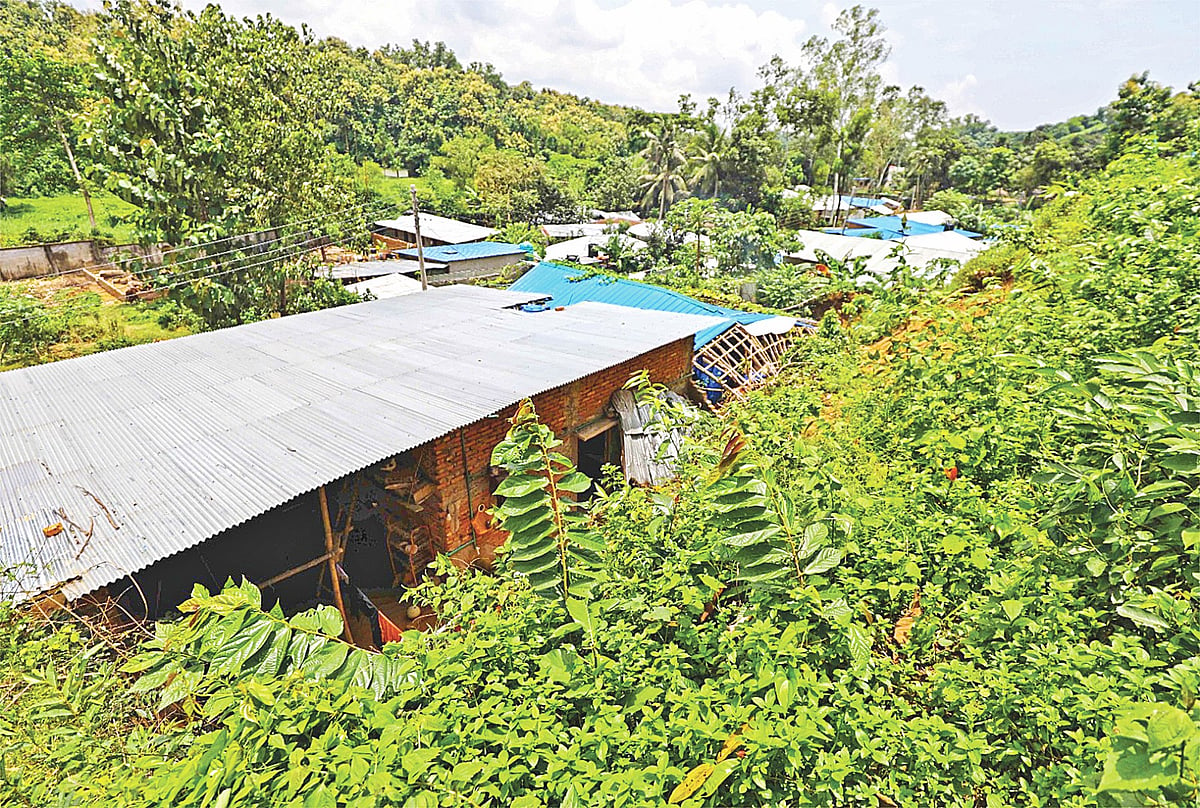
Photo Collected
CHITTAGONG – Illegal encroachment and unauthorized hill-cutting are rapidly transforming the landscape of Boraitoli in the Jungle South Pahartali area of Chittagong. Local authorities have identified nearly 95 acres of government-owned land that is being systematically divided, sold, and built upon, raising concerns that the area is following the same pattern of uncontrolled expansion that once plagued Jungle Salimpur.
Official land office records indicate that approximately 94.45 acres within the Jungle South Pahartali mouza are designated as government-owned ‘khas’ land. Despite this classification, the area is currently crowded with makeshift dwellings constructed from tin, bamboo, and fencing. Residents have carved out flat surfaces into the hillsides to accommodate these structures, leaving behind clear evidence of land degradation and deforestation.
While a comprehensive government survey has not been completed, local estimates suggest more than 300 families reside in Boraitoli alone, with hundreds more inhabiting surrounding hills. Investigations revealed a thriving illicit market where plots are bought and sold for amounts ranging from 70,000 to 300,000 taka. Buyers report receiving informal documents—sometimes on 50-taka non-judicial stamps—rather than legal ownership deeds. In one instance documented by reporters, a parcel of land featuring five semi-permanent structures changed hands for 700,000 taka.
The Department of Environment has confirmed extensive ecological damage, identifying 14 specific sites where 18,994 cubic feet of hillside soil have been excavated. Following these findings, the department issued fines totaling 165,000 taka to 14 individuals in early August. However, critics note that these minor fines have failed to halt the encroachment or lead to the eviction of illegal occupants.
Chittagong District Administrator Mohammad Jahidul Islam Mia emphasized that the administration would not permit the area to become another Jungle Salimpur, where long-term settlements eventually made eviction logistically and socially complex. “We will not allow another Jungle Salimpur to emerge,” Mia stated, promising swift operations to clear the illegal occupants.
Residents claim that the settlement process began decades ago, expanding significantly after the 1991 cyclone when displaced people from coastal regions arrived in the area. Throughout the subsequent years, various political figures and local influencers have been accused of facilitating the land sales and construction. Several individuals named in official reports as being linked to hill-cutting operations have denied the allegations, often citing political rivalries or claiming that the accusations are conspiratorial.
Experts warn that the current situation represents a textbook case of systematic land grabbing. Professor Mohammad Kamal Hossain of the Institute of Forestry and Environmental Sciences at the University of Chittagong warned that unless the administration acts decisively to halt the cutting and reclaim the land, the environmental and demographic consequences will become increasingly difficult to reverse. For now, the Department of Environment has indicated it will coordinate with the Hill Management Committee to investigate how these illicit networks operate and to facilitate the legal reclamation of government property.
0%
0%
0%
0%