
Bangladesh Mahila Parishad demands urgent enactment of anti-sexual harassment law and mandatory complaint committees
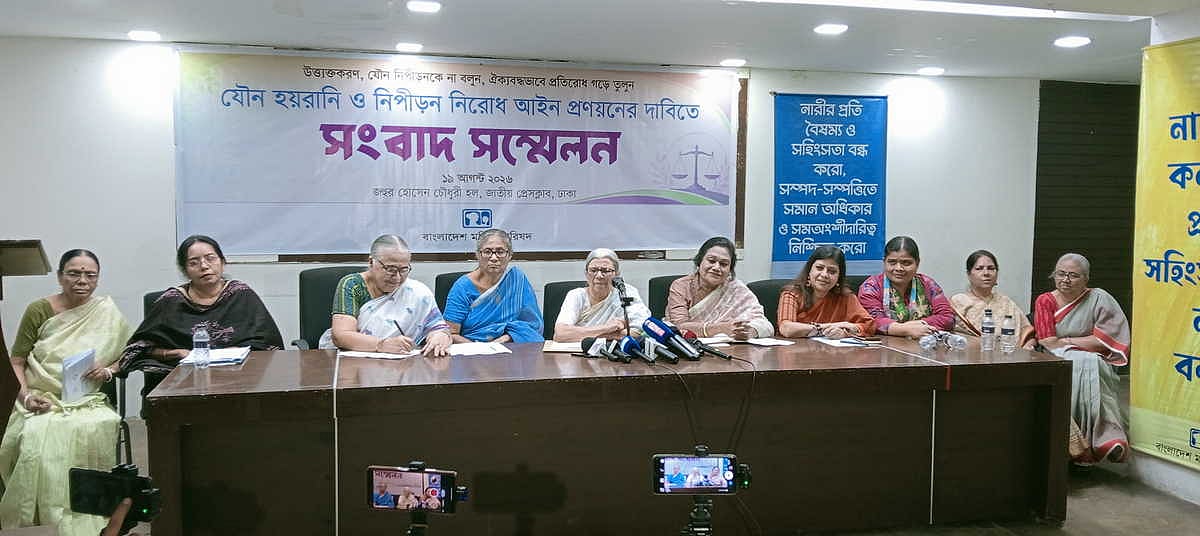
Photo Collected
DHAKA — The Bangladesh Mahila Parishad has called for the immediate enactment of comprehensive legislation to combat sexual harassment and abuse, citing the urgent need to formalize protections for women in educational institutions and workplaces.
During a press conference held Wednesday at the Zahur Hossain Chowdhury Hall of the National Press Club, representatives expressed frustration over the protracted delay in passing the proposed Sexual Harassment Prevention Ordinance. Although the draft ordinance received preliminary approval in January 2024, organizers noted that significant legislative progress has stalled despite a landmark High Court directive issued in 2009.
Maleka Banu, General Secretary of the Bangladesh Mahila Parishad, stated that sexual harassment remains a severe violation of human rights that often forces victims to abandon their education or careers. She emphasized that the state bears a primary responsibility to ensure the safety and dignity of women through robust legal frameworks.
Masuda Rehana Begum, Joint General Secretary of the organization’s central committee, highlighted that the movement for such legislation has persisted for over a decade. While a draft was finalized in consultation with relevant stakeholders in 2024, the absence of a formal law has left many institutions without effective oversight or accountability mechanisms.
The organization demanded the immediate updating of existing legal definitions regarding sexual harassment and the strict implementation of mandatory complaints committees in every educational and workplace setting. Advocates further urged the government to incorporate preventative education into national curricula and ensure that law enforcement and administrative bodies adopt a more proactive approach to addressing these crimes.
Legal experts and advocates present at the event, including Salma Ali of the Bangladesh National Women Lawyers Association, noted that while the 2009 High Court directive mandated the formation of complaints committees, compliance remains sporadic and ineffective. Many speakers pointed out that even where committees exist, they are often non-functional, leaving victims vulnerable to further intimidation or social ostracization.
Representatives from organizations such as BRAC, BLAST, and Ain o Salish Kendra highlighted the lack of reporting transparency and monitoring. Shaswati Biplob, Associate Director at BRAC, emphasized that the civil society recommendations incorporated into the draft must be retained in the final statute to ensure genuine protection.
Concluding the session, Bangladesh Mahila Parishad President Fauzia Moslem underscored that sexual harassment is a symptom of systemic criminality that requires an unambiguous government response. She urged policymakers to resume dialogue with advocacy groups to finalize a functional law that addresses the current legislative gaps and provides real-world protection for women across the country.
0%
0%
0%
0%
More News from Local