


Shrinking Corridors Fuel Human-Elephant Conflict and Threaten Survival of Endangered Species in Bangladesh
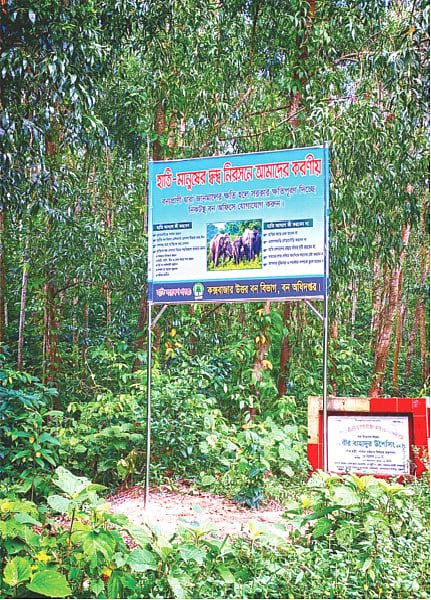
Photo Collected
The expansion of infrastructure, including roads, railway lines, and various human settlements, has severely constricted elephant corridors across Bangladesh, fueling a rise in human-elephant conflict. Once capable of migrating freely between forests in search of food and water, these animals now face fragmented habitats that threaten their survival and genetic diversity.
A 2016 study by the International Union for Conservation of Nature (IUCN), titled “Atlas: Elephant Routes and Corridors in Bangladesh,” identified 12 primary elephant corridors in the Chittagong and Cox’s Bazar regions. Of these, eight are located in the Cox’s Bazar area, while four are situated in the Rangunia and Lohagara upazilas of Chittagong. Many have been rendered unusable; for instance, the Ukhia-Ghumdhum corridor is completely obstructed by the establishment of Rohingya refugee camps, and the Tulabagan-Panerchhara corridor in Ramu has been blocked by railway lines and a military cantonment. Furthermore, international corridors near Khagrachhari and Rangamati have been severed by barbed-wire fencing along the border.
Wildlife experts emphasize that these corridors are essential, as elephants possess strong memories and instinctively return to ancestral migration routes. When these paths are blocked, elephants become trapped in isolated forest patches. This isolation prevents interbreeding between different herds, leading to a decline in genetic diversity that weakens the species’ ability to survive in adverse environmental conditions.
The situation has contributed to a spike in lethal encounters between humans and elephants. According to Forest Department data, 146 elephants have died in the country between 2016 and December 2025. The IUCN has officially classified the Asian elephant in Bangladesh as “critically endangered,” warning that the species faces a high risk of extinction in the coming decades.
Sanaullah Patwari, Conservator of Forests for the Wildlife and Nature Conservation Region, stated that the government has approved a new project to conduct a comprehensive survey and review of these corridors. The initiative aims to develop a strategic plan for restoring passages that have been encroached upon or obstructed.
However, experts remain cautious about the long-term prospects without significant policy shifts. Professor M.A. Aziz of Jahangirnagar University, a member of the IUCN Elephant Specialist Group, noted that the fragmentation of forests makes the remaining corridors vital. Wildlife expert Dr. Reza Khan pointed to successful restoration models in countries like Nepal and several African nations, urging the Bangladeshi government to prioritize wildlife protection. Dr. Khan stressed that the recovery of these corridors depends entirely on the government’s commitment to viewing wildlife preservation as a national priority.
Previous research by the IUCN in 2016 estimated the elephant population in Bangladesh at 268, including 67 males, 172 females, and 29 calves. With these populations distributed across critical forest divisions in Chittagong, Cox’s Bazar, Lama, Bandarban, and the Chittagong Hill Tracts, the need for preserved and connected habitats remains a matter of urgent conservation concern.
0%
0%
0%
0%


