Supreme Court Allows Government Appeal Against Restrictions on Construction at Mahasthangarh Archaeological Site
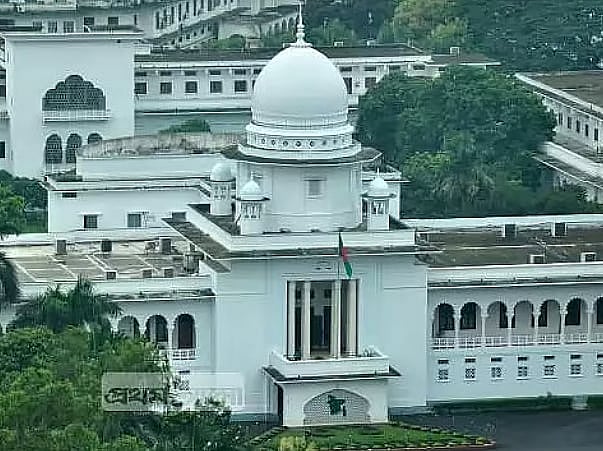
Photo Collected
The Appellate Division of the Supreme Court has granted the government permission to appeal a High Court ruling that restricted construction, maintenance, and excavation activities within the protected archaeological site of Mahasthangarh in Bogura.
A four-member bench led by Chief Justice Zubayer Rahman Chowdhury issued the order on Sunday, effectively allowing the state to challenge the previous judicial directives. Following the decision, Senior Advocate Manzill Murshid, representing the writ petitioners, confirmed that a status quo remains in effect, meaning no construction activities are permitted at the site for the time being.
The government had filed the leave-to-appeal petition last month, seeking a waiver for a delay of 5,279 days in challenging the High Court’s original judgment from January 19, 2012, and a subsequent order dated March 5, 2020. The state also requested a stay on the High Court’s ruling. After the matter was brought before the Chamber Court on July 14, it was referred to the regular bench for a formal hearing, which culminated in Sunday’s order.
Attorney General Md. Ruhul Quddus Kazal represented the state during the proceedings, while Senior Advocate Manzill Murshid, assisted by lawyer Sanjay Mondal, appeared for the writ petitioners.
The legal dispute began in 2010 when the organization Human Rights and Peace for Bangladesh (HRPB) filed a writ petition seeking to halt unauthorized construction, the expansion of shrines, and excavation work that threatened archaeological artifacts at Mahasthangarh. In its 2012 ruling, the High Court ordered the implementation of conservation committee recommendations, directed authorities to prevent illegal encroachment, and mandated the acquisition of land for a new mosque to be built 200 feet away from the site.
In 2020, following media reports of continued encroachment, the High Court issued further directives, including the deployment of law enforcement to block illegal soil excavation and construction.
In its appeal petition, the government argued that the High Court’s restrictions have hindered efforts to implement development and beautification projects. The state contended that while funding has been allocated for the development of the historic Mahasthangarh Mosque, the ongoing judicial orders have prevented these projects from commencing, thereby limiting the site’s potential for tourism and infrastructure improvement.
0%
0%
0%
0%
More News from Local