
NGO Initiatives Drive Rural Economic Transformation Across Jessore Region
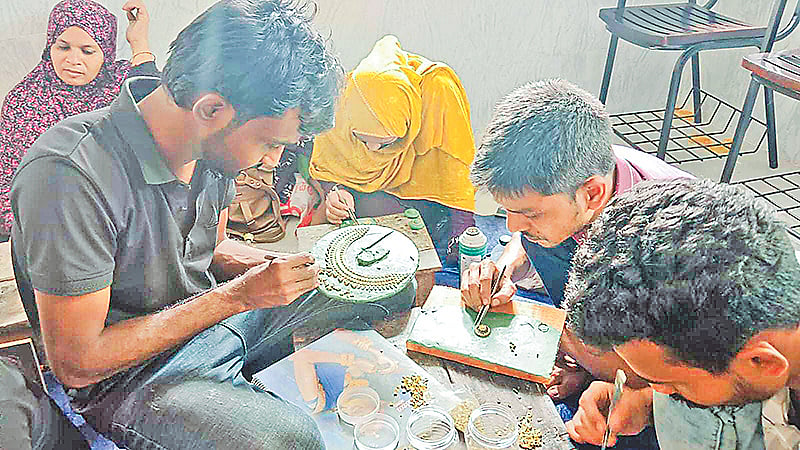
Photo Collected
In the agricultural hub of Jashore, a quiet revolution led by non-governmental organizations is reshaping the lives of thousands, offering a blueprint for rural economic self-reliance through local innovation and targeted social welfare programs.
For local farmers like Sajeda Khatun, who has spent 15 years cultivating flowers in Jhikargacha, the most significant shift has been the domestic availability of high-quality plant seedlings. Previously, Khatun relied on expensive imports from India, a process fraught with high costs and unreliable delivery timelines. Since 2019, she has sourced Gerbera seedlings from the Rural Reconstruction Foundation (RRF), which operates the Green Biotech Tissue Culture Lab.
Established in 2017 through a collaboration between the Palli Karma-Sahayak Foundation (PKSF) and RRF, the lab has provided over 34,500 Gerbera seedlings to date, selling them at nearly half the cost of imported varieties. This initiative has expanded beyond Jashore to serve growers in districts including Jhenaidah, Chattogram, Savar, and Gazipur. RRF has further reduced overhead costs for farmers by installing solar-powered irrigation pumps in Maheshpur, allowing cultivators to irrigate their fields at roughly half the price of traditional diesel or electric pumps.
Beyond agricultural support, private organizations are tackling deep-seated social inequities. The “Shishu Swargo” school, managed by the Jagorani Chakra Foundation, serves as a beacon for children born into sex work and the Dalit Harijan community. Since 2002, the program has provided education and vocational training to children from marginalized backgrounds, successfully integrating 154 students into the mainstream workforce. Many of these graduates have gone on to complete university degrees and secure positions in the banking and private sectors, while others have achieved independence through trades such as driving and small-scale business.
The region’s economic landscape is also benefiting from microfinance and vocational training models. In Maheshpur, Salma Khatun transformed her family’s financial prospects by leveraging loans and training from the Shishu Niloy Foundation to establish an imitation jewelry business. Her home-based workshop now employs up to 10 workers, producing hundreds of pairs of earrings daily. This model has proven replicable; approximately 6,000 people across 40 villages in Maheshpur are now engaged in similar home-based manufacturing, supported by foundation-led training and micro-loans.
While local authorities, including the Department of Social Services, acknowledge the vital role these organizations play in grassroots development, they emphasize the need for continued oversight to prevent predatory lending practices. Nonetheless, district officials maintain that the interventions—ranging from tissue culture labs to solar irrigation and social inclusion schools—are driving a profound shift in the rural economy. Organizations such as Brac, Ad-din Welfare Trust, and various local foundations continue to anchor these efforts, providing the capital and training necessary to sustain Jashore’s trajectory toward economic resilience.
0%
0%
0%
0%