Legendary Actress Bobita Reflects on Cinematic Journey and Satyajit Ray Collaboration
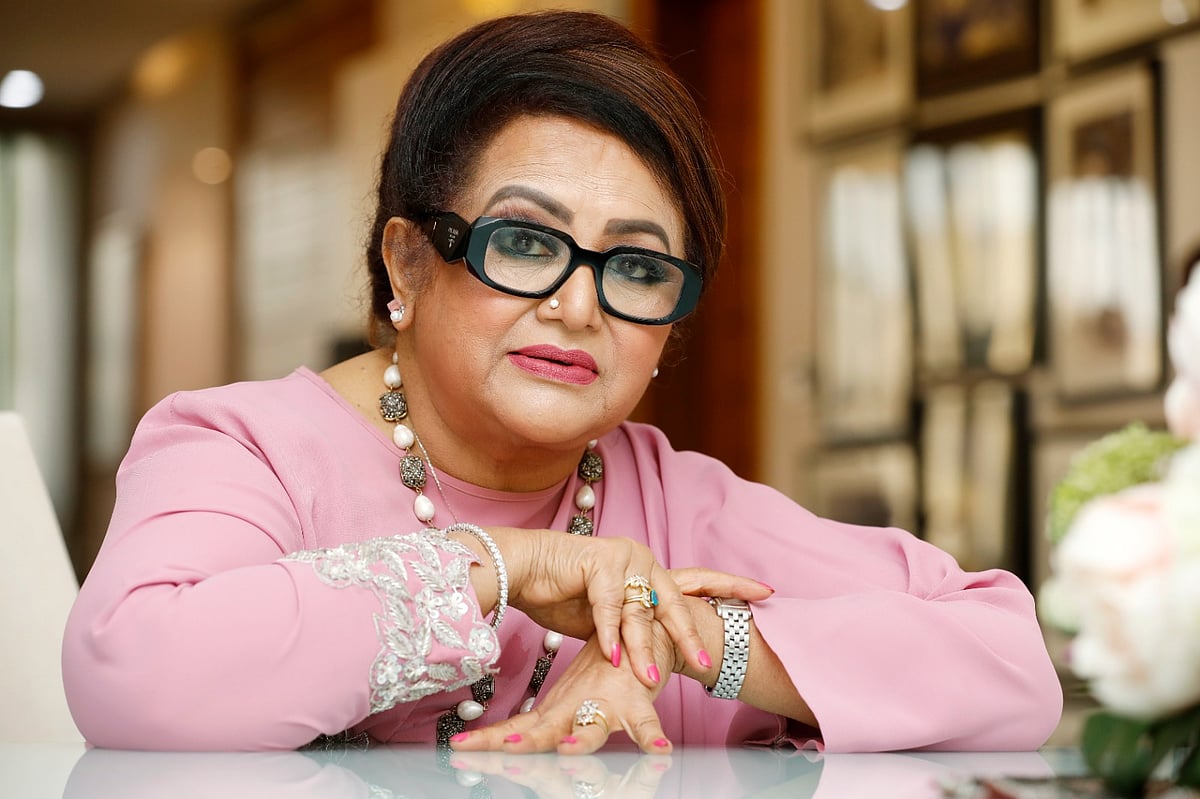
Photo Collected
Legendary Bangladeshi actress Bobita, an icon of the country’s silver screen with an illustrious career spanning over 275 films, recently reflected on her life’s journey in a wide-ranging interview with author and journalist Anisul Huq. Born Farida Akhter in 1953 in Bagerhat, she rose from a reluctant child actor to become one of the most celebrated figures in South Asian cinema, famously earning the admiration of auteur Satyajit Ray.
During the conversation, Bobita recounted her unconventional entry into the film industry, spurred by her brother-in-law, the visionary director Zahir Raihan. Despite her early childhood desire to avoid the grueling lifestyle of film sets—having witnessed her elder sister, actress Suchanda, navigate the physical demands of long outdoor shoots—she was cast in the Urdu-language film *Jwalte Suraj Ke Niche*. Her talent was quickly recognized, leading to her breakout role in the 1969 film *Shesh Porjonto*, which solidified her partnership with the legendary actor Razzak.
A defining moment in her career came with the offer to star in Satyajit Ray’s masterpiece, *Ashani Sanket*. Bobita recalled the initial disbelief she felt upon receiving an invitation from the world-renowned director. Her eventual meeting with Ray, whom she affectionately calls “Manikda,” remains a pivotal memory. Ray insisted on seeing her without the heavy makeup she had applied for their first meeting, later declaring her the perfect fit for his protagonist, Ananga Bou. Their collaboration involved months of filming in the serene landscapes of Birbhum, marking the beginning of Bobita’s international acclaim.
Reflecting on her artistic influences, Bobita credited her mother, Jahanara, who instilled in her children the importance of cultural depth alongside formal education. This upbringing pushed her to pursue diverse roles, from commercial blockbusters to critically acclaimed social dramas like Amjad Hossain’s *Golapi Ekhon Traine* and Narayan Ghosh Mita’s *Lathial*. She highlighted her role in *Golapi Ekhon Traine*—a film that participated in the Moscow Film Festival—as a milestone for Bangladeshi cinema, noting that the iconic dialogue regarding equality in class remains etched in the public memory.
The actress also touched upon the personal challenges that accompanied her professional success, including the profound grief of losing her mother on the very day her debut film was released, and the later loss of her husband when their son, Anik, was just a toddler. Despite these hardships, she navigated a successful career across diverse genres, collaborating with stalwarts like Alamgir and Zafar Iqbal.
Now residing in a different era for cinema, Bobita expressed reservations about the current landscape of the industry, noting that the depth and storytelling found in the works of directors like Zahir Raihan, Subhash Dutta, and Amjad Hossain are missing from today’s mainstream projects. While she remains open to returning to the screen, she emphasized that any future role must offer the same artistic merit that defined her legacy. As she addressed her audience, Bobita credited them for her success and reaffirmed her enduring passion for the craft, stating that for a true artist, there is no final curtain call.
0%
0%
0%
0%