Dhaka Medical College Hospital Experts Call for Standardized Emergency Response Protocols to Manage Mass-Casualty Events
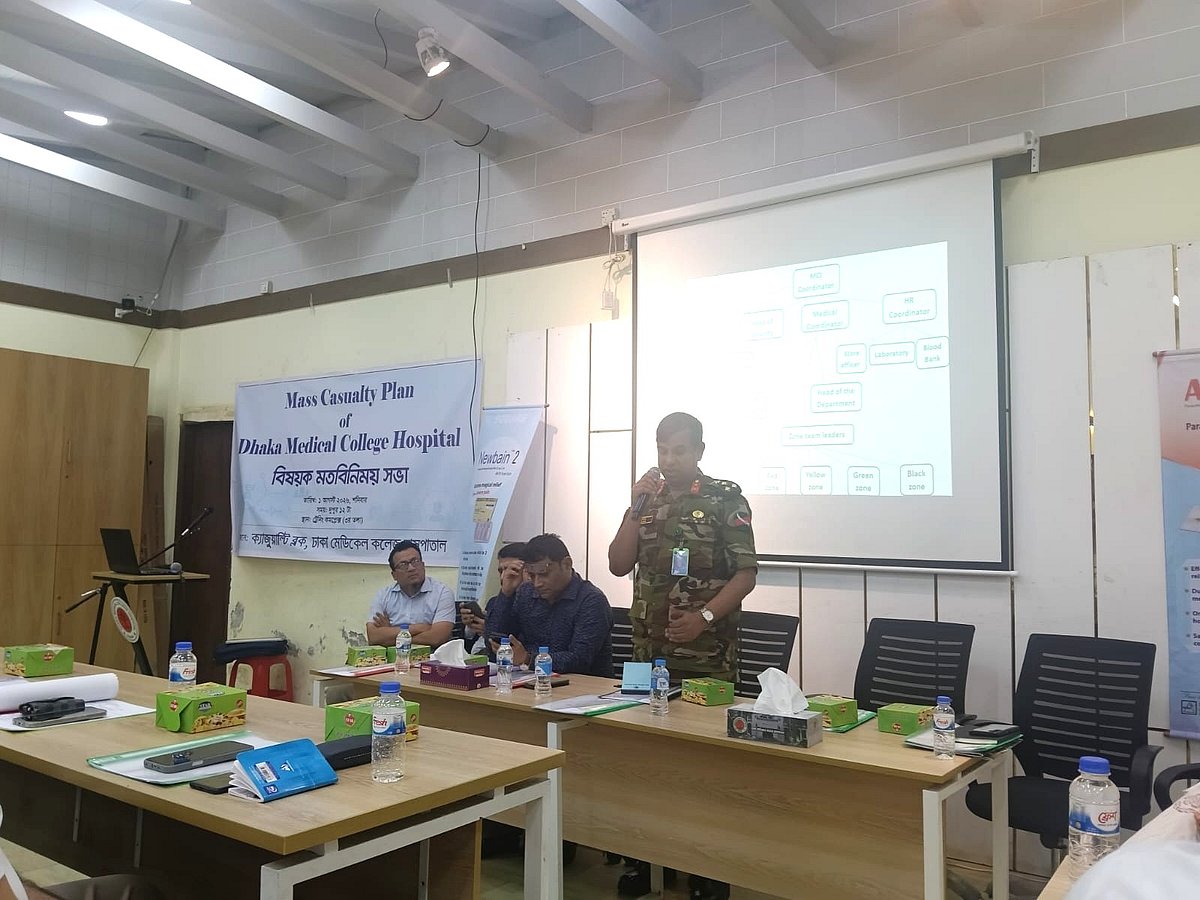
Photo Collected
Health experts have warned that Bangladesh’s hospitals lack the strategic framework necessary to manage mass-casualty events, stressing that lives could be saved if individual facilities developed and implemented structured emergency response plans. During a discussion on a draft emergency medical plan at Dhaka Medical College Hospital (DMCH) this Saturday, officials and medical professionals emphasized that the urgent modernization of emergency departments requires a unified commitment from the government, hospital administration, political leaders, and the media.
The event, hosted by the DMCH casualty department with support from Médecins Sans Frontières (MSF), highlighted the chronic strain placed on the hospital. As the primary destination for victims of daily road accidents, violent incidents, and large-scale disasters, DMCH serves as the frontline of the nation’s healthcare system. Brigadier General Md. Asaduzzaman, the hospital’s director, noted that the facility operates under a unique pressure: while typical hospitals receive 80 percent of their admissions from outpatient services, DMCH receives 80 percent of its patients through the emergency department. He suggested that if other hospitals assumed a greater share of the burden, the quality of care at DMCH would significantly improve.
Associate Professor of Casualty, Mostak Hossain, who presented the draft plan, underscored that systematic patient management is essential to preventing avoidable deaths. His proposal details a comprehensive framework involving departmental coordination, increased staffing, strategic medical supply stockpiling, and the critical process of “triage.” According to the proposed model, large-scale incidents typically involve 50 to 70 percent minor, 20 to 30 percent moderate, and 10 to 20 percent severe injury cases. Experts noted that properly categorizing these patients remains a complex but vital task for optimizing life-saving interventions.
The discussion also addressed the significant operational challenges posed by overcrowding, which often hinders medical personnel. Senior doctors reported that the influx of patients’ relatives, combined with interruptions by political figures and their associates, frequently disrupts emergency care. Participants also cited the role of the media, suggesting that while accurate reporting is necessary, the lack of an institutional mechanism for disseminating official updates creates confusion and attracts unnecessary crowds to the hospital. Some attendees proposed the creation of entirely separate emergency facilities to mitigate these pressures.
Closing the session, MSF representative Md. Jamil noted that a formal plan is merely the first step. He argued that consistent, simulated drills are essential to stress-test these protocols, identify procedural weaknesses, and ensure that medical teams are prepared to function effectively under the extreme conditions of a mass-casualty disaster.
0%
0%
0%
0%